A Mount Sinai-Led Team Creates Model for Understanding How the Brain’s Decision-Making is Impacted in Psychiatric Disorders

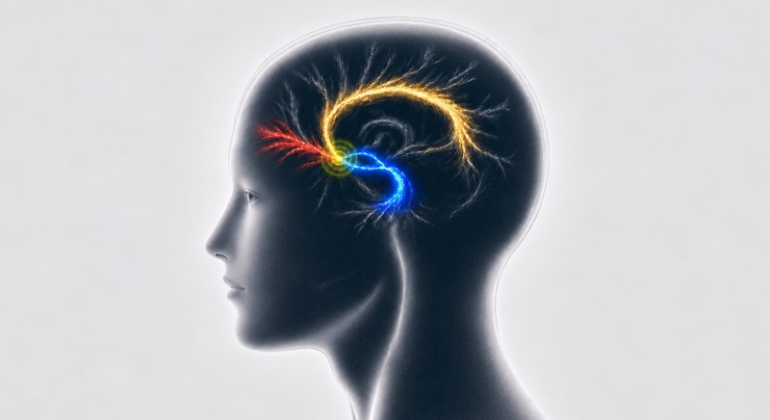
Scientists from the Icahn School of Medicine at Mount Sinai, working in collaboration with a team from the University of Texas at El Paso, have developed a novel computational framework for understanding how a region of the brain known as the striatum is involved in the everyday decisions we make and, importantly, how it might factor into impaired decision-making by individuals with psychiatric disorders like post-traumatic stress disorder and substance use disorder.
In a study published in Nature Communications [10.1038/s41467-025-61466-x] on August 14, the team reported that modulating activity within the striosomal compartment—a neurochemically discrete area of the striatum—might be an important therapeutic strategy for promoting healthier decision-making in people with psychiatric disorders.
“Though it has been established that the striatum is clearly important for cost-benefit decision-making, the precise role of the striosomal compartment has remained elusive,” says Ki Goosens, PhD, Associate Professor of Pharmacological Sciences and Psychiatry, at the Icahn School of Medicine at Mount Sinai and co-lead author of the study. “Our computational model tackles that issue by creating a framework that links levels of striosomal activity to which and how many factors we consider in our decisions to pursue something. For the first time, we’ve developed a model to explain how striosomal circuits are involved in healthy as well as disordered decision-making.”
The striatum is known to play a critical role in the human brain by coordinating multiple aspects of cognition, including decision-making, motor control, motivation, and reward perception. It is differentiated into the anatomically discrete compartments of the striosomes and the matrix, though functional impacts of the striosome-matrix organization are poorly understood. Through the creation and deployment of a sophisticated model that combines biology, decision-making theory, mathematical modeling, and big data analysis, the team is shedding valuable light on the distinction in regulation of neural function in each of these compartments.
Investigators found that information from the brain about potentially relevant factors involved in decision-making flows into the striosomes, and that the striosomes then determine which and how many of those factors will be used to make the decision. Specifically, they learned that high levels of striosomal activity favor “simple” decisions in which single factors determine whether the individual pursues an option that carries potential rewards or costs. Extremely high levels of striosomal activity, however, can lead to impulsive decisions which are made rapidly and often carelessly. On the other hand, the study revealed that lower levels of striosomal activity favor “complex” decisions in which multiple factors are considered in the course of decision-making, while extremely low levels can lead to “analysis paralysis,” in which decisions are greatly delayed because too many factors are being considered and neural circuits can’t settle into a configuration that favors one action versus another.
“Our model provides an innovative way to interpret impairments in so-called cost-benefit decision-making in psychiatric disorders,” explains Alexander Friedman, PhD, Assistant Professor of Biological Sciences at the University of Texas at El Paso and co-lead author of the study. “For example, we believe that disorders like post-traumatic stress disorder and substance abuse disorder, in which risky behaviors are common, result from high levels of striosomal activity driving consideration of potential rewards but ignoring potential costs. Conversely, disorders like depression, where daily decisions are often difficult, are believed to result from low levels of striosomal activity that result in too many dimensions being considered.”
The computational tool Dr. Goosens and the team created not only offers a framework for explaining why daily decision-making is impaired in psychiatric disorders, but highlights the need to understand how striosomal activity is changed in different disorders. Perhaps even more consequential is the suggestion by the team that modulating striosomal activity through therapeutic intervention could be a new and effective approach to addressing a wide range of psychiatric abnormalities.
The study was a collaborative effort involving The Friedman Brain Institute, the Center for Translational Medicine and Pharmacology, and the Departments of Psychiatry and Pharmacological Sciences at Mount Sinai and the University of Texas at El Paso.
About the Mount Sinai Health System
Mount Sinai Health System is one of the nation’s leading integrated academic health systems and one of the largest in the New York metropolitan area. Its comprehensive system includes seven hospitals, more than 400 outpatient practices, over 600 research and clinical laboratories, the Icahn School of Medicine at Mount Sinai, the Graduate School of Biomedical Sciences, and the Mount Sinai Phillips School of Nursing. Together, the Health System comprises approximately 48,000 employees, more than 9,000 physicians, and 8,600 nurses.
As a leading learning health system, Mount Sinai combines clinical expertise with scientific discovery to improve patient care while training the next generation of health care and biomedical leaders. The Health System provides care across every stage of life, from prenatal care through geriatrics, while advancing personalized medicine through artificial intelligence, data science, and biomedical research.
Mount Sinai is consistently recognized among the nation’s leading academic health systems for patient care, research, and education. The Mount Sinai Hospital is ranked No. 1 in New York by Newsweek and No. 5 on the magazine’s World’s Best Hospitals list. The Icahn School of Medicine at Mount Sinai ranks No. 11 among U.S. medical schools and No. 1 among freestanding medical schools for National Institutes of Health funding, reflecting the strength of its scientific enterprise and leadership in biomedical research.

Scott J. Russo, PhD, Appointed Chair of the Nash Family Department of Neuroscience
Oct 13, 2026 View All Press Releases


Researchers Discover Rare Cortical Neurons That Can Help Put the Brain to Sleep
Sep 11, 2026 View All Press Releases