
Cancer Screening in 2026

What if the best cancer treatment is finding cancer before symptoms ever appear?
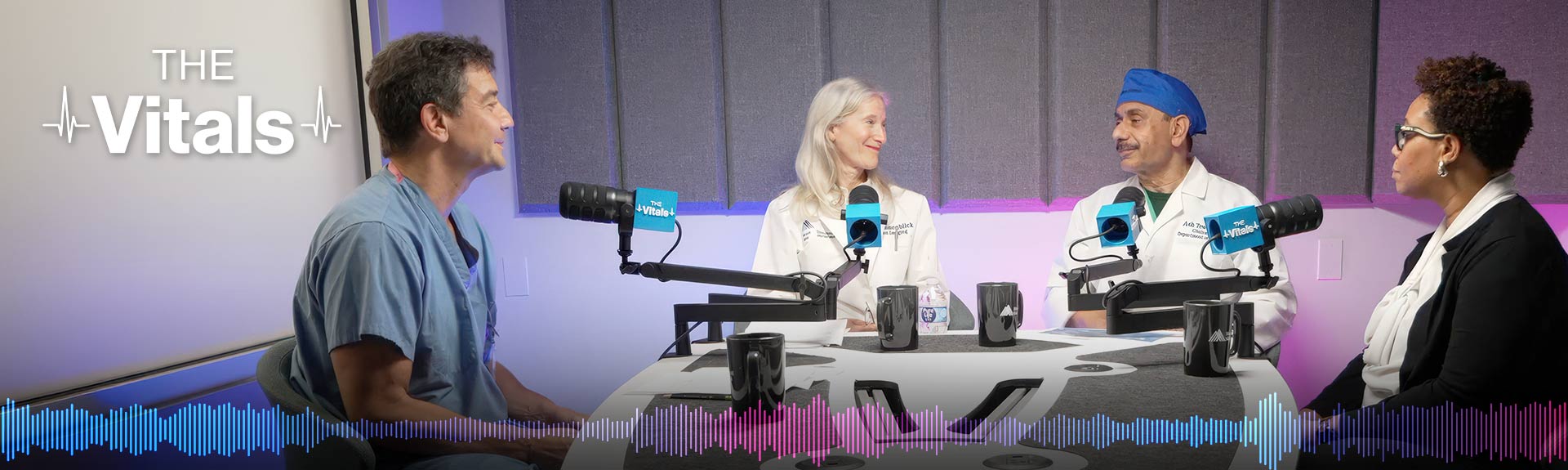
Early detection remains one of the most powerful tools in cancer care, but screening only works when people can access it. In this episode of The Vitals, guest host Dr. Raja Flores is joined by Dr. Ash Tewari, Dr. Jamila Sly, and Dr. Emily Sonnenblick for a wide-ranging conversation about how cancer screening is evolving, why participation remains a challenge, and how bringing screening directly into communities could save lives.
The panel explores the latest recommendations for breast, prostate, and lung cancer screening; the role of MRI, genomics, biomarkers, and AI in identifying risk earlier; and the growing movement to make screening more accessible through mobile clinics and community-based outreach. They also discuss health disparities, trust in medicine, and the practical barriers that prevent many people from getting potentially lifesaving tests.
Whether you're wondering when to get screened, curious about emerging cancer detection technologies, or interested in how healthcare systems can improve access to care, this episode offers expert perspectives on one of medicine's most important frontiers: finding cancer early, when treatment is most effective.
Jamilia Sly: What we're aiming to do with that project is to engage with New York City public housing residents. So we wanna leverage existing resources that are available at Mount Sinai, like the prostate van and our mobile mammography van, and offer opportunities for residents who are living there and in the surrounding communities.
And I think that's one of the biggest ways that we can do more to, um, increase access in a different way than we traditionally do.
Raja Flores: Hello, and welcome back to The Vitals, the Mount Sinai Health System show, bringing you the latest in medical news, research, and innovation. I am your host, Dr. Raja Flores, Chair of Thoracic Surgery at Mount Sinai.
Raja Flores: When it comes to cancer, one of the most important things we can do is to find it early. Today, we have screening tools that help detect several of the most common cancers, including breast, [00:01:00] colorectal, cervical, lung, and prostate cancer.
But having a screening test available is only part of the equation. For many people, getting screened isn't always easy. Cost, transportation, work schedules, language barriers, limited access to healthcare, lack of information, and concerns about what a screening might find can all stand in the way. Joining me today are three experts who see this issue from very different perspectives: Dr. Ash Tiwari, Dr. Jamelia Sly, and Dr. Emily Sonnenblick. When we talk about screening, let's first focus on the big picture. When we talk about screening, what does it mean to find a cancer before it develops symptoms? Uh, let's start with Dr. Tiwari. What, what does that mean when we [00:02:00] screen and we wanna find a cancer before symptoms develop?