
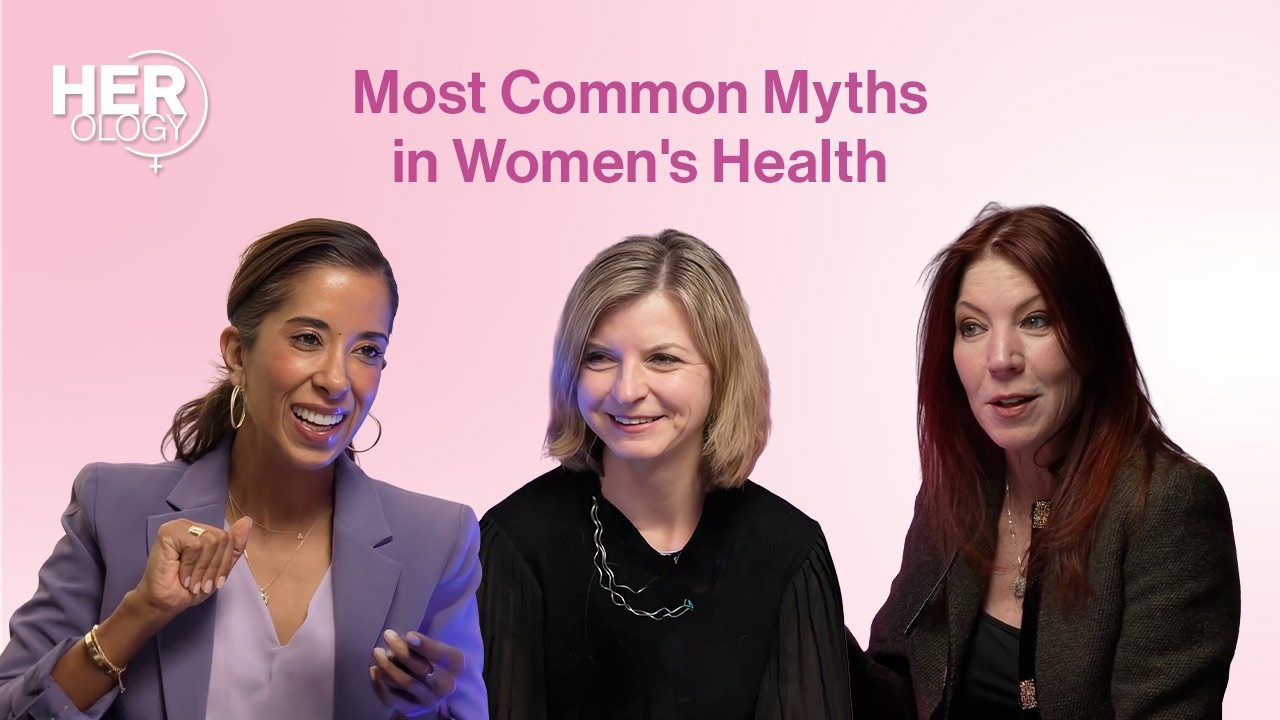
Common Myths in Women's Health
Can seed cycling balance your hormones? Do you need to detox your uterus after your period? Can an IUD travel to your brain? And is heart disease really more dangerous for men than women?
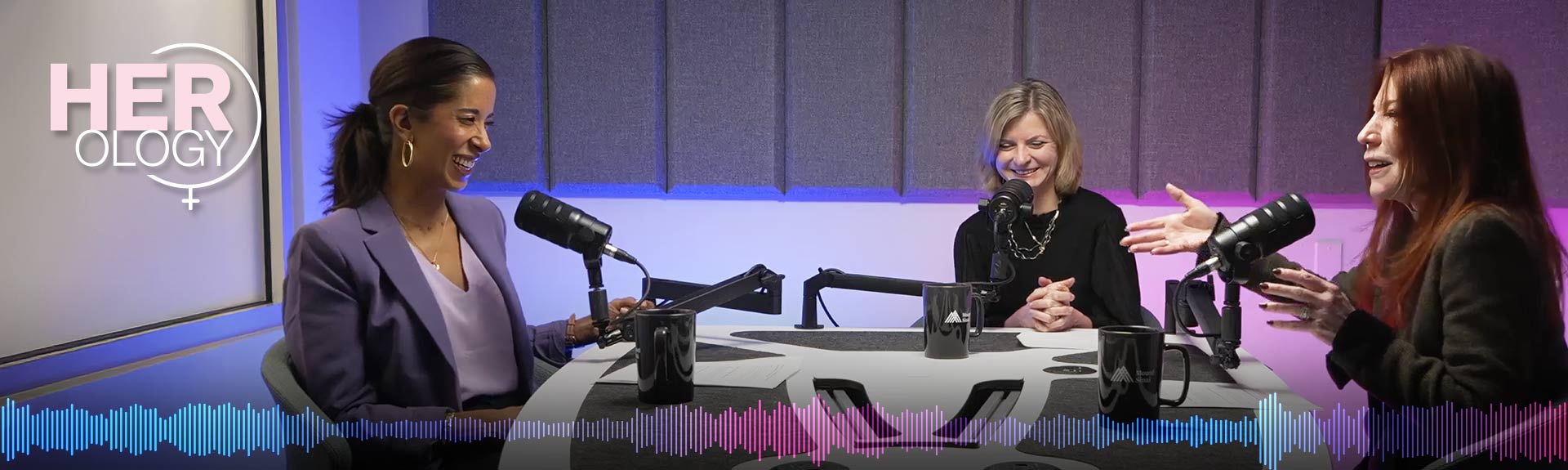
In this myth-busting episode of HERology, our co-hosts—Drs. Anu Lala, Joanne Stone, and Anna Barbieri—separate fact from fiction on some of the most common women's health misconceptions circulating online and in everyday conversation.
Together, they tackle myths surrounding such areas as fertility, perimenopause, and hormone therapy, among many others
Whether you're navigating reproductive health, menopause, pregnancy, or simply trying to make sense of the latest wellness trends, this episode offers practical, evidence-based insights from three leading Mount Sinai physicians.
Anu Lala: [00:00:00] Does your uterus need pearls? Does it need steaming? Does it need herbs? Does it need charcoal cleanses? Believe me, these are things that exist out there. Which, does it need any kind of cleansing after your period?
Joanne Stone: The whole purpose of your period is, like, you're sloughing off tissue, so it's sort of detox- It's like self-detox, right?
It's like getting rid of all those cells and lining in there. So that's, like, the perfect natural detoxification.
Anu Lala: Welcome to Herology, the podcast from the Mount Sinai Health System, dedicated to advancing women's health through the lens of cutting-edge science and compassionate care. I'm your host for today, Dr. Anu Lala, and our show is brought to you in part by the Carolyn Rowan Center for Women's Health and Wellness.
Today we're discussing the most common myths about women's health. Sometimes, as doctors, we have to regularly address misinformation, and we're here to set the record straight. [00:01:00] I'm joined by people that I deeply admire, my regular co-hosts of this show, Dr. Joanne Stone and Dr. Anna Barbieri, two of Mount Sinai's most prominent and celebrated OBGYNs.
Joanne and Anna, welcome to the show. I am so excited to be talking to you today. We are going to have some fun over the next 30 to 40 minutes. We're going to be debunking, hopefully, some myths. Some myths we see on TikTok and Instagram, and other ones that are really kind of popularized in general. So you all ready?
Joanne Stone: Yeah, I feel like we're like- We're ready to go ... not the Ghostbusters, we're the myth busters right now. The myth busters. The TikTok
Anu Lala: busters. There we go. Let's do it. There we go. Okay. So Anna, talk to me about seed cycling. Can I balance my hormones with seed cycling? One of my
Anna Barbieri: favorite topics. Okay. First of all, what is it?
Full Episode Transcript
Anu Lala: Does your uterus need pearls? Does it need steaming? Does it need herbs? Does it need charcoal cleanses? Believe me, these are things that exist out there. Which, does it need any kind of cleansing after your period?
Joanne Stone: The whole purpose of your period is, like, you're sloughing off tissue, so it's sort of detox- It's like self-detox, right?
It's like getting rid of all those cells and lining in there. So that's, like, the perfect natural detoxification.
Anu Lala: Welcome to Herology, the podcast from the Mount Sinai Health System, dedicated to advancing women's health through the lens of cutting-edge science and compassionate care. I'm your host for today, Dr. Anu Lala, and our show is brought to you in part by the Carolyn Rowan Center for Women's Health and Wellness.
Today we're discussing the most common myths about women's health. Sometimes, as doctors, we have to regularly address misinformation, and we're here to set the record straight. [00:01:00] I'm joined by people that I deeply admire, my regular co-hosts of this show, Dr. Joanne Stone and Dr. Anna Barbieri, two of Mount Sinai's most prominent and celebrated OBGYNs.
Joanne and Anna, welcome to the show. I am so excited to be talking to you today. We are going to have some fun over the next 30 to 40 minutes. We're going to be debunking, hopefully, some myths. Some myths we see on TikTok and Instagram, and other ones that are really kind of popularized in general. So you all ready?
Joanne Stone: Yeah, I feel like we're like- We're ready to go ... not the Ghostbusters, we're the myth busters right now. The myth busters. The TikTok
Anu Lala: busters. There we go. Let's do it. There we go. Okay.
Seed Cycling Explained
Anu Lala: So Anna, talk to me about seed cycling. Can I balance my hormones with seed cycling? One of my
Anna Barbieri: favorite topics. Okay. First of all, what is it?
Okay. So I don't know what people know what seed cycling is, but it's like a big TikTok thing, and there's companies forming around it. So seed [00:02:00] cycling is the idea that you can regulate your hormones that drive your menstrual cycle by eating certain seeds, and specifically by eating flaxseed and pumpkin seeds in the follicular phase, which is the first two weeks of your cycle, so your period week and the week after.
And then eating other seeds in the last two weeks. Okay, that does not work.
Joanne Stone: Okay? Like, who comes up with this stuff? I, I don't even- Well- I can't even imagine ... the theory
Anna Barbieri: is that certain seeds may be phytoestrogenic. So like flaxseed, for example, has lignans, omega-3s. Those are great for you. It has some phytoestrogens.
Okay, that is not going to drive your menstrual cycle. There's just not enough in there. So seed cycling, um, great idea to get some healthy nuts into your body. It is not going to solve your PCOS. It's not going to solve menstrual irregularities. It's not going to make you get pregnant if you wanna get pregnant or not make you get pregnant.
[00:03:00] Um, so seed cycling, that's a no from me. That's a big no.
Anu Lala: That's a big no from me. Okay. I was gonna say myth, or do we see some truth? You're gonna call it a myth. Myth. Okay. I like it.
Supplements and Hot Flashes
Anu Lala: So what about supplements? If someone's having a hot flash, can you say, "Listen, take some ashwagandha, you'll be much better"?
Anna Barbieri: All right. Well, listen, ashwagandha, as you know, is one of my favorite supplements. Not necessarily for hot flashes. Does not work for hot flashes. Um, that's a bigger topic, because we have to get a little bit more nuanced. You know, the, the typical answer is usually no supplements don't work. And if you take them as a, as a group, okay, for, for real hormonal issues, you, you don't wanna assume that supplements are going to work I do, as I'm an integrative physician also, I do think that some supplements have a greater body of evidence behind them.
So for example, something like Vitex that has some Some decent studies [00:04:00] specifically about PMS and breast pain during a cycle. That's a potential there, but really, you know, again, something like fertility issues, severe PCOS, or really significant menopause complaints, there are better solutions for that than supplements.
Joanne Stone: And I, and I think that also, like, creatine has some good data behind it for mu- building muscle mass. So w- we talked in an earlier episode about, um, the importance of building muscle, especially if you're on certain medications, and I think creatine is one of those supplements that has some good data behind it.
Yeah. I, I agree with that. I think- I put it in my coffee every morning. So do I. Faster, yeah? Yeah, so do I.
Anu Lala: Some truth to it. Yeah. Some truth to it. So do I. Seed cycling myth? Seed
Anna Barbieri: cycling, no. Some supplements- Supplements ... maybe some truth? Maybe
Anu Lala: some, not others. Okay. Complicated. And last part of this myth busting, um, for fertility in particular.
Any teas that we can take? [00:05:00] Soy milk? Do you believe in any of these things that can boost your estrogen? Red raspberry.
Joanne Stone: Red raspberry. Well, that's for, that's for labor, but yeah.
Anna Barbieri: But this- Didn't make me go into labor. Yeah. I
Joanne Stone: mean, yeah, it doesn't really work so well. But, um, no, I don't think there's really any good data behind the, these teas for boosting fertility.
I mean, there are certain things we know that are really important to do for fertility. You know, being healthy, being at a good weight. You know, maybe some people advocate for gluten-free 'cause it do, it decreases inflammation. Depends on your underlying medical conditions, of course. Like, so much of this depends on that.
But teas, I would cross my T and say, you know- ... definitely a myth there. Fertili-tea. All right. Fertili-tea. Ba-dum-tish. Oh, that could be... That's gonna become a brand pretty soon, Fertili-tea.
Anu Lala: All right, so we're calling myth number- I'm sure it's out there and
Anna Barbieri: taken. I don't know.
Anu Lala: I love it. Okay.
Perimenopause Timing Truths
Anu Lala: So Anna, this is much of your practice.
Myth or some [00:06:00] truth, perimenopause begins at 50. Uh, it's- Anything younger than that, it's something else. Okay, X on that. Okay? Good. Okay. Are you gonna get on the table?
Anna Barbieri: Perimenopause, for most people, starts w- it could start at 50, but it starts way before 50. Okay, I think we need to put an X on it and just say perimenopause lasts forever, or so it feels like it.
But really, perimenopause typically will start late 30s, early to mid-40s for most women out there, and it will last several years, up to about a decade.
Joanne Stone: I mean, otherwise, people would have been having, like, 50th birthday perimenopause parties. Like, it's gonna be- Hmm ... welcome to perimenopause, right? So, so. I don't
Anna Barbieri: know if anybody celebrates that.
Anu Lala: Um, so tell me just the distinction in your mind, perimenopause and menopause. Is menopause a day? And perimenopause a decade? Yeah.
Anna Barbieri: So great question. So let's go through some, [00:07:00] um, terminology here because it's important to speak that same language. So menopause, it's basically means the cessation of your menstrual cycle, and that is a day.
It's the day your periods stop forever. You're not in menopause or you're not post-menopausal until a year has gone by from that time. Perimenopause is everything that is in between when your hormones change very regularly cycle to cycle and that day one year past that last menstrual period. Mm. So that can be a long time, and that's tricky, right?
Because it's kind of like puberty. Like, there are some obvious signs of puberty, but sometimes, like, you know, if you're 11 and you're just not sleeping great and maybe you're, like, getting taller, like, that's probably puberty, but you're not quite sure. So perimenopause is similar. Mm. A lot of women when we first enter it, the signs are subtle.
Maybe that [00:08:00] period is not varied yet, but maybe we're waking up at 3:00 AM, maybe PMS is getting worse. That can certainly be very early perimenopause, but it's not super obvious. But yeah, so I would say, like, entry into it, late 30s to mid-40s for most women. Um, sometimes later. Could be 50. Usually earlier.
And then the average age of entry into menopause about 51,
Anu Lala: 52. Okay. Joanne, can you get pregnant during perimenopause?
Joanne Stone: It's possible. I mean, certainly it's a time where there are a lot of hormonal changes, but, you know, you're still... You know, you may still be ovulating, so you can definitely still get pregnant during pene- perimenopause.
As you get older, of course, infertility rises, so by the time you hit your late 40s, less likely that you're gonna g- uh, you know, get pregnant spontaneously. But certainly, you know, late 30s, early 40s, absolutely. Okay. We are
Anu Lala: [00:09:00] crushing these myths, people. Busting them, I should say. I like it. All right.
Ultrasound Findings Panic
Anu Lala: Now, this is, this is...
In this modern age, where we can essentially have a test for everything, we're doing ultrasounds for so much, right? Yeah. Based on our OB experience, but then even afterwards. Cysts on the ovaries, fibroids in our uterus, polyps in the uterus and elsewhere. True or false, truth or myth, if it's on an ultrasound, it's gotta be dangerous.
Joanne Stone: So I think I can take that one since I do ultrasounds so, so much of my life. Um, so I think, you know, in general, a myth, right? 'Cause a lot of the findings that we see on ultrasound are totally benign, meaning that they're not of concern. So you can have a small cyst that's really small, and it's clear, it's simple, it doesn't really mean anything.
Especially if you're, you know, if you're pregnant, a cyst commonly oc- occurs after you ovulate. Um, a cyst maybe when [00:10:00] you're later in life that looks a little bit more complex might be a, a reason for concern. A lot of people talk about fibroids. You know, fibroids are growths of the muscle of the uterus.
They look like little balls inside the uterus. Most of the time there are no symptoms. They mean nothing, so not to worry. It's all over, like, TikTok, like that they're horrible. It's like a crazy thing. You gotta remove it. Right. You know, things like that. Now, for some people, rapid growth or the certain appearance of it might be concerning.
Um, polyps in general, you know, they could also be no, you know, just an incidental finding, but there are other polyps that m- may be associated with bleeding after m- after menopause, let's say, that might become an issue. Um, so I would say, you know, for the most part, you know, definitely I... it's a myth that everything is abnormal, but, you know, you have to put it in the context of really what you're looking at, the age of the person, the health, and what the actual findings are.[00:11:00]
When Imaging Is Worth It
Anu Lala: So maybe to that effect, you know, transitioning past the OB space When should you have a pelvic ultrasound in perimenopause, menopause in general? Do you have, like, sort of a cheat sheet for us, or would you say how much is too much?
Anna Barbieri: Yeah. So, um, you know that old saying, right? If you look, you shall find. So if you look, you shall find lots of things.
Um, the statistic on fibroids is something like 80% of women by the age of 45 have fibroids. Wow. That doesn't mean that we need to look for them in everybody or do something about them when we find them. So I really advocate for very rational use of technology and diagnostics, and typically we recommend something like pelvic ultrasound to identify an issue that is, um, being investigated due to symptoms.
So someone who has [00:12:00] abnormal bleeding, too much bleeding, too frequent bleeding, you want to really do an ultrasound to figure out if there is a structural reason for that. There may not be a lot of the times because in perimenopause, that good friend, you know, a lot of the bleeding abnormalities are driven by hormonal changes and not something that's growing in the uterus.
Certainly for things like pelvic pain, sensation of pelvic pressure, yes, we do ultrasounds to again look for structural abnormalities, ovarian cysts and so on, and that's important. I think the question of, like, should we be doing ultrasound routinely as a screening method, let's say for ovarian cancer, right?
Big deal, because we don't have a good screening method for ovarian cancer. Hmm. That's actually has been looked at in terms of, uh, trying to get the data on this, and routine screening ultrasound in asymptomatic women does not work. It's not a good screening tool for ovarian cancer. So I'm really [00:13:00] careful about kind of elective screening with these methods because, again, if you look, you shall find, and a lot of the times it doesn't mean so much.
Everybody gets super anxious, then they start doing procedures and so on. But yes to diagnostics for symptoms that will give us a result that we can act on.
Joanne Stone: I mean, I, I agree with you in my, with my medical hat. Mm-hmm. Totally agree with you. But there's another piece of me that's like, "Okay, so as a gynecologist, you do a pelvic exam, so you're putting your hand in, you're feeling the uterus, you're feeling the ovaries.
You might be doing a rectal vaginal exam, which is really uncomfortable, when you can just do a vaginal ultrasound, see all the things that you're trying to feel, right? And you could see the ovaries and you could see the uterus and, you know, s- assess its size much better than a pelvic exam, and especially in women maybe who are overweight, where it's [00:14:00] really hard to feel."
Mm. So as... I don't know, there's a part of me that's like, I think ultrasound... I mean, you're a cardiologist, right? Yeah, I'm like, "Hold it back here." So, you know, exactly. Like, you know, how, you know, you can listen with a stethoscope or you can do an ul- you know, an echo and actually see what it is that you're trying to hear.
So there's a... And I agree with this. And as somebody, you know, that did, ha- did an ultrasound and found some cysts, and now I have to get followed every year 'cause I found the stupid cysts and, you know- ... whatever. And then the person, another person did an ultrasound, like, and see my pancreas and found a little cyst in my pancreas- Right
because they were just scanning my pancreas, you know? So like, yes, you're gonna find find something. Well, that's a slippery slope. It is a slippery slope. I mean, it's like the...
Anna Barbieri: Yeah. I, I hear you. Yeah. I mean, I, I, I totally get that, and I get the conflict. You know, we have people coming in all the time who get elective full body MRIs, right?
That's a thing. Mm-hmm. And I, you know, on my, one part of me understands, like, "Oh, we can [00:15:00] follow it every year because it's good to find something super early and take it out, and you can watch it grow and intervene." And then this other part of me is like, "Holy moly, I mean, we're gonna be finding... I, I don't want to find- What are we gonna do?
a cyst in my brain. What do I... Then I'm gonna lose sleep over that, and what can I do about it?" So it's really, you know, it's, it's a, it's a very, there is some tension in this idea for me too. Yeah. So I would say, you know, low, um, threshold. Mm. Low threshold for doing imaging. I agree, I can see a lot more with an ultrasound than I can feel with my hands.
Um, but I'm not quite on board with just lots of imaging electively for everybody, you know, every six months.
Anu Lala: Okay. So I, I like that. I'll take that. So- If it's on an ultrasound, it must be dangerous, we're gonna call that a big myth. Yes. Okay. Great.
Exercise During Pregnancy
Anu Lala: Joann, this one's for you. Okay. And this one comes up so frequently, even in the cardiology world.
You've got a woman who's pregnant, [00:16:00] third trimester, feeling big, but is a runner and misses running. Is it safe to exercise during pregnancy?
Joanne Stone: It's, it's not only safe, it's so- She's getting on the table, people. I am. It's so good for you to exercise. I mean, there are plenty of studies out there that show that women who exercise during preg- during pregnancy have fewer pregnancy related symptoms.
You know, they're tend not to gain, you know, too much weight. They feel better about themselves. And they keep it going because, you know, all of a sudden you take home that newborn and you got no time. Like, you're exhausted, you're sleepless, and you may not have the time to exercise like you, like you had been.
So exercise is key. It's crucial. It's, uh, of course, in the setting, you know, there could be certain conditions, you know, if you're bleeding, if you just had a procedure, you know, some medical conditions where you say, you know, don't exercise. But for the most part, for a healthy pregnancy, you definitely should exercise.
Is
Anu Lala: there like a [00:17:00] this is too much? No. 'Cause I think that's where there's a lot of tension. Like- People always ask, "Can- ... can I go for a 10-mile run? Yeah. Can
Anna Barbieri: I raise my heart rate- Right ... over a certain- Yeah ... you know, rate? It
Joanne Stone: used to be thought that you can- could not raise your heart rate above 140. That's no longer thought to be the case.
There was an article, it was, like in the New York Times a few years ago, about a woman who ran the marathon like two days before she delivered. I mean, she was like totally- That's right. I remember that ... ran a marathon. Yeah. So a lot of it is, you know, I wouldn't suggest going from zero to 100, right? But, you know, work yourself up, you know, and do exercises that make you feel good.
Mm. And, and you know, I, it's, it's good for your mind too, you know? And- Oh, that's
Anu Lala: the key. Yeah.
Joanne Stone: When you're pregnant and you have let, you know, you're anxious- Weight vest in pregnancy? Yeah.
Anu Lala: Yeah. And would you say the same- I don't know how it
Joanne Stone: goes over your boobs. Yeah.
Anna Barbieri: Like,
Anu Lala: and same sort of recommendations no matter what trime- trimester you're in?
Joanne Stone: Yeah. I mean, in the first trimester, sometimes people, like they're just so nauseous. Mm. They can't eat. They're, you know, fatigued. They just can't muster it up. And so listen to your body in [00:18:00] some ways. Listen to your body. Listen to your body.
Anu Lala: I feel like we don't do that enough, right? Yeah. We just want someone to tell us what to do all the time.
Like TikTok. No. Yeah. But I think that that's really helpful. Okay, so we are busting myth number four, that we indeed can exercise and in fact should exercise during pregnancy.
Detoxing After Your Period
Anu Lala: So myth number five, how about can, should you detox your uterus after your period? Talk to us. Just kidding. Seeds. No, I'm kidding.
Yeah. Um, does your uterus need pearls? Does it need steaming? Does it need herbs? Does it need charcoal cleanses? Believe me, these are things that exist out there. Which, does it need any kind of cleansing after your period?
Joanne Stone: I mean, I'm gonna let Anna take this. But I, I will just say that the whole purpose of your period is, like, you're sloughing off tissue, so it's sort of detox- It's like self-detox, right?
It's like getting rid of all those [00:19:00] cells and lining in there. So that's, like, the perfect natural detoxification.
Anna Barbieri: I, yeah, no. No. You don't need to detox. You do not need to detox your uterus, and I would go one step further. Attempts at detoxing your uterus, if you're putting garlic... I mean, people do this, but please don't do this.
If you're putting garlic up there, sour cream up there, soap up there, they may actually do the opposite of detoxing the uterus, because you can affect your vaginal microbiome and cause certain infections. So, um, yes, no to detoxing the uterus.
Anu Lala: Okay. Busting another myth.
IUDs Traveling Myth
Anu Lala: So now, this one comes up a lot. IUDs.
Okay. Can they travel in the bloodstream? To, and I, I'm having a difficult time asking this question as a cardiologist, but this is a myth that's out there, [00:20:00] uh, to your heart, or even worse, to your brain.
Joanne Stone: Yeah, this, this one- ... I could not believe it. It is, like, so insane. No, they cannot travel in your blood, make their way up to your heart or your brain or any, you know- You don't say.
Yeah, exa- I mean, you know, sometimes they can get dislodged, and sometimes they can, you know, rarely go through the lining of the uterus and end up in the abdominal cavity.
Anu Lala: Okay.
Joanne Stone: But that's unusual. And in the abdominal cavity, they c- they're not gonna be able to travel and get to your heart or your brain or any other place.
Anu Lala: Can you... I mean, just, you know, taking it back and bringing some seriousness into it, 'cause obviously myths exist because there is fear, right? Yeah. And, and while it can be kind of funny and, and sensationalized, there's also this underlying desire for us as physicians, clinicians, to dispel myths so that there is less fear, right?
And because our patients deserve informed choices and not fear. So what exactly is the [00:21:00] IUD? Where is it placed? And why do you think that there may be this concept that it could get dislodged, potentially, to another organ system? I mean, you kind of already touched on it a little bit.
Joanne Stone: Yeah, so an IUD, I mean, there are different types of IUDs.
There are hormonal IUDs and then non-hormonal IUDs. They're mainly used for really excellent birth control, so prevent, uh, pregnancy from occurring. Um, they're placed through the cervix into the uterus. Often an ultrasound actually is used to verify the location, that it's placed properly and is really- Ind- indicated ultrasound.
Yeah. Yes, yeah. Indicated ultrasound. Really, like, good 3D imaging to see, to see, and you can actually even see the string out, uh, coming outside the cervix. It's fascinating. Um, but in some patients, let's say you go for checkup, and they don't... Your doctor does a speculum exam where they put the, you know, metal or plastic speculum in, they don't see the s- uh, the string anymore, then you wanna do an ultrasound to look.
Did, you know, did it get dislodged? Is it, you know, maybe some, s- somehow- Going into the [00:22:00] uterus itself- Mm ... and very rarely would it go beyond the uterus into the abdominal cavity. Um, but they're really good and, and in s- in fact, the hormonal one often people don't get periods on. So for people who have, like, heavy, uh, menstrual cycles, sometimes it's used for that so that they don't bleed so heavily.
And, and in fact, many of them don't even get a period after several months of being on a hormonal IUD. So they can be really good, but they will not go to your brain. Okay. And-
Anu Lala: And, and I won't see it on an echocardiogram of my heart? No, you're not gonna see it on an echo. Whew.
Anatomy Shame and Side Effects
Anna Barbieri: I would also say, I mean, putting my serious hat on- Mm
is some of these myths, like this IUD one, stem from the fact that lots of women don't know their own anatomy, and that there is- Right ... still, like, some taboos and shame around the female anatomy, and, like, there should not be. Like, these are body parts. Yes, your vagina and the uterus do not have open channels with your heart or your brain.
I mean, that's, that's from, like, 2,000 years ago, right? So [00:23:00] we should move beyond that. Um, but I think that's what sometimes is behind it. That's different than someone claiming that, let's say, their hormonal IUD is affecting them emotionally or causing side effects. Because I've heard that, too, since we're talking about myths, how, "Oh, no, no, IUDs are just local, and they won't cause side effects."
And the reality is that there are some people that are sensitive even to the small amount of hormone that's technically released locally, but there are patients and, and women that have some systemic side effects, and, and that can happen.
Anu Lala: I love what you said about, I think this kind of overall shame that women tend to feel about their anatomy, you know?
To the point where literally, uh, uh, y- you say vagina, and they're like, "Oh, shh," you know? It's true. I mean, it's a body part. We all have it. Yeah. Wait, can I tell this
Anna Barbieri: quick story?
Anu Lala: Oh, please. [00:24:00] I am gonna- I love your stories ... digress. Yeah.
Anna Barbieri: Okay.
Kids and Body Words
Anna Barbieri: So this was when my daughter, I have two daughters, and she must have been four or five, and she was at preschool, and I was called.
I'm like, "What did I do again that I forgot to- ... you know, like, put underwear on her?" Which I have done also, right? Uh, no, they wanted to know why my daughter knew the word vagina.
Anu Lala: Oh, wow.
Anna Barbieri: Because they thought that this was an unusual- Inappropriate ... thing, and signified some sort of inappropriate exposure- ... to media- Oh, my goodness
or, you know, something. And I'm like, "No," like, "This is what we call body parts in my house." Right. Like, we call them by their name. Yeah. So,
Joanne Stone: yes. I- I know. I, I mean, w- same thing, I have two daughters also, and, you know, I was so open, like, growing up and saying, calling out... I mean, we used to play, like, having a baby and putting a Doral in and pushing it.
You know, like simulating a section. But one day, one of my daughters walked in, she must have been, like, three, and says to my husband, "Are you gonna put your penis in [00:25:00] Mommy's vagina and have a baby?" Wow. Or something like that. Wow. Like, at three. You know, my husband was, like,
Anna Barbieri: dying.
Joanne Stone: I think- The birds and the bees is supposed to be later.
Wow, um, yes, that
Anna Barbieri: would get you a call from the- Yeah, from the preschool ... preschool my daughter went to. That's fabulous. Yeah. Yeah.
Joanne Stone: Yeah.
Breaking Period Shame
Joanne Stone: But we, it's true, you know? And, and I, I, I love what you said. I feel like it is taboo, and, and we don't ta- Like, when you have your period and you're, uh, you know, 11, 12, 13- Ugh
you feel like you're hiding it. Yes. You're embarrassed. It's the worst. It's the worst, and we, we need to normalize it, you know?
Anna Barbieri: You know where I see it, too? Just because, you know, I mostly take care of, um, women probably mostly mid-life and beyond. My much older patients, and I do think some of it is generational- Mm
when we use vaginal estrogen, that does require self-insertion. So you have to put in either this cream or this little tablet or this little sort of capsule vaginally. Some of my patients in their 70s will say, "I just, I just don't know where it goes. I'm afraid of putting it-" Mm ... "in the wrong [00:26:00] place," because they just were taught to never touch, never explore- Right
and, like, you real- you really see that in practice. So anyway, just a call to, you know-
Anu Lala: You know, we talked a little bit, uh, previously- For awareness and education. Yeah ... absolutely. We talked a little bit previously about self-compassion. Uh, whether it's midlife, whether it's adolescence, whether it's, you know, in our reproductive years or beyond.
And I think that some of that body image shame, uh, weight-related preoccupation, it's all related. You know? There's something to be- For sure ... I mean, how amazing are we that we have the organs that we have, that we're able to do the things that we're able to do, whether you end up having children or not. So I, I love this conversation, um, about that.
Pap Smear vs HPV
Anu Lala: Okay, so busting some more myths. Let's do it. Talk to me about this one: A Pap smear is equal to an HPV test. Myth or truth?[00:27:00]
Anna Barbieri: Sort of, sort of Tricky. Tricky, okay. Okay. So currently, when somebody's going to ha- have a Pap smear, what typically is meant by that is having a test that screens for cervical cancer and precancerous changes on the cervix. And currently, the way that it's done most of the time, there's a little brush that goes on the cervix, which is the bottom part of the uterus, that's the part that's visible in the vagina, and that sample is used to analyze the cells themselves.
Mm-hmm. So that's your classic Pap smear, and is used to also run the HPV test, which will look for the presence of the virus called human papillomavirus or HPV in that sample. So they're kind of done as one thing, but they are two separate tests actually. And the next phase of this, this test was actually, [00:28:00] um, just approved this past year.
The, um, sort of the collection of the sample For the purpose of screening for precancerous changes on the cervix will likely mostly rely on HPV analysis that will be self-collected. So- Oh. Yeah ... that's gonna be a major game changer. Um, and again, the test was just approved. It's kind of looks like a kit that can be mailed to you.
And then you do it yourself. You do it- Sort of like a Cologuard. But you do need to know where to put it, right? Yes. Yes. Prerequisites. And,
Joanne Stone: and just to say, HPV, which is human papillomavirus, is thought... And there are different strains or the different subtypes, and some are much higher risk than others, but that's what is the f- the virus that's thought to lead to, um, cer- cervical cancer and, and pre-cancer cells.
And that's why it's so important, you know, we have HPV vaccine that, you know, that people get, um, from... I don't remember what the [00:29:00] younger age is, maybe age nine. I think it's up from age nine, yeah. Yeah, nine and, and above. And it's for both men and women, so because- Correct. Right ... because guys can also get HPV as well.
So really important. So
Anu Lala: important. So I like that one 'cause it's sorta, sorta related. Sorta, yeah. Okay.
Irregular Periods Explained
Anu Lala: Um, let's talk a little bit about irregular periods. Ah. What do they mean? So irregular periods, do they always either equal PCOS or perimenopause, depending on your age range?
Anna Barbieri: Myth or truth? Okay. The simple answer is no, they don't always equal that or the other.
Um-
Joanne Stone: Yeah. I mean-
Anna Barbieri: Are you done? Yeah. I could go on for three hours, but...
Joanne Stone: It also depen- you know, it depends on, you know, the circumstance, how old you are, you know, other medical conditions. So, you know, if you just had a baby, let's say, and you're in the postpartum period and, you know, you're breastfeeding, you're stopped, and sometimes it [00:30:00] takes a while for your period to regulate.
Mm. So you could have irregular periods because of that. You could have irru- irregular periods because you have PCOS. That's a possibility, so... But it doesn't mean that you have PCOS. Or, you know, if you're in the peri- perimenopause, right? You can have irregular periods. So maybe you get a period every... You start spacing out to every three or four months.
Yeah. I mean, you're the expert, not me, but, um,
Anu Lala: so the- So it's a symptom rather than a hallmark of a disease state?
Anna Barbieri: Yes. So the way I think of irregular periods is how I explain it to my patients. So once someone has had a period, we know that the hardware, so kind of your anatomy at least, is there to result in a period.
There are some very rare states where somebody may not ever get periods, and that's a whole other conversation. But once a woman has had a period, we know that the, the pipes are there to allow for a period to happen. So irregular periods could mean that periods are really far apart, or they occur at [00:31:00] an irregular, maybe every four weeks here, but eight weeks later, or that they happen closer together.
The more common thing is gonna be periods that are too spaced out or are really irregular, and that's going to be driven by hormones. So now you have to ask yourself, "Okay-" If the issue is hormonal, how do we deciver- decipher what that hormonal reason is that's responsible for the period irregularity?
And you're gonna have states that they, the div- two different categories are going to be a bucket of low estrogen states and a bucket of high estrogen states. Mm. So that's gonna be your determining factor. PCOS that you mentioned, it is the most common reason for irregular periods in women of reproductive age.
That's a high estrogen state, where estrogen is made, but ovulation does not happen regularly, so that person is not getting a [00:32:00] period. Low estrogen states are going to be, for example, a mom that's breastfeeding. In order to breastfeed, her prolactin needs to be up. Prolactin is going to suppress estrogen.
No estrogen, no ovulation, no period. It's going to be that super thin athlete or a model that whose body is simply not seeing enough energy production and fat storage for her to mount adequate estrogen production. Mm. Low estrogen, no ovulation, no period. I feel
Anu Lala: like I need to be taking notes. And- There's gonna be a test afterwards.
I'm
Anna Barbieri: stressing. Yes. And then perimenopause, this is fluctuating, but declining estrogen. And then menopause, right? Low estrogen. Low estrogen, no ovulation, no period. So that's kind of how I think of them. Yeah, that's beautiful. And there are some, you know, thyroid states is going to be another thing that's going to screw up ovulation [00:33:00] even in the presence of estrogen, so that's going to be on this side.
So it helps to kind of have that framework 'cause I think people can understand it a little bit better, and that's how we also know how to intervene, by understanding what the initial reason is.
Anu Lala: I love that. I think that's a super important lesson to take home. So myth-ish, right? So irregular periods may mean PCOS, but it doesn't always mean PCOS.
So... Sorta, sorta. Sorta, sorta. I like that.
Hormones Fertility and Wrap
Anu Lala: I'm gonna get a little controversial as we come to the end here. Oh, no. Let's do it. Um- What is the difference fundamentally between birth control pills, the hormones that are offered in birth control pills, and the hormones that are offered in menopause hormone therapy or hormone replacement therapy, which it used to be called?
How would you explain that to, to me, let's say? And then we'll take it a little further and maybe make it a little more spicy in terms of where we stand now.
Joanne Stone: I'm [00:34:00] gonna turn it to the hormone queen over here. Oh, one of my favorite questions. Yeah, it's your favorite thing. Okay.
Anna Barbieri: So, okay. Hormones in a birth control pill, um, they are going to be of two types.
There's going to be typically either a pill that will have a combination of a estrogen and something called a progestin. Those are going to be synthetic Analogues of human hormones, estrogen and progesterone, but they are not exactly that. So most pills will have... There are different types of estrogens, like ethinyl estradiol is going to be the most common ones, and there are different types of progestins.
And the dose of these hormones in a birth control pill is high enough and potent enough to suppress a woman's hormonal cycle. That's how the [00:35:00] pill works, right? The body sees these hormones and says, "Okay, that's plenty. I'm not going to make my own, therefore I'm going to stop ovulating because I'm responding to the signal like this, and therefore pregnancy does not occur."
Anu Lala: Hmm.
Anna Barbieri: There's also other birth control pills that are not combination pills that will have a progestin only in them. The mechanism of action is a little bit different because that's not going to prevent ovulation all the time. It's going to rely on other contraceptive, um, methods like thickening of cervical mucus and slowing down your fallopian tubes so that egg doesn't travel, um, as fast into the uterus.
The, uh, hormones in menopause hormone therapy, or MHT regimens, can be sometimes similar, but will be at a much lower dose because they are not meant to suppress your normally functioning cycle. They are meant to just gently raise the levels of these [00:36:00] sex hormones in your body, and they can be either similar in terms of estrogens and progestins, so not exactly the same on a chemical or molecular level as h- human hormones, or they can be the same as human hormones, and some people call that bioidentical.
That's a, this controversial sort of name. When we-- I would say we have to agree when we talk about bioidentical hormones here, all I mean by that is these are the hormones in exactly the same molecular formula as what the human body makes. Hmm. Typically, that's going to be estradiol and progesterone, but there are menopause hormone therapy regimens that will have non-bioidentical hormones Phew.
Woo. Confusing, right? You go, girl. Right. Anyway. So, so the myth- That's the difference ...
Joanne Stone: so the myth is that they're not the same, right? Right. So we're- That's the bust ... breaking that. Yeah, that's what we're busting,
Anna Barbieri: [00:37:00] right? So. They are n- they are not the same biochemically all the way, and their dose and potency is not the same either.
Anu Lala: And that's an important distinction- Yes ... I think for all of us to kind of recognize.
Joanne Stone: And I'm glad you mentioned about the progesterone-only birth control pill because we have a lot of patients who are- Yeah, talk to us a little bit about that ... yeah, so, so a lot of patients who are just had a baby who are postpartum, um, one thought is that estrogen can sometimes suppress lactation from occurring or may not have enough milk supply.
Mm. So by giving the progesterone-only pill, I mean, it's not as good as the, as the, um, one that contains the, the estrogen as well. Um, but it is quite good. Um, the combination of lactating, 'cause it, which suppresses you from ovulating, and the progesterone-only pill is commonly used. I mean, a lot of people think, you know, once breastfeeding is really well established, [00:38:00] it's fine to be on a regular birth control pill, but for some people who maybe are not lactating as well, it's a good option.
Anna Barbieri: But, you know, speaking of the birth control pill, like the big TikTok thing for... I don't know if it's on it, 'cause I'm actually not on TikTok- I know ... but I just hear about it I don't have a TikTok account
Anu Lala: either.
Anna Barbieri: Um, that there were all these videos of women, you know, flushing their birth control pill down the toilet because of all these, you know, side effects, and it ruins your fertility, all, all this stuff out there.
Like, the reality is birth control pill is a tool. Like, it's a tool. It's, it, it's great to have it if you need it. It can be a wonderful tool for contraception. It can be a medical tool for control of terrible menstrual pain. It can be used in endometriosis. It can be used in premenstrual dysphoric disorder or premenstrual depression.
And yet, it's also true that some women will have major side effects, and we see it all the time. Yeah. There's some women that will have more depression on the pill. [00:39:00] There's some women that will have hair loss on the pill. Right. Um, so it's really- I mean, this is
Anu Lala: personalized medicine. Yes. It's not one size- Yes
fits all ever. Yeah.
Anna Barbieri: So it's really... You know, so to me, the pill is like... It's... Let's, let's not get emotional about the pill. Like, it's- ... it's a, a great tool to have- Right ... but it can have side effects. For the right person- Like lots of things ... at
Anu Lala: the right time- Yes ... in the right context. Exactly. Okay. So last thing that I just want to, uh, dispel, if at all, or inform, is you can get a hormone test to assess for your fertility.
Joanne Stone: Yeah.
Anu Lala: Truth or myth?
Joanne Stone: Well, that's a myth. I mean, and a lot, a lot of people talk about AMH, your AMH level.
Anu Lala: Yeah. And, um- Tell us what that... Like, what do they mean by that?
Joanne Stone: It's anti-Mullerian hormone, so it's, you know, may be reflective of your ovulatory, um, um, status in terms of, like, number of eggs that you [00:40:00] have.
You know, so, so sometimes, so sometimes, you know, in- fertility doctors ha- measure that, but, you know, it fluctuates. So a one-time measurement cannot rule in or rule out, you know, your ability to get pregnant.
Anna Barbieri: Oh. Yeah. I love that. Yeah. All right. And speaking of PCOS, your AMH can actually be elevated in PCOS.
Hmm. It hasn't made it, um, there as a diagnostic criteria for that, but we often see that, and it may or may not correlate quite with fertility in that, in that aspect. So Anna, what
Anu Lala: about the corollary for perimenopause? Can I go to my doctor and ask them to run a magic test and tell me if I'm in perimenopause?
No, you cannot. What the heck, man? With all of our- ... advancements, we can't tell when we're fertile. Yeah. We can't tell when we're in perimenopause? I
Anna Barbieri: mean, you can't. It's kind of like, you know, what's the test for puberty? Right. You know it when it's here, right? Right. Um, so right now we don't have a good test for perimenopause.
Usually [00:41:00] we assess it by, you know, kind of symptom profile, what's happening. On the other hand, look, I do think that You know, medicine will advance. Yeah. And there are, just like we have continuous glucose monitors now, right, to measure your blood glucose, there are some tests that are in development for more kind of easier measurement of hormones.
And there is a pattern that emerges in perimenopause. Your FSH, follicle stimulating hormone, rises, estrogen fluctuates, but over time it goes down. So I, I don't want to leave it at, like, there is never going to be a test. We should never do hormone tests. A lot of people say that. Like, hormone testing can be useful in some situations, but there is not one single test for perimenopause.
Anu Lala: I, I think that that's a huge myth that is important to inform our listeners, I mean, the community about, right? Because you wish that there was such a thing, but it in reality doesn't exist as we speak today.
Joanne Stone: Yeah, and that's why I think it's so important, [00:42:00] the educational component of this, really to talk about symptoms of perimenopause means people don't...
are not even aware, you know- Right ... of some of those symptoms, the sleeplessness, the change in appetite- Mm-hmm ... things like that. And it can backfire, right? '
Anna Barbieri: Cause for so... And the conversation is changing now, but for decades and even now, women would go to their doctor, including OBGYN, and say, "Oh, I'm experiencing this and that.
Let's check hormones." Their hormones are run, and that day estrogen may be normal. So they are told- Right ... "Well, you're, this is not perimenopause." Well, the fluctuation
Anu Lala: point is the
Anna Barbieri: key. It- Yeah ... you can definitely be in perimenopause and have, quote unquote, "normal hormone levels."
Joanne Stone: I can definitely see a wearable in the future for this, you know?
Yeah. Yeah. Definitely. Yeah. Like, checking your levels- Yeah ... and yeah, for sure.
Anu Lala: All right. So we have busted 10 myths today on this episode. What are your closing remarks for our listeners? What would you say is your one sort of pet [00:43:00] peeve myth that you get day in and day out that you could almost just press- Hmm
uh, r- you know, play on your voice to kind of tell your patients like, "Nope, that's not, that's not true"?
Joanne Stone: Well, you know, I'm a high risk obstetrician, so I deal with pregnant patients all the time. So for me, it's the, the myth that you can't eat sushi. I can't. Uh, you know- Ooh. Yeah. Like, I literally had a patient today- I love that one.
Yeah. She was 37 weeks. She's gonna deliver in a couple of weeks from now. And w- somehow we got talking about sushi and she's like, "Yeah, I can't wait to have sushi after I deliver the..." Didn't I tell you at the beginning, like our first conversation, that you can actually eat sushi? I mean, I say you limit the tuna because of the high mercury.
Right. You don't have the raw shellfish 'cause of hepatitis risk. But there's a greater chance of getting sick from contaminated chicken than there is eating sushi. I love that. So that's a big one. Oh,
Anu Lala: that's a great, great myth to be busted. And you, last one, Anna. Oh, I have so
Anna Barbieri: many. Um, and they change over time.
Mm-hmm. You know, my recent one is, um, [00:44:00] testosterone will solve all my problems. Ooh. Um, and look, testosterone, again, it's a useful tool. Lots of women feel better with it. There's a purpose to its use, but it's not a magic bullet. So, and I look at, you know, at a lot of the tools we have as the anti-magic bullets, and that's probably my favorite kind of myth to bust.
There is no such thing. This is personalized medicine. It takes time. It takes time to figure out what's right for somebody, and there's no single, you know, potion, prescription, pill, cream that's gonna solve all our problems.
Joanne Stone: Except pumpkin seeds and- Yeah. ... and flaxseed. And flaxseed,
Anu Lala: yes. I love that. You know, I am so grateful for this kind of opportunity.
Honestly, like, this is sort of a dream come true because we are finally getting out of our silos. Here I am, a cardiologist speaking to two world-renowned OBGYNs with different areas of expertise within OBGYN, and I [00:45:00] think the more crosstalk we have, the better women's health will get over time, so. Okay, so we've got requests to bust two more myths, one that is near and dear to my heart, quite literally, but we'll start with this one first.
Truth or myth, bras and the type of bras that you wear, underwire bras in particular, potentially can increase your risk of breast cancer?
Joanne Stone: Oh, my God. No. That's really out there? So absolutely 100% not the case, right? Bras are there to support the breasts. They cannot induce, they cannot, um, cause breast cancer in any way.
Breast cancer is quite complex. There's genetic reasons behind it. There's environmental causes that increase the risk for breast cancer, all, a whole host of things, but definitely bras, whether they're underwire- ... whether they're like, you know, made of cotton or whatever it is, cannot cause breast cancer.
Anu Lala: [00:46:00] Have you gotten that one too? What Joanne said. Yeah. Yeah. What she said. And the last one, heart disease, and this is, I, I'm like answering my own question here. But heart disease affects men more than women in terms of being the number one killer.
Anna Barbieri: Heart disease is the number one killer of women. So- But you're the expert, so yeah.
We're the expert. You're the
Joanne Stone: expert, right? We, I mean, we know that, you know, women who have a heart attack will die- have a greater chance of dying in the first year than men after a heart attack, right?
Anu Lala: They present later, they present in a more acute form. They're, because their symptoms often get ignored, and so they're presenting in, in more severe cases oftentimes, whether you look at run-of-the-mill myocardial infarction, their heart attacks, or if they're in full-blown cardiogenic shock.
It's, "You're anxious, don't worry about it." Yeah. Right? So I mean, that's the... I'm not saying everybody's [00:47:00] like that, but that's very frequent. And I think this historical, a man cr- holding his chest, you know, complaining of- Shoveling snow. Yeah. Yeah, exactly. Ch- pain radiating to the jaw. We don't picture a woman like that.
They may appear differently. They present differently. They have different symptoms. But yes, indeed, heart disease is the number one killer of women, which is also why it's so beautiful that we're talking like this, um, because most women see their OBGYNs as their everything, as their source of all health.
And while- OBGYNs do an incredible job. It's so important for us to partner across different specialties for women's health. That's why
Anna Barbieri: collaboration, you know, is key. And I do think that hopefully the time is coming where OBGYN, just like you said, you know, we serve kind of in the front lines of women's health, and it should not be this bikini medicine.
Right. Like, OBGYN is [00:48:00] whole person medicine, and it's so important to have the conversation, partner, and really look at people as, as whole people, not-
Joanne Stone: And, and, and just on top of that, it also works the other way. People that see their primary care doctor maybe and they're not seeing their gynecologist all the time, it's important for the primary care doctors, the internist, to understand all these conditions.
You know, to, uh, they have to understand hormonal health. They need to understand, you know, how complications of pregnancy can affect future cardiovascular disease and metabolic disease and things like that. So I think there needs to be, like you've said, you know, several times, both of you, break down of these silos- Yeah
and much more communication and talking so that we really can fully take the best care of our patients. And hopefully we're seeing
Anu Lala: that. We're certainly seeing that here, so exciting times.
Joanne Stone: Yeah.
Anu Lala: That's it for this episode of Herology. I'm your regular co-host, Dr. Anu Lala. For more groundbreaking conversations on women's health, subscribe to the Mount Sinai Health System's [00:49:00] Herology podcast on YouTube, Apple Podcasts, Spotify, or wherever you get your podcasts.
Herology is a production of the Mount Sinai Health System and the Carolyn Rowan Center for Women's Health and Wellness. To learn more about the Rowan Center and our state-of-the-art facilities helping shape the future of women's health, scan the QR code on your screen or click the link in the description below.