
What a Modern ICU Means for Patient Care

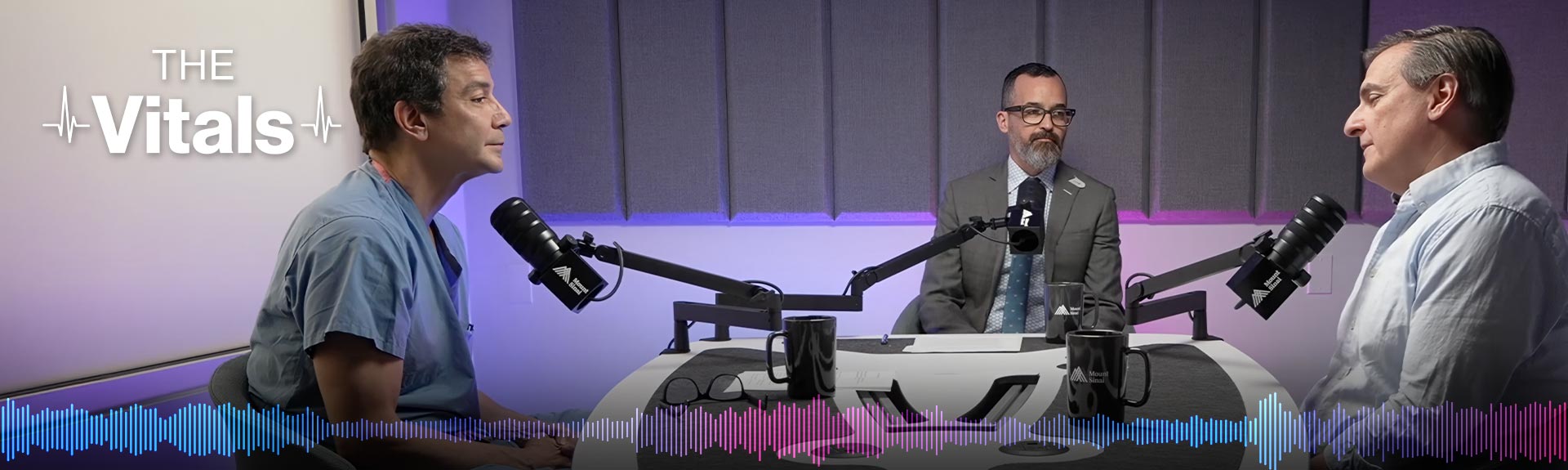
In this episode of The Vitals, guest host Raja Flores, MD, joins New York State Senator Michael Gianaris and Mount Sinai Queens President and COO Cameron Hernandez, MD, to celebrate the opening of a new advanced ICU at Mount Sinai Queens in Astoria.
The panel discusses how critical care has grown more complex over the last decade—including expanded services like cardiac catheterization and care for higher-acuity patients—requiring specialized nursing and new technologies.
Raja Flores: Hello, and welcome back to The Vitals, the Mount Sinai Health System's groundbreaking roundtable video podcast. I'm your host for this episode, Dr. Raja Flores, a thoracic surgeon here at Mount Sinai Hospital. On this episode, we're celebrating the opening of a new and advanced ICU at one of our hospitals, Mount Sinai Queens, located in the New York City neighborhood of Astoria, Queens.
The ICU was a coordinated effort between policymakers and folks here at Mount Sinai to improve community access to advanced high-quality care. To walk us through how they helped accomplish this for both Mount Sinai, the Queens community, and New Yorkers in general, we're joined by State Senator Michael Gianaris, who helped secure funding at the state level, and Dr.
Cameron Hernandez, the president and chief operating officer at Mount Sinai Queens. Gentlemen, welcome.[00:01:00]
Raja Flores: Dr. Hernandez, take us to the bedside. What does critical care demand today that it didn't 10, 15 years ago?
Cameron Hernandez: Well, especially in Queens, Mount Sinai Queens, the complexity. We did not have the complexity before, and nowadays, um, with the backing of the system, we've actually increased a lot more services at Queens so that we're not actually bringing patients into Manhattan anymore.
And by doing that, it has raised the level of complexity within the ICU, and that means, you know, really having, um, higher level of care of nurses, uh, to be able to do pre and post, you know, surgical procedures or bringing up patien- patients from the emergency room. You know, we built a cardiac catheterization lab, so now we're bringing in patients who have had major heart attacks, you know, otherwise known as STEMIs, um, up to the floors.