
Pioneering Ketamine Treatment for Depression

How did ketamine evolve from an anesthetic to one of the most important mental health treatment breakthroughs in decades?
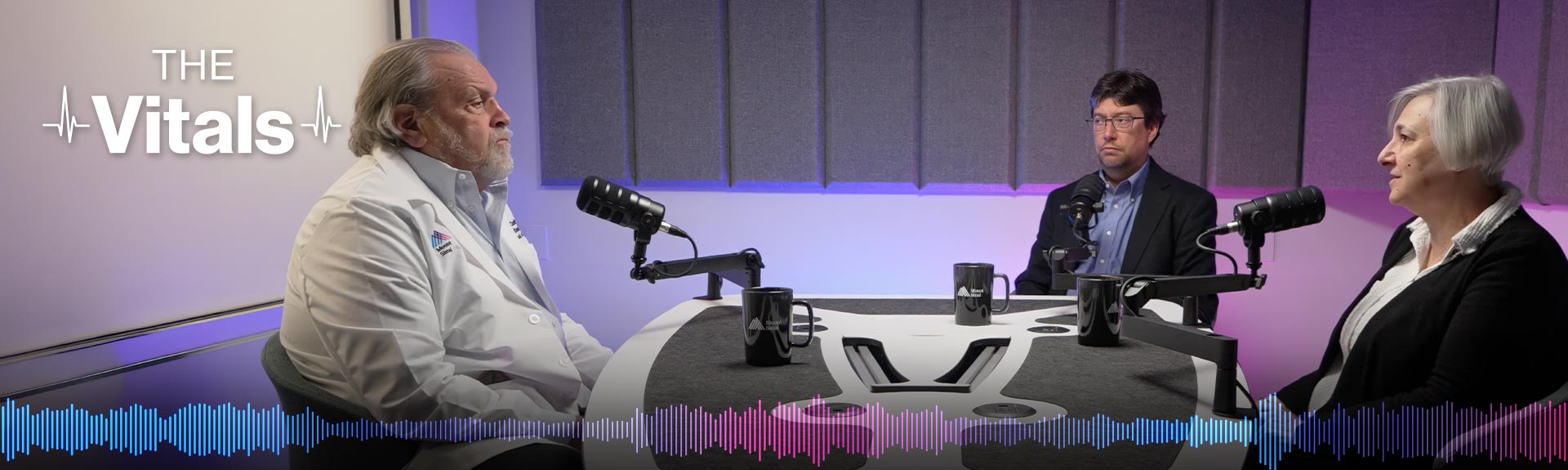
In this episode of The Vitals, guest host Dennis Charney, MD sits down with specialists, James Murrough , MD, PhD, and Adriana Feder, MD, to explore the science behind ketamine treatment for depression and PTSD—and why it may offer hope for patients who have not responded to traditional therapies.
The conversation traces the origins of ketamine research to the pioneering clinical work conducted at Mount Sinai. The doctors explain how ketamine differs from standard antidepressants, why it can work within hours instead of weeks, and how it is helping patients with treatment-resistant depression and suicidal thinking.
Dennis Charney: Hello, and welcome back to The Vitals, the Mount Sinai Health System's groundbreaking roundtable video podcast. I'm your guest host for the episode, Dr. Dennis Charney, a biological psychiatrist and former dean of the Icahn School of Medicine at Mount Sinai. The subject today of ketamine treatment for depression has received a lot of coverage in the media, often without attention paid to the little things, like science or data.
So questions pile up. How does ketamine work as an antidepressant? What is the research currently telling us? And what does the next generation of treatment look like? To walk us through all of this, we're joined by Doctors Adriana Feder and James Murrough, both professors of psychiatry here at the Mount Sinai Health System, and both at the forefront of research and treatment.
Welcome, James, and welcome, Adriana.
Adriana Feder: Good to be here.
Dennis Charney: Today we're gonna talk about ketamine, uh, which is a treatment for depression. Uh, in, in fact, it's, unquote, "the market" in which doctors can prescribe ketamine. It's called the Spravato.