
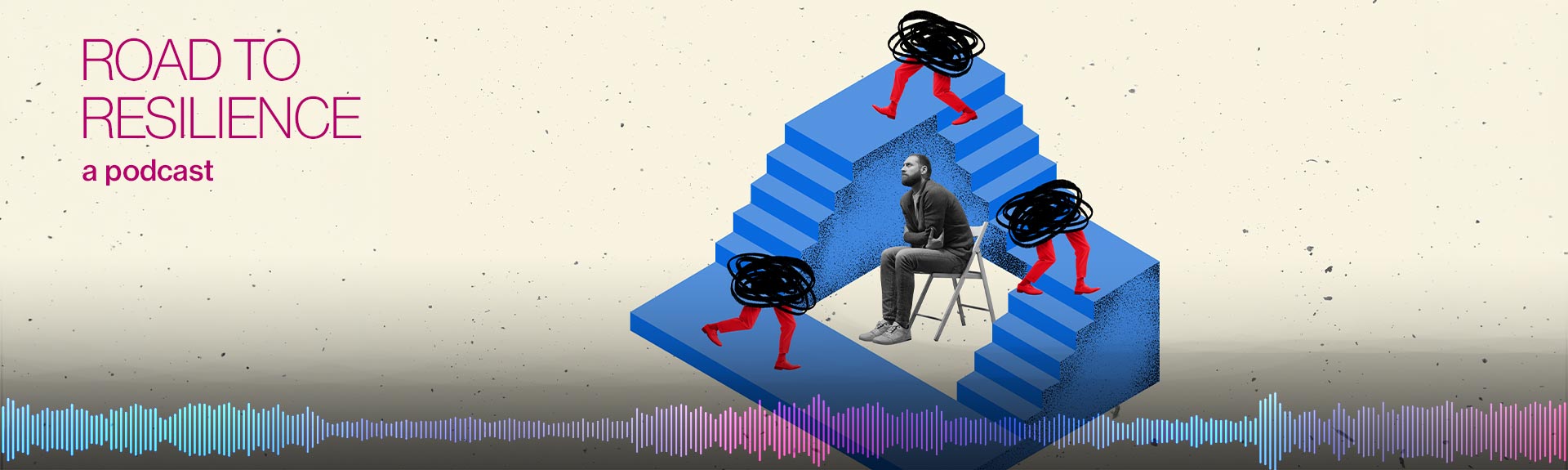
What Childhood Trauma Leaves Behind
Childhood trauma can leave lasting marks on the brain, body, and sense of safety—but it does not define a person’s future.
In this episode of Road to Resilience, host Stephen Calabria speaks with Frank W. Putnam, MD, one of the country’s leading researchers on childhood trauma and maltreatment. Drawing on decades of clinical work and a landmark longitudinal study that followed abused girls from childhood into adulthood, Dr. Putnam explains how early maltreatment can shape mental health, physical health, development, and even biological aging.
But the conversation is also about what helps people heal. Dr. Putnam discusses why safety is the foundation of recovery, how supportive relationships can change a child’s trajectory, and why resilience often begins with having options, stability, and someone who truly listens.
Stephen Calabria: From the Mount Sinai Health System in New York City, this is Road to Resilience, a podcast about facing adversity. I'm your host, Stephen Calabria, Mount Sinai's director of podcasting
On this episode, we welcome Frank W. Putnam, MD who's regarded as one of the foremost researchers and clinicians on the health effects of violence and abuse.
He is the co-author of a four-decade longitudinal study documenting the effects of childhood sexual abuse His new book titled Old Before Their Time: A Scientific Life Investigating How Maltreatment Harms Children and the Adults They Become, discusses the study's findings and how our society responds to maltreatment.
We're honored to welcome Dr. Frank Putnam to the show.
Dr. Frank Putnam, welcome to Road to Resilience.
Frank Putnam: Thank you very much for having me.
I'm looking forward to this discussion.
Stephen Calabria: Now your new book, Old Before Their Time, chronicles how childhood maltreatment affects development and adult health. What inspired you to take on this kind of long-term investigation, and what was your most surprising discovery along the way?
Frank Putnam: I was looking for children who had dissociative identity disorder because I'd been working with adults who had dissociative identity disorder at the National Institutes of Mental Health in Bethesda. And all of them told me that they had been really, essentially multiple since childhood. In fact, they never felt that they were ever integrated in any way.
And so I thought, if that's true, I should be able to find children with this disorder. I was circulating actually a profile and asking therapists, foster parents, other people who were dealing with children, particularly who had disturbed behavior if we could do a consultation on them.