
A New Era in Research and Treatment

Pancreatic cancer has long been considered one of the most difficult cancers to diagnose and treat. But as researchers learn more about the biology of the disease, advances in surgery, radiation, chemotherapy, targeted therapies and artificial intelligence are creating new possibilities for patients and families.
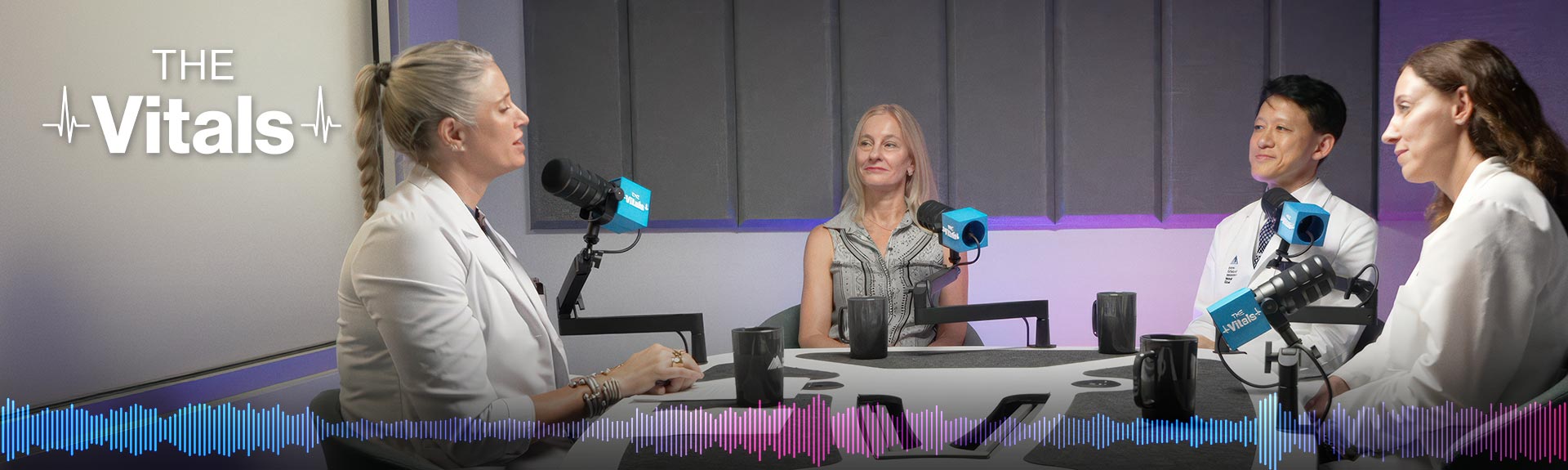
In this episode of The Vitals, host Leslie Schlachter is joined by three Mount Sinai experts to explore the changing landscape of pancreatic cancer care. They discuss why pancreatic cancer can be so difficult to detect, who may be at increased risk, and how multidisciplinary teams are changing the way patients are evaluated and treated.
The panel includes Dr. Deirdre Cohen, Associate Professor of Medicine and Medical Oncology; Dr. James Park, Associate Professor of Surgery and Surgical Oncology; and Dr. Karyn Goodman, Professor of Radiation Oncology and Medical Education, at the Icahn School of Medicine at Mount Sinai.
Leslie Schlachter: Hello, and welcome back to The Vitals, the Mount Sinai Health System show that brings you the latest in medical news, research, and innovation. I'm your host, Leslie Schlachter, a neurosurgery PA here at the Mount Sinai Hospital. Pancreatic cancer has long been considered one of the most difficult cancers to diagnose and treat.
But pancreatic cancer is also receiving more attention now more than ever. Cases are rising, researchers are learning more about the biology of the disease and new approaches to surgery, radiation, chemotherapy, and personalized treatment that are giving patients and families more options, and more reason for hope.
So why is pancreatic cancer becoming more common? Who may be at greater risk? And who are the specialists working together to improve outcomes for our patients? Joining us to answer these questions today are three experts who bring different perspectives to the treatment of pancreatic cancer. Dr.
Deirdre Cohen, Dr. James Park, and Dr. Karen Goodman. Thank you guys all for being here.
Leslie Schlachter: So before we get into, like, the [00:01:00] nitty-gritty about cancer and what's happening and treatments and all that, let's just start with, like, the basics. We'll start with you, the surgeon. What is the pancreas? Where is it? What does it do?
James Park: The pancreas serves two, uh, functions. Uh, one is an exocrine, uh, function, uh, where it, uh, forms and, uh, d- uh, delivers, uh, digestive enzymes.