
People With Long COVID Who Used a Noninvasive Magnetic Therapy Headset Show Improved Cognitive Function and Mood
Clinical trial led by Mount Sinai researchers showed sustained improvements in working memory, verbal learning, processing speed, and emotional well-being
A new study, led by researchers from the Icahn School of Medicine at Mount Sinai and published in Brain Communications, found that a transcranial low-amplitude magnetic field intervention delivered twice weekly into the brain through a non-invasive headset was associated with improvements in several measures of cognitive function and emotional well-being in people experiencing cognitive impairment associated with long COVID.
Importantly, the improvements seen among patients who received the therapy continued after the treatment period ended, providing early evidence that non-invasive biophysical approaches may warrant further study as potential treatments for persistent neurological symptoms of long COVID.
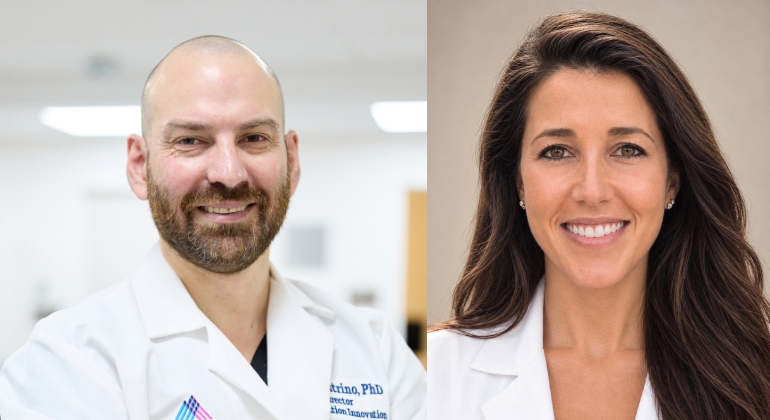
"Cognitive symptoms are among the most persistent and disabling manifestations of long COVID, yet evidence-based treatment options have been sparse,” said Jacqueline Becker, PhD, clinical neuropsychologist and Assistant Professor of Medicine at the Icahn School of Medicine at Mount Sinai and co-senior author of the study. “What is particularly encouraging about these findings is that we observed improvements across several cognitive domains, as well as in daily functioning and well-being, and that these improvements persisted even after treatment ended."
Long COVID, also known as post-acute sequelae of SARS-CoV-2 infection, can involve persistent symptoms affecting multiple organ systems. Cognitive impairment, often described by patients as “brain fog,” can include problems with attention, memory, processing speed, and executive function that can substantially affect function and quality of life. Evidence suggests that sustained neuroinflammation, cerebrovascular dysfunction, and mitochondrial impairment contribute to cognitive symptoms.
In this triple-blind pilot study, Mount Sinai researchers evaluated the feasibility and safety of Microtesla Magnetic Therapy (MMT), a proprietary investigational device developed by Fareon®, a clinical-stage biophysics company. While MMT has shown anti-inflammatory and neuroprotective effects in preclinical models, this was the first randomized controlled trial of MMT for long COVID cognitive impairment.
For this study, 30 participants with confirmed objective cognitive impairment from long COVID were randomized 2:1 to active or sham MMT. They all self-administered 15-minute sessions at home twice weekly for four weeks using a head-worn device that delivered either a nonthermal radio-frequency magnetic field to the whole brain or, for the sham group, no field. The sham devices looked and sounded identical. All patients were monitored remotely by the study team. Feasibility was defined as completing at least 80 percent of prescribed treatments and all study visits. Safety was assessed by adverse events. Cognitive function and self-reported mood and quality of life were exploratory outcomes assessed at baseline, week four (end of treatment), and week eight (follow-up).
At-home MMT was shown to be feasible, safe, and well tolerated in individuals with cognitive impairment from long COVID. Participants receiving the active treatment demonstrated improvements in measures of working memory, verbal learning, processing speed, and emotional well-being compared with those receiving the sham intervention.
Notably, the investigators observed continued improvement in several measures between the fourth week, when active treatment ended, and the eighth week of follow-up, suggesting that some of the observed changes may persist beyond the period of treatment. Further research is needed to determine how long the effects last and whether they translate into sustained improvements in everyday functioning.
“According to the Centers for Disease Control and Prevention, roughly 7 percent of Americans are experiencing symptoms related to long COVID, and a majority of these people report cognitive symptoms as amongst their most troubling and disabling symptoms. There is an urgent need to find answers and effective treatments for the hundreds of millions of people worldwide who are struggling with long COVID. This first-in-human study is a promising start for a completely novel therapy that is showing great potential,” said David Putrino, PhD, Nash Family Director of the Cohen Center for Recovery From Complex Chronic Illness at the Icahn School of Medicine at Mount Sinai and co-senior author of the study.
The researchers emphasize that the therapy remains investigational, noting that while the study provides evidence of potential cognitive and mood effects, it does not establish the therapy as an approved treatment for long COVID.
The findings add to a growing body of research into the biological mechanisms underlying persistent neurological symptoms after SARS-CoV-2 infection and the development of treatments for people who continue to experience cognitive impairment after the acute phase of COVID-19.
Future studies are needed to replicate the findings in larger populations, further evaluate the durability of the cognitive and mood changes, and investigate the biological mechanisms through which noninvasive magnetic field therapy may affect brain function in people with long COVID.
The research team plans to build on these findings in a larger trial that will also examine the biological mechanisms behind the observed changes.
About the Mount Sinai Health System
Mount Sinai Health System is one of the nation’s leading integrated academic health systems and one of the largest in the New York metropolitan area. Its comprehensive system includes seven hospitals, more than 400 outpatient practices, over 600 research and clinical laboratories, the Icahn School of Medicine at Mount Sinai, the Graduate School of Biomedical Sciences, and the Mount Sinai Phillips School of Nursing. Together, the Health System comprises approximately 48,000 employees, more than 9,000 physicians, and 8,600 nurses.
As a leading learning health system, Mount Sinai combines clinical expertise with scientific discovery to improve patient care while training the next generation of health care and biomedical leaders. The Health System provides care across every stage of life, from prenatal care through geriatrics, while advancing personalized medicine through artificial intelligence, data science, and biomedical research.
Mount Sinai is consistently recognized among the nation’s leading academic health systems for patient care, research, and education. The Mount Sinai Hospital is ranked No. 1 in New York by Newsweek and No. 5 on the magazine’s World’s Best Hospitals list. The Icahn School of Medicine at Mount Sinai ranks No. 11 among U.S. medical schools and No. 1 among freestanding medical schools for National Institutes of Health funding, reflecting the strength of its scientific enterprise and leadership in biomedical research.