
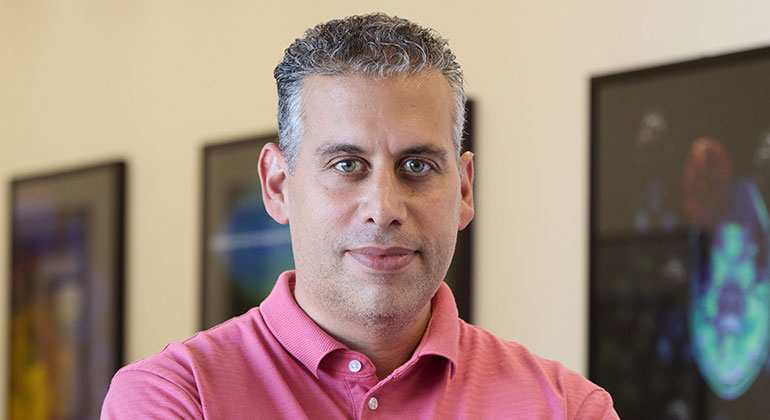
Scott J. Russo, PhD, Appointed Chair of the Nash Family Department of Neuroscience
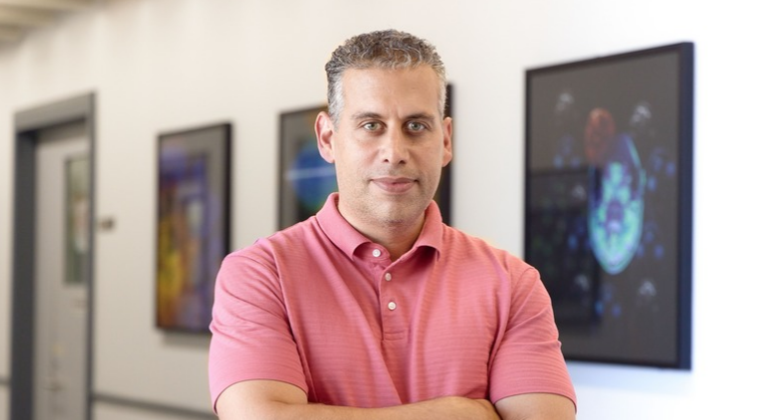
Credit: Mount Sinai Health System
Scott J. Russo, PhD, has been appointed Chair of the Nash Family Department of Neuroscience at the Icahn School of Medicine at Mount Sinai. Dr. Russo will also continue to serve as the Leon Levy Director of the Brain-Body Research Institute, where he leads interdisciplinary research into the complex connections among the brain, immune system, and body in health and disease.
“Dr. Russo is an accomplished neuroscientist and an exceptional scientific leader whose work has helped transform our understanding of how the brain interacts with the immune system and peripheral organs to influence behavior and mental health,” says Eric J. Nestler, MD, PhD, Anne and Joel Ehrenkranz Dean of the Icahn School of Medicine. “I have every confidence that his academic rigor and leadership skills will serve him and our faculty well as he takes on this new role.”
“Scott’s vision for neuroscience is deeply collaborative and interdisciplinary, making him ideally positioned to lead the Nash Family Department of Neuroscience as we continue to advance fundamental discoveries and translate them into new approaches to preventing and treating brain disorders,” says Paul Kenny, PhD, Director of The Friedman Brain Institute and outgoing Chair of the Department of Neuroscience.
Since joining Mount Sinai in 2008, Dr. Russo has built an internationally recognized research program focused on the neural and immunological mechanisms underlying neuropsychiatric disorders, including depression and post-traumatic stress disorder. His research has helped broaden the understanding of these conditions by demonstrating how interactions between the brain and peripheral systems throughout the body can influence complex behaviors and contribute to disease.
His laboratory has investigated how changes in peripheral immunity can affect brain function and behaviors associated with psychiatric illness, as well as the neural circuits that regulate social behavior and the ways traumatic social experiences can influence both mental and physical health. This work has contributed to the identification and evaluation of potential therapeutic targets for depression and related disorders.
As Director of the Brain-Body Research Institute, Dr. Russo leads a multidisciplinary effort focused on understanding the bidirectional communication between the brain and the body. The institute grew out of the Brain and Body Research Center, which Dr. Russo helped establish in 2021, bringing together scientists from across disciplines to investigate how interactions between neural, immune, metabolic, and other peripheral systems contribute to health and disease.
“Neuroscience is increasingly revealing that the brain cannot be understood in isolation from the rest of the body,” says Dr. Russo. “I am honored to lead the Nash Family Department of Neuroscience and to continue building on the extraordinary work of our faculty, trainees, and staff. “We have an opportunity to transform neuroscience research by building sustained collaborations between basic and clinical neuroscience, and advancing fundamental discoveries to improve the lives of people living with neurological and psychiatric disorders.”
In addition to his ongoing research, Dr. Russo is committed to educating and mentoring the next generation of neuroscientists. He leads a National Institutes of Health-funded training program in social neuroscience and mentors doctoral students, postdoctoral fellows, and other trainees across disciplines.
Dr. Russo received his PhD in Psychology from the City University of New York in 2003 and completed postdoctoral training in Psychiatry and Psychology at UT Southwestern Medical Center before joining Mount Sinai.
About the Icahn School of Medicine at Mount Sinai
The Icahn School of Medicine at Mount Sinai is internationally renowned for its outstanding research, educational, and clinical care programs. It is the sole academic partner for the seven member hospitals* of the Mount Sinai Health System, one of the largest academic health systems in the United States, providing care to New York City’s large and diverse patient population.
The Icahn School of Medicine at Mount Sinai offers highly competitive MD, PhD, MD-PhD, and master’s degree programs, with enrollment of more than 1,200 students. It has the largest graduate medical education program in the country, with more than 2,700 clinical residents and fellows training throughout the Health System. The Graduate School of Biomedical Sciences offers 12 degree-granting programs, conducts innovative basic and translational research, and trains more than 470 postdoctoral research fellows.
Ranked 11th nationwide in National Institutes of Health (NIH) funding, the Icahn School of Medicine at Mount Sinai is among the 90th percentile of U.S. private medical schools in Sponsored Programs Direct Expenditures per Principal Investigator, according to the Association of American Medical Colleges. More than 6,900 scientists, educators, and clinicians work within and across dozens of academic departments and multidisciplinary institutes with an emphasis on translational research and therapeutics. Through Mount Sinai Innovation Partners (MSIP), the Health System facilitates the real-world application and commercialization of medical breakthroughs made at Mount Sinai.
-------------------------------------------------------
* Mount Sinai Health System member hospitals: The Mount Sinai Hospital; Mount Sinai Brooklyn; Mount Sinai Morningside; Mount Sinai Queens; Mount Sinai South Nassau; Mount Sinai West; and New York Eye and Ear Infirmary of Mount Sinai.
About the Mount Sinai Health System
Mount Sinai Health System is one of the nation’s leading integrated academic health systems and one of the largest in the New York metropolitan area. Its comprehensive system includes seven hospitals, more than 400 outpatient practices, over 600 research and clinical laboratories, the Icahn School of Medicine at Mount Sinai, the Graduate School of Biomedical Sciences, and the Mount Sinai Phillips School of Nursing. Together, the Health System comprises approximately 48,000 employees, more than 9,000 physicians, and 8,600 nurses.
As a leading learning health system, Mount Sinai combines clinical expertise with scientific discovery to improve patient care while training the next generation of health care and biomedical leaders. The Health System provides care across every stage of life, from prenatal care through geriatrics, while advancing personalized medicine through artificial intelligence, data science, and biomedical research.
Mount Sinai is consistently recognized among the nation’s leading academic health systems for patient care, research, and education. The Mount Sinai Hospital is ranked No. 1 in New York by Newsweek and No. 5 on the magazine’s World’s Best Hospitals list. The Icahn School of Medicine at Mount Sinai ranks No. 11 among U.S. medical schools and No. 1 among freestanding medical schools for National Institutes of Health funding, reflecting the strength of its scientific enterprise and leadership in biomedical research.


Mount Sinai Launches Neural Epigenomics Research Center
May 23, 2022 View All Press Releases
Mount Sinai Neurobiologist Selected as a Howard Hughes Medical Institute Investigator
Sep 23, 2021 View All Press Releases