
Mount Sinai Launches the Brain and Body Research Center, Among the First in the U.S.to Focus Solely on How the Brain and Body Interact
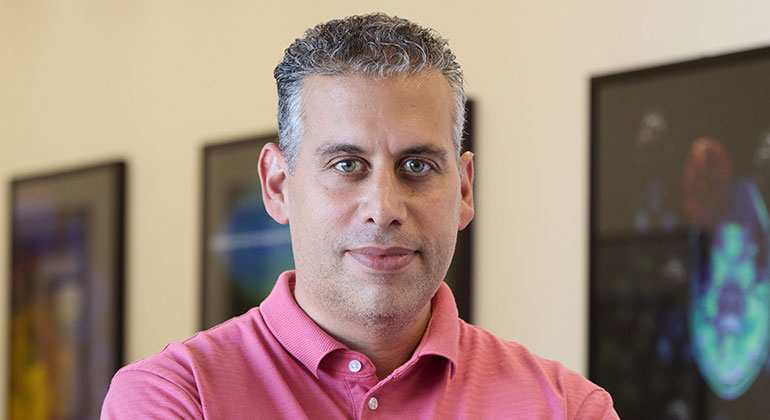
Have you ever experienced a stressful time in your life and then caught a cold, or wondered why you feel sad and depressed when you’re sick? It turns out that it’s not all in your head.
Recent research spanning the fields of neuroscience and immunology suggests that when the brain senses a threat in the environment—whether it be physical, psychological, or social—it sends signals via a complex network of peripheral nerves that mobilize the immune system, readying it to protect us from injury. While critical for survival, when this brain-mediated activation of the immune system is excessive and prolonged, it can lead to or aggravate a variety of illnesses including depression, cardiovascular disease, diabetes, and dermatitis, among many others.
To harness a deeper understanding of how these connections between the brain and peripheral organ systems can affect a person’s health, the Icahn School of Medicine at Mount Sinai has launched the Brain and Body Research Center. Under the direction of Scott J. Russo, PhD, Mount Sinai Professor of Neuroscience and Psychiatry and Director of the Center for Affective Neuroscience at Mount Sinai, the Brain and Body Research Center brings together researchers from across multiple departments, centers, and institutes within the Mount Sinai Health System including the Biomedical Engineering and Imaging Institute; the Cardiovascular Research Institute; the Departments of Dermatology, Neurology, and Psychiatry; the Depression and Anxiety Center for Discovery and Treatment; The Friedman Brain Institute; the Mount Sinai Bone Program; the Nash Family Department of Neuroscience; and the Precision Immunology Institute.
“Researchers within our Mount Sinai Health System are already conducting groundbreaking work into the bidirectional connections between the brain and body and are supported by a diverse portfolio of National Institutes of Health grants, which allow us to tap into the broad range of expertise that spans many scientific and medical disciplines on our campuses,” said Dr. Russo. “Through the Center, an intentional and pointed multidisciplinary approach will influence research areas to collaborate in a meaningful way to drive breakthroughs in this emerging field of study.”
Like the brain-body connection, the Center’s overall strategy is also bidirectional: research teams perform trials in patients to identify disease mechanisms and then use preclinical models to dissect the complex ways in which the brain and body interact with one another. These insights are then brought back to patients to perform cutting-edge clinical trials for development of novel, precision treatments targeted to the right individuals.
The interactions between the nervous system and immune system are representative of the brain’s reciprocal connections with all other organs in the body. For example, the food we eat affects the gut microbiome, which affects both the immune and nervous systems. Additionally, stress-related illnesses like major depressive disorder and anxiety disorders are leading causes of disability throughout the world. Both are highly prevalent in patients with cardiovascular disease, irritable bowel syndrome, dermatitis, and diabetes, and can aggravate symptoms.
“Mount Sinai is at the forefront of this burgeoning field of biomedical research and clinical medicine,” said Eric J. Nestler, MD, PhD, Dean for Academic and Scientific Affairs, Nash Family Professor of Neuroscience, and Director of The Friedman Brain Institute. “Our researchers bring decades of research and expertise in their respective specialties to this intensely collaborative effort, enabling the Brain and Body Research Center to drive the mission of harnessing brain-body connections to conquer the most impactful diseases of our time.”
For specific details on the Center’s current research projects, please visit: https://icahn.mssm.edu/research/brain-and-body/research
About the Mount Sinai Health System
Mount Sinai Health System is one of the nation’s leading integrated academic health systems and one of the largest in the New York metropolitan area. Its comprehensive system includes seven hospitals, more than 400 outpatient practices, over 600 research and clinical laboratories, the Icahn School of Medicine at Mount Sinai, the Graduate School of Biomedical Sciences, and the Mount Sinai Phillips School of Nursing. Together, the Health System comprises approximately 48,000 employees, more than 9,000 physicians, and 8,600 nurses.
As a leading learning health system, Mount Sinai combines clinical expertise with scientific discovery to improve patient care while training the next generation of health care and biomedical leaders. The Health System provides care across every stage of life, from prenatal care through geriatrics, while advancing personalized medicine through artificial intelligence, data science, and biomedical research.
Mount Sinai is consistently recognized among the nation’s leading academic health systems for patient care, research, and education. The Mount Sinai Hospital is ranked No. 1 in New York by Newsweek and No. 5 on the magazine’s World’s Best Hospitals list. The Icahn School of Medicine at Mount Sinai ranks No. 11 among U.S. medical schools and No. 1 among freestanding medical schools for National Institutes of Health funding, reflecting the strength of its scientific enterprise and leadership in biomedical research.

Eva A. Mistry, MBBS, MSCI, FAHA, Appointed Mount Sinai Health System Chair of Neurology
Sep 09, 2026 View All Press Releases



Mount Sinai Neurobiologist Selected as a Howard Hughes Medical Institute Investigator
Sep 23, 2021 View All Press Releases