Nine Studies Led By Mount Sinai Investigators Featured in Coordinated Collection of Papers That Map the Molecular and Cellular Architecture of Brain Disorders
Large-scale studies across the Nature journals create one of the world’s most comprehensive single-cell atlases of Alzheimer’s disease and related neuropsychiatric conditions
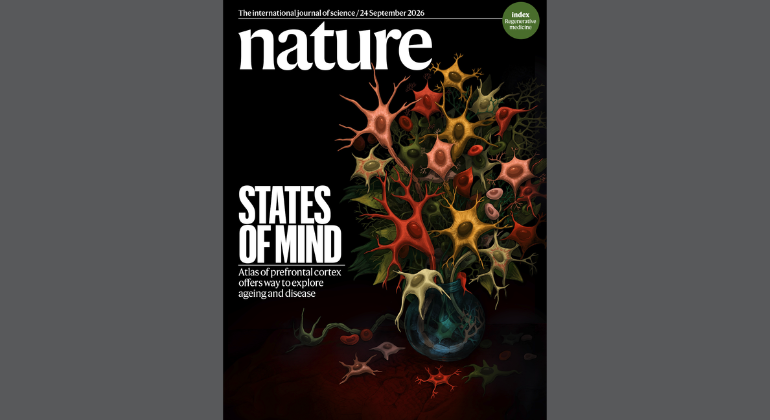
Nature cover image; Credit: Nature
Research led by Mount Sinai scientists within the PsychAD Consortium, a large-scale, multidisciplinary initiative launched in 2019 with support from the National Institute on Aging (NIA), is featured in a landmark collection of nine papers published across the Nature family of journals that maps the molecular mechanisms underlying Alzheimer’s disease, Parkinson’s disease, schizophrenia, and other brain disorders.
The coordinated package includes three papers in Nature, three in Nature Communications, and one each in Nature Medicine, Nature Genetics, and Scientific Data. Together, these studies represent one of the largest and most comprehensive applications of single-cell genomics to human brain disease research and establish foundational resources expected to accelerate discovery across neuroscience.
The PsychAD Consortium brings together investigators from across the United States and around the world to better understand the biological mechanisms underlying Alzheimer’s disease and related neuropsychiatric disorders. By studying human brain tissue at unprecedented scale and single-cell resolution, researchers have identified both shared and disease-specific molecular changes that contribute to neurodegeneration, psychiatric illness, and cognitive decline.
“Until now, efforts to apply single-cell technology in psychiatry have been relatively small-scale or just focused on individual diseases,” said Panos Roussos, MD, PhD, Mount Sinai Professor of Translational Psychiatry at the Icahn School of Medicine at Mount Sinai, Director of the Center for Disease Neurogenomics, and Contact Principal Investigator of the PsychAD Consortium. “No one has systematically examined how molecular mechanisms overlap across different brain disorders at this scale.”
“By describing the genetic and cellular architecture across many brain disorders, we have started building a pathway toward new treatment targets and the next generation of therapies for these diseases,” added Dr. Roussos, who also serves as Director of the Center for Precision Medicine and Translational Therapeutics at the James J. Peters VA Medical Center in the Bronx.
“This extraordinary collection of studies reflects the scale of the scientific collaboration and discovery that the PsychAD Consortium has made possible,” said Eric J. Nestler, MD, PhD, Anne and Joel Ehrenkranz Dean, Icahn School of Medicine at Mount Sinai. “We are particularly proud to see so many Mount Sinai investigators playing leading roles across this coordinated body of work, which brings together data from thousands of human brains and millions of individual cells. Truly a tour de force of modern neuroscience, these studies demonstrate how large-scale, collaborative approaches can deepen our understanding of the biological mechanisms underlying brain disorders and create valuable resources for the broader scientific community.”
Building the Largest Cross-Disorder Atlas of the Human Brain
At the center of the collection is a landmark Nature study that generated a population-scale single-cell atlas of the human dorsolateral prefrontal cortex using more than 6.3 million cell nuclei from 1,494 human donors spanning Alzheimer’s disease, Parkinson’s disease, Lewy body disease, vascular dementia, schizophrenia, bipolar disorder, and neurotypical controls.
The study identified both shared and disease-specific molecular programs across neuronal, glial, immune, and vascular cell types and defined cellular trajectories associated with disease progression and neuropsychiatric symptoms.
"By analyzing millions of cells across multiple brain disorders, we found that many diseases share common molecular pathways while also exhibiting distinct cellular signatures," said Donghoon Lee, PhD, Assistant Professor of Psychiatry, and Genetics and Genomic Sciences, at the Icahn School of Medicine at Mount Sinai, and first and co-corresponding author of the Nature study. "These findings provide a framework for understanding why different neurological and psychiatric disorders converge on similar biological processes while maintaining distinct disease-specific features."
The atlas establishes one of the largest single-cell datasets ever assembled for human brain disease research, providing investigators worldwide with a foundational resource for understanding how cellular and molecular mechanisms contribute to neurological and psychiatric disease.
“Our goal is for this resource to accelerate the development of targeted therapies by helping researchers better understand the molecular complexity underlying brain disorders,” added Dr. Lee.
Revealing the Genetic Architecture of Brain Disease
Two complementary studies demonstrate how inherited genetic risk influences brain function at the cellular level.
In a second Nature paper, investigators used the PsychAD Consortium’s single-nucleus dataset to connect genetic risk for brain disorders with specific brain cell types, genes, and biological pathways. The study’s multiancestry models predicted genetically regulated gene expression and identified disease-associated mechanisms that are often missed when analyzing bulk brain tissue.
"Large genetic studies have identified thousands of risk variants for brain disorders, but they often provide limited insight into how those variants influence disease," said Georgios Voloudakis, MD, PhD, Associate Professor of Psychiatry, Genetics and Genomic Sciences, and Artificial Intelligence and Human Health, at the Icahn School of Medicine at Mount Sinai, and co-senior author of this Nature study. "By integrating single-nucleus brain data with human genetics, we can translate broad genetic risk into specific changes in gene activity, helping identify the cell types, genes, and biological pathways that may become future therapeutic targets."
A companion study in Nature Genetics generated a comprehensive atlas of cell-type-specific genetic regulation across the human prefrontal cortex, identifying thousands of expression quantitative trait loci (eQTLs) and uncovering regulatory mechanisms associated with neurodegenerative and psychiatric disorders.
"Gene regulation is highly cell-type specific," said Biao Zeng, PhD, Instructor of Psychiatry, and Genetics and Genomic Sciences, at the Icahn School of Medicine at Mount Sinai, and first author of the Nature Genetics study. "By mapping regulatory variation at single-cell resolution, we created a resource that helps explain how inherited genetic differences influence brain function and disease risk."
Together, these studies create an important bridge between inherited genetic risk and the specific brain cells and biological processes through which those genetic differences influence disease.
Advancing Precision Medicine for Alzheimer’s Disease
Several papers in the collection advance understanding of why Alzheimer’s disease progresses differently among individuals, providing new insights that may inform future precision medicine strategies.
A Nature Medicine study introduces PASCode, an artificial intelligence framework developed by the research team to identify cell states associated with Alzheimer’s disease pathology, cognitive decline, resilience, and neuropsychiatric symptoms. By analyzing more than 6 million cell nuclei, investigators identified cellular populations and molecular pathways associated with clinically important features of the disease, including depression and cognitive impairment.
A complementary Nature Communications study presents a personalized functional genomics framework that models donor-specific molecular networks at single-cell resolution. The findings reveal substantial biological diversity among individuals with Alzheimer’s disease and identify patient-specific molecular pathways associated with neurodegeneration.
Together, these studies represent an important step toward precision medicine by moving beyond average disease signatures to better understand the biological differences among individual patients.
"One of the central challenges in Alzheimer's disease research is that patients with similar clinical diagnoses can have very different underlying biology," said Dr. Roussos. "Rather than focusing only on average disease signatures, these studies begin to define the molecular diversity of Alzheimer's disease at the individual patient level, creating a foundation for future biomarker discovery and precision therapeutics."
Understanding Brain Aging Across the Lifespan
A third Nature study generated the first population-scale single-cell transcriptomic atlas of the human dorsolateral prefrontal cortex, a brain region essential for higher cognitive functions such as decision-making, planning, and working memory, across the human lifespan, profiling more than 1.3 million brain cells from 284 neurotypical donors ranging from infancy through age 97.
The study revealed that the brain follows three distinct molecular phases across the lifespan: rapid cellular remodeling during early development, a prolonged period of relative stability through middle adulthood, and a wave of molecular changes beginning around age 60 that is driven largely by glial support cells. Investigators also identified age 24 as an unexpected inflection point after which the brain's cellular composition becomes largely stable.
Among the study’s most significant discoveries was evidence that the brain's circadian biology changes substantially with age.
“In young and middle-aged adults, neurons exhibit tightly coordinated 24-hour rhythms governed by core circadian clock genes. After age 60, those neuronal rhythms largely disappear, while the brain's immune cells acquire new rhythmic activity associated with cellular stress and inflammation. The brain does not simply stop keeping time—it changes what it is timing,” said Kiran Girdhar, PhD, Assistant Professor of Psychiatry, and Genetics and Genomic Sciences, at the Icahn School of Medicine at Mount Sinai, and co-senior author of this study.
The atlas also identifies periods during which the brain may be more susceptible to disease. Genes associated with schizophrenia and bipolar disorder are most active during early development, long before symptoms appear, while Alzheimer's disease-associated genes are predominantly expressed in aging glial cells, highlighting late-life immune reprogramming as a potential contributor to neurodegeneration.
“This atlas provides an essential reference for understanding healthy brain aging at the molecular level,” said Dr. Girdhar. “That reference will help researchers determine when and where disease processes begin to diverge from normal biology.”
Developing the Next Generation of Computational Tools
The scale of modern single-cell datasets presents significant computational and statistical challenges. To address them, PsychAD Consortium investigators developed two analytical frameworks, both of which are published in Nature Communications, that enable researchers to analyze population-scale datasets with greater accuracy and efficiency.
The first, dreamlet, provides an efficient and statistically robust framework for differential expression analysis across population-scale single-cell datasets containing millions of cells.
"The scale of modern single-cell studies demands new statistical approaches," said Gabriel Hoffman, PhD, Associate Professor of Psychiatry, and Genetics and Genomic Sciences, at the Icahn School of Medicine at Mount Sinai, and first author of the dreamlet study. "dreamlet was designed to provide rigorous and efficient analysis of datasets containing millions of cells and thousands of individuals."
The second, crumblr, provides a scalable framework for analyzing disease-associated changes in cellular composition while accounting for complex biological relationships and variation across study cohorts.
"Changes in cellular composition are fundamental features of many diseases," said Dr. Hoffman. "crumblr enables researchers to measure these changes more accurately and at a scale that was previously difficult to achieve."
Together, these computational tools provide investigators with scalable methods for extracting reliable biological insights from increasingly large studies of aging, neurodegeneration, and psychiatric disorders.
A Resource for the Scientific Community
Central to the PsychAD mission is to create openly available scientific resources that accelerate discovery across neuroscience. An accompanying Scientific Data publication describes the consortium’s harmonized single-cell atlas, including cohort design, metadata harmonization, quality control methods, and standardized analytical pipelines derived from more than 1,400 human brain donors.
By making these datasets and analytical resources publicly available, the consortium aims to enable researchers around the world to accelerate discoveries in aging, neurodegeneration, psychiatry, and human brain biology.
“This collection demonstrates the power of collaborative science and the importance of studying human brain tissue at unprecedented scale,” said John Fullard, PhD, Associate Professor of Psychiatry, and Genetics and Genomic Sciences, at the Icahn School of Medicine at Mount Sinai, and first author of the study.
“By bringing together large patient cohorts, advanced single-cell technologies, artificial intelligence, and computational genomics, we are creating a scientific foundation that will help drive the next generation of discoveries in brain disorders,” said Jaroslav Bendl, PhD, Assistant Professor of Psychiatry, and Genetics and Genomic Sciences, at the Icahn School of Medicine at Mount Sinai, and co-senior author of the study.
Future Directions for PsychAD
Multiple studies are already exploring insights from this first wave of data, while the consortium continues expanding the scope of its research.
“With approximately 1,500 human brains, this represents the largest single-cell analysis of the human brain performed to date. But it is only the beginning,” Dr. Roussos said.
With new funding from the NIA and the National Institute of Neurological Disorders and Stroke, Dr. Roussos and his colleagues plan to integrate and harmonize available single-cell datasets from across the field.
“Our goal is to build a resource representing approximately 10,000 individuals,” he said. “By harmonizing these data, we will gain a much deeper understanding of the molecular and genetic architecture underlying brain disorders.”
At Mount Sinai, investigators have already begun translating these discoveries into new therapeutic research. Using a robotic screening platform capable of evaluating more than 1,000 potential drug candidates each week, researchers are testing compounds that target molecular changes identified through the PsychAD Consortium's work.
These efforts represent an important step toward translating large-scale genomic discoveries into future therapies for neurological and psychiatric disorders.
References:
Lee D, et al. Single-cell atlas of transcriptomic vulnerability across multiple neurodegenerative and neuropsychiatric diseases. Nature. 2026. DOI: 10.1038/s41586-025-09573-z
He C, et al. AI-based Characterization of Alzheimer’s Disease Phenotypes from Population Scale Single Cell Data. Nature Medicine. 2026. DOI: 10.1038/s41591-025-04128-1
Chandrashekar PB, et al. Personalized Single-Cell Transcriptomics Reveals Molecular Diversity in Alzheimer's Disease. Nature Communications. 2026. DOI: 10.1038/S41467-026-72310-1
Venkatesh S, et al. Single-nucleus transcriptome-wide association study of human brain disorders. Nature. 2026. DOI: 10.1038/s41586-026-10836-6
Zeng B, et al. Single-Nucleus Atlas of Cell-Type Specific Genetic Regulation in the Human Brain. Nature Genetics. 2026. DOI: 10.1038/s41588-026-02733-5
Yang H, et al. Lifespan single-cell transcriptomic atlas of the human prefrontal cortex. Nature. 2026. DOI: 10.1038/s41586-026-10271-7
Hoffman G, et al. Fast, flexible analysis of differences in cellular composition with crumblr. Nature Communications. 2026. DOI: 10.1038/s41467-026-75681-7
Hoffman G, et al. Efficient differential expression analysis of large-scale single cell transcriptomics data using dreamlet. Nature Communications. 2026. DOI: 10.1038/s41467-026-75680-8
Fullard J, et al. Population-scale cross-disorder atlas of the human prefrontal cortex at single-cell resolution. Scientific Data. 2026. DOI: 10.1038/s41597-025-04687-5
About the Icahn School of Medicine at Mount Sinai
The Icahn School of Medicine at Mount Sinai is internationally renowned for its outstanding research, educational, and clinical care programs. It is the sole academic partner for the seven member hospitals* of the Mount Sinai Health System, one of the largest academic health systems in the United States, providing care to New York City’s large and diverse patient population.
The Icahn School of Medicine at Mount Sinai offers highly competitive MD, PhD, MD-PhD, and master’s degree programs, with enrollment of more than 1,200 students. It has the largest graduate medical education program in the country, with more than 2,700 clinical residents and fellows training throughout the Health System. The Graduate School of Biomedical Sciences offers 12 degree-granting programs, conducts innovative basic and translational research, and trains more than 470 postdoctoral research fellows.
Ranked 11th nationwide in National Institutes of Health (NIH) funding, the Icahn School of Medicine at Mount Sinai is among the 90th percentile of U.S. private medical schools in Sponsored Programs Direct Expenditures per Principal Investigator, according to the Association of American Medical Colleges. More than 6,900 scientists, educators, and clinicians work within and across dozens of academic departments and multidisciplinary institutes with an emphasis on translational research and therapeutics. Through Mount Sinai Innovation Partners (MSIP), the Health System facilitates the real-world application and commercialization of medical breakthroughs made at Mount Sinai.
-------------------------------------------------------
* Mount Sinai Health System member hospitals: The Mount Sinai Hospital; Mount Sinai Brooklyn; Mount Sinai Morningside; Mount Sinai Queens; Mount Sinai South Nassau; Mount Sinai West; and New York Eye and Ear Infirmary of Mount Sinai.
About the Mount Sinai Health System
Mount Sinai Health System is one of the nation’s leading integrated academic health systems and one of the largest in the New York metropolitan area. Its comprehensive system includes seven hospitals, more than 400 outpatient practices, over 600 research and clinical laboratories, the Icahn School of Medicine at Mount Sinai, the Graduate School of Biomedical Sciences, and the Mount Sinai Phillips School of Nursing. Together, the Health System comprises approximately 48,000 employees, more than 9,000 physicians, and 8,600 nurses.
As a leading learning health system, Mount Sinai combines clinical expertise with scientific discovery to improve patient care while training the next generation of health care and biomedical leaders. The Health System provides care across every stage of life, from prenatal care through geriatrics, while advancing personalized medicine through artificial intelligence, data science, and biomedical research.
Mount Sinai is consistently recognized among the nation’s leading academic health systems for patient care, research, and education. The Mount Sinai Hospital is ranked No. 1 in New York by Newsweek and No. 5 on the magazine’s World’s Best Hospitals list. The Icahn School of Medicine at Mount Sinai ranks No. 11 among U.S. medical schools and No. 1 among freestanding medical schools for National Institutes of Health funding, reflecting the strength of its scientific enterprise and leadership in biomedical research.