
Two Leading Mount Sinai Brain Scientists Elected to the National Academy of Medicine
Highest honor recognizing outstanding contributions to medicine
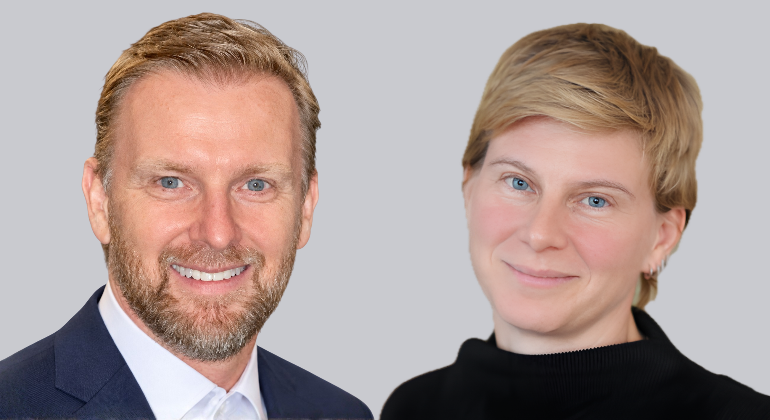
Paul J. Kenny, PhD, Nash Family Professor of Neuroscience, and Director of The Friedman Brain Institute at Mount Sinai, and Anne Schaefer, MD, PhD, Professor of Neuroscience and Psychiatry at the Icahn School of Medicine at Mount Sinai, and Director at the Max Planck Institute for Biology of Ageing in Cologne, Germany, have been elected to the National Academy of Medicine (NAM).
Election to the NAM is considered one of the highest honors in health and medicine, recognizing individuals who have demonstrated outstanding professional achievement and commitment to service. With their election, Mount Sinai has 29 faculty members in the National Academies of Medicine and/or Sciences.
“Drs. Kenny and Schaefer have made outstanding contributions to biomedical sciences and to mentoring the next generation of investigators,” says Eric J. Nestler, MD, PhD, Anne and Joel Ehrenkranz Dean of the Icahn School of Medicine at Mount Sinai. “Their achievements reflect the scientific excellence and collaborative spirit that define our institution and its particular strength within the neurosciences as exemplified by the Nash Family Department of Neuroscience and The Friedman Brain Institute. We congratulate them both on this very well-deserved and most esteemed recognition.”
Dr. Kenny is an internationally recognized expert in the study of the neurobiology of drug addiction, obesity, and schizophrenia. He and his research team study how brain circuits regulate reward, aversion, and responses to threat, and how brain-body signaling links addiction to metabolic disorders. His team’s multidisciplinary approach combines behavioral pharmacology, electrophysiology, circuit-level neuroanatomy, single-cell and spatial transcriptomics, and molecular biology, with the goal of identifying new therapeutic targets for neuropsychiatric and metabolic disorders.
Among Dr. Kenny’s many accomplishments are pioneering studies that were among the first to link GLP-1 receptor signaling to addiction-related brain processes, opening new avenues for therapeutic intervention. His laboratory revealed how highly processed foods alter brain reward circuits to promote compulsive eating and weight gain. His team has also helped explain how genetic variants associated with vulnerability to addiction alter the brain’s responses to drugs. Building on these discoveries, Dr. Kenny has made translating fundamental neuroscience into new treatments a central focus of his work. He co-founded Eolas Therapeutics, Inc., a biotechnology company developing new treatments for substance use disorders.
Dr. Schaefer is an internationally renowned neuroscientist recognized for her outstanding achievements in the life sciences. Her research focuses on identifying the mechanisms of brain aging and neurodegeneration, with a particular emphasis on microglia—the brain’s innate immune cells—in the regulation of neuronal function and survival. She proposes that neuronal homeostasis, the brain's ability to maintain a healthy and stable environment for nerve cells (neurons), depends on phenotypic matching between neurons and microglia, meaning these two cell types are aligned in how they function and respond to their environment. And a mismatch between functional states of these two cell types leads to inflammation and neurodegeneration.
Among the many ways Dr. Schaefer has made a lasting impact in the field, she and her research team identified neuromodulatory functions of microglia—the ways they help regulate and influence how brain cells communicate and function. Her most recent studies have focused on microglia subpopulations that can act as suppressors of brain inflammation and slow progression of neurodegenerative disorders. Dr. Schaefer’s research is advancing the science community’s understanding of mechanisms of neurological disorders and helping to inform potential treatments by targeting the neuronal epigenome, the set of chemical markers that help control which genes in nerve cells are turned on or off.
About the Icahn School of Medicine at Mount Sinai
The Icahn School of Medicine at Mount Sinai is internationally renowned for its outstanding research, educational, and clinical care programs. It is the sole academic partner for the seven member hospitals* of the Mount Sinai Health System, one of the largest academic health systems in the United States, providing care to New York City’s large and diverse patient population.
The Icahn School of Medicine at Mount Sinai offers highly competitive MD, PhD, MD-PhD, and master’s degree programs, with enrollment of more than 1,200 students. It has the largest graduate medical education program in the country, with more than 2,700 clinical residents and fellows training throughout the Health System. The Graduate School of Biomedical Sciences offers 12 degree-granting programs, conducts innovative basic and translational research, and trains more than 470 postdoctoral research fellows.
Ranked 9th nationwide in National Institutes of Health (NIH) grant funding, the Icahn School of Medicine at Mount Sinai is among the 90th percentile of U.S. private medical schools in Sponsored Programs Direct Expenditures per Principal Investigator, according to the Association of American Medical Colleges. More than 6,900 scientists, educators, and clinicians work within and across dozens of academic departments and multidisciplinary institutes with an emphasis on translational research and therapeutics. Through Mount Sinai Innovation Partners (MSIP), the Health System facilitates the real-world application and commercialization of medical breakthroughs made at Mount Sinai.
-------------------------------------------------------
* Mount Sinai Health System member hospitals: The Mount Sinai Hospital; Mount Sinai Brooklyn; Mount Sinai Morningside; Mount Sinai Queens; Mount Sinai South Nassau; Mount Sinai West; and New York Eye and Ear Infirmary of Mount Sinai.
About the Mount Sinai Health System
Mount Sinai Health System is one of the nation’s leading integrated academic health systems and one of the largest in the New York metropolitan area. Its comprehensive system includes seven hospitals, more than 400 outpatient practices, over 600 research and clinical laboratories, the Icahn School of Medicine at Mount Sinai, the Graduate School of Biomedical Sciences, and the Mount Sinai Phillips School of Nursing. Together, the Health System comprises approximately 48,000 employees, more than 9,000 physicians, and 8,600 nurses.
As a leading learning health system, Mount Sinai combines clinical expertise with scientific discovery to improve patient care while training the next generation of health care and biomedical leaders. The Health System provides care across every stage of life, from prenatal care through geriatrics, while advancing personalized medicine through artificial intelligence, data science, and biomedical research.
Mount Sinai is consistently recognized among the nation’s leading academic health systems for patient care, research, and education. The Mount Sinai Hospital is ranked No. 1 in New York by Newsweek and No. 5 on the magazine’s World’s Best Hospitals list. The Icahn School of Medicine at Mount Sinai ranks No. 11 among U.S. medical schools and No. 1 among freestanding medical schools for National Institutes of Health funding, reflecting the strength of its scientific enterprise and leadership in biomedical research.


Mount Sinai Scientist Receives Inaugural Landis Award for Outstanding Mentorship
Sep 18, 2018 View All Press Releases