Pioneering Study Demonstrates Benefit of Imaging Technique in Identifying Mental Illness
MRI may be an effective way to diagnose mental illnesses such as bipolar disorder, according to experts from the Icahn School of Medicine at Mount Sinai.
MRI may be an effective way to diagnose mental illnesses such as bipolar disorder, according to experts from the Icahn School of Medicine at Mount Sinai. In a landmark study using advanced techniques, the researchers were able to correctly distinguish bipolar patients from healthy individuals based on their brain scans alone. The data are published in the journal Psychological Medicine.
Currently, most mental illnesses are diagnosed based on symptoms only, creating an urgent need for new approaches to diagnosis. In bipolar disorder, there may be a significant delay in diagnosis due to the complex clinical presentation of the illness. In this study, Sophia Frangou, MD, Professor of Psychiatry and Chief of the Psychosis Research Program at the Icahn School of Medicine at Mount Sinai teamed up with Andy Simmons, MD, of the Kings College London and Janaina Mourao-Miranda, MD, of University College London, to explore whether brain imaging could help correctly identify patients with bipolar disorder.
“Bipolar disorder affects patients’ ability to regulate their emotions successfully, which puts them at great disadvantage in their lives,” said Dr. Frangou. “The situation is made worse by unacceptably long delays, sometimes of up to 10 years, in making the correct diagnosis. Bipolar disorder may be easily misdiagnosed for other disorders, such as depression or schizophrenia. This is why bipolar disorder ranks among the top ten disorders causing significant disability worldwide.”
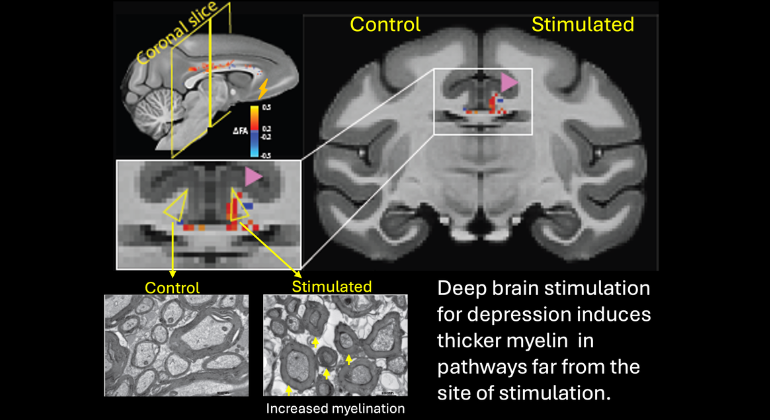
Dr. Frangou and her team used MRI to scan the brains of people with bipolar disorder and of healthy individuals. Using advanced computational models, they were successful in correctly separating people with bipolar disorder from healthy individuals with 73 percent accuracy using their brain imaging scans alone. They replicated their finding in a separate group of patients and healthy individuals and found a 72 percent accuracy rate.
Dr. Simmons added, “The level of accuracy we achieved is comparable to that of many other tests used in medicine. Additionally, brain scanning is very acceptable to patients as most people consider it a routine diagnostic test.”
“This approach does not undermine the importance of rigorous clinical assessment and the importance of building relationships with patients but provides biological justification for the type of diagnosis made,” said Dr. Frangou. “However, diagnostic imaging for psychiatry is still under investigation and not ready for widespread use. Nonetheless, our results together with those from other labs are a harbinger of a major shift in the way we approach diagnosis in psychiatry.”
Dr. Frangou recently joined Mount Sinai as Chief of the Psychosis Research Program in the Division of Psychiatric Genomics in the Department of Psychiatry at Mount Sinai. A leading authority on neuroimaging in schizophrenia and bipolar disorder, Dr. Frangou was recruited to Mount Sinai to establish a clinical and translational psychosis program. By building on Mount Sinai’s strengths in clinical investigation, the program aims to translate research in genetics, neuroimaging, and neurobiology into clinical trials and clinical care.
Learn more about Dr. Frangou’s expertise here: http://icahn.mssm.edu/profiles/sophia-frangou
About The Mount Sinai Medical Center
The Mount Sinai Medical Center encompasses both The Mount Sinai Hospital and Icahn School of Medicine at Mount Sinai. Established in 1968, the Icahn School of Medicine at Mount Sinai is one of the leading medical schools in the United States. The Icahn School of Medicine is noted for innovation in education, biomedical research, clinical care delivery, and local and global community service. It has more than 3,400 faculty members in 32 departments and 14 research institutes, and ranks among the top 20 medical schools both in National Institutes of Health (NIH) funding and by U.S. News & World Report.
The Mount Sinai Hospital, founded in 1852, is a 1,171-bed tertiary- and quaternary-care teaching facility and one of the nation’s oldest, largest and most-respected voluntary hospitals. In 2012, U.S. News & World Report ranked The Mount Sinai Hospital 14th on its elite Honor Roll of the nation’s top hospitals based on reputation, safety, and other patient-care factors. Mount Sinai is one of just 12 integrated academic medical centers whose medical school ranks among the top 20 in NIH funding and by U.S. News & World Report and whose hospital is on the U.S. News & World Report Honor Roll. Nearly 60,000 people were treated at Mount Sinai as inpatients last year, and approximately 560,000 outpatient visits took place.
For more information, visit http://www.mountsinai.org.
Find Mount Sinai on:
Facebook: http://www.facebook.com/mountsinainyc
Twitter @mountsinainyc
YouTube: http://www.youtube.com/mountsinainy
# # #
About the Mount Sinai Health System
Mount Sinai Health System is one of the nation’s leading integrated academic health systems and one of the largest in the New York metropolitan area. Its comprehensive system includes seven hospitals, more than 400 outpatient practices, over 600 research and clinical laboratories, the Icahn School of Medicine at Mount Sinai, the Graduate School of Biomedical Sciences, and the Mount Sinai Phillips School of Nursing. Together, the Health System comprises approximately 48,000 employees, more than 9,000 physicians, and 8,600 nurses.
As a leading learning health system, Mount Sinai combines clinical expertise with scientific discovery to improve patient care while training the next generation of health care and biomedical leaders. The Health System provides care across every stage of life, from prenatal care through geriatrics, while advancing personalized medicine through artificial intelligence, data science, and biomedical research.
Mount Sinai is consistently recognized among the nation’s leading academic health systems for patient care, research, and education. The Mount Sinai Hospital is ranked No. 1 in New York by Newsweek® and No. 7 in the U.S. on the magazine’s World’s Best Hospitals 2026 list. The Icahn School of Medicine at Mount Sinai ranks No. 9 among U.S. medical schools and No. 1 among freestanding medical schools for National Institutes of Health grant funding, reflecting the strength of its scientific enterprise and leadership in biomedical research.

Mount Sinai Researchers Identify Brain “Entrapment” Patterns Associated With Depression
Jun 11, 2026 View All Press Releases