Study Identifies Gene Expression Program Linked to Neurotransmission in the Living Human Brain
Breakthrough findings provide direct molecular insight into how human brain cells communicate in real time
Researchers have identified a distinct and reproducible gene expression program associated with neurotransmission in the living human brain, offering unprecedented insight into the molecular mechanisms that support human cognition, emotion, and behavior. The findings were published February 19 in Molecular Psychiatry.
Neurotransmission—the electrical and chemical signaling between neurons—is fundamental to all brain function. Until now, most gene expression studies of the human brain have relied on postmortem tissue, limiting scientists’ ability to understand which genes are actively involved in real-time neuronal communication.
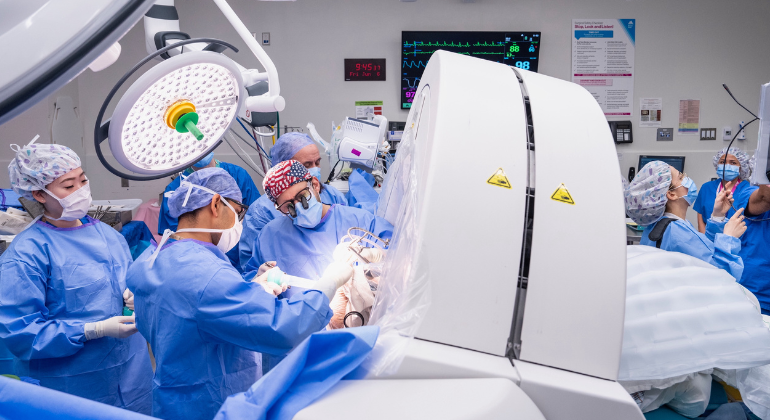
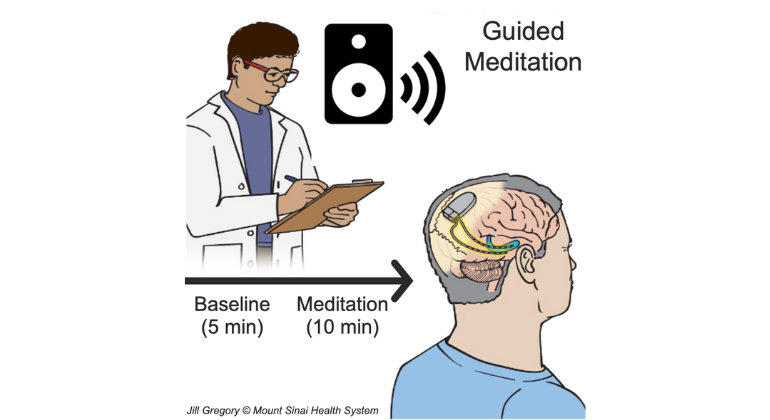
In this study, investigators integrated gene expression profiling from the prefrontal cortex with direct intracranial measures of neurotransmission collected from the brains of more than 100 individuals as they underwent neurosurgical procedures. By combining molecular data with real-time physiological recordings, the team identified a coordinated set of genes whose activity tracks with neuronal signaling—a transcriptional program associated with neurotransmission.
Alexander Charney, MD, PhD, Professor of Psychiatry, Neuroscience, and Genetics and Genomic Sciences at the Icahn School of Medicine at Mount Sinai, said the findings represent a major shift in the field’s ability to study living brain biology.
“For decades, our understanding of gene expression in the human brain has been limited to postmortem studies,” Dr. Charney said. “This work allows us to examine the molecular architecture of neurotransmission as it is happening in living individuals, bringing us closer to directly linking genes to real-time brain function.”
The study demonstrated that this transcriptional program is reproducible across independent cohorts and aligns with established pathways involved in excitatory neuronal signaling and synaptic function. The findings provide a molecular framework for understanding how gene activity supports active brain communication.
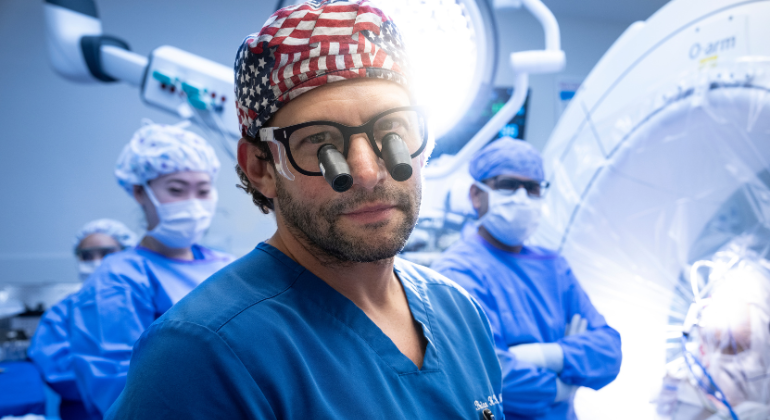
Brian Kopell, MD, Director of the Center for Neuromodulation and Co-Director of The Mount Sinai Hospital’s Movement Disorders Program, emphasized the significance of integrating electrophysiology and molecular science.
“By pairing intracranial recordings with molecular profiling, we’re bridging two worlds that have traditionally been studied separately,” Dr. Kopell said. “This approach gives us a clearer picture of how neural circuits operate at both the electrical and genetic levels, which has profound implications for neuromodulation and precision treatments.”
Because disrupted neurotransmission is central to many psychiatric and neurological disorders—including depression, schizophrenia, epilepsy, and neurodegenerative disease—identifying the genes linked to active signaling could help refine future diagnostic tools and therapeutic strategies.
Ignacio Saez, PhD, Associate Professor of Neuroscience, Neurosurgery, and Neurology at the Icahn School of Medicine at Mount Sinai, noted that the study also advances how researchers interpret complex genomic data.
“The power of this study lies in its integration of large-scale transcriptomic data with direct measures of brain activity,” Dr. Saez said. “Identifying a coordinated transcriptional program associated with neurotransmission provides a new framework for understanding how genetic variation may influence brain function and vulnerability to disease.”
About the Mount Sinai Health System
Mount Sinai Health System is one of the nation’s leading integrated academic health systems and one of the largest in the New York metropolitan area. Its comprehensive system includes seven hospitals, more than 400 outpatient practices, over 600 research and clinical laboratories, the Icahn School of Medicine at Mount Sinai, the Graduate School of Biomedical Sciences, and the Mount Sinai Phillips School of Nursing. Together, the Health System comprises approximately 48,000 employees, more than 9,000 physicians, and 8,600 nurses.
As a leading learning health system, Mount Sinai combines clinical expertise with scientific discovery to improve patient care while training the next generation of health care and biomedical leaders. The Health System provides care across every stage of life, from prenatal care through geriatrics, while advancing personalized medicine through artificial intelligence, data science, and biomedical research.
Mount Sinai is consistently recognized among the nation’s leading academic health systems for patient care, research, and education. The Mount Sinai Hospital is ranked No. 1 in New York by Newsweek and No. 5 on the magazine’s World’s Best Hospitals list. The Icahn School of Medicine at Mount Sinai ranks No. 11 among U.S. medical schools and No. 1 among freestanding medical schools for National Institutes of Health funding, reflecting the strength of its scientific enterprise and leadership in biomedical research.