
Mount Sinai-Led Research Team Identifies Underlying Mechanisms of Age-Related Dysfunction in Glands Crucial to Eye Function
Discovery may lead to new treatment options for dry eye disease
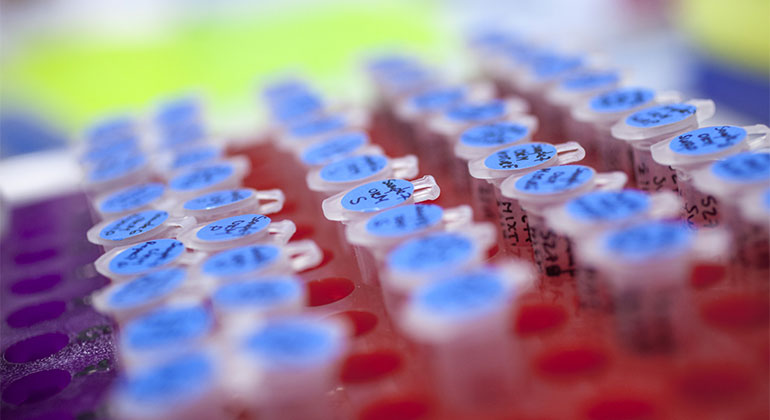
A team led by Mount Sinai researchers has identified stem cell populations and mechanisms underlying age-related degeneration in glands that are vital to eye function. The findings, published in Nature Communications on February 15, may lead to new therapeutic approaches for evaporative dry eye disease, a common condition in older people.
Meibomian glands, tiny oil glands along the edges of the eyelids, secrete lipid-rich meibum to prevent tear evaporation and protect the eye surface. Aging-related shrinkage of the meibomian glands may result, in part, from stem cell exhaustion and is associated with evaporative dry eye disease, a common condition that causes swollen eyelids, itchy eyes, or blurred vision. Symptoms may be lessened with warm compressions, artificial tears, and thermal pulsation, but these treatments are only partially effective.
The researchers identified markers for stem cell populations that maintain distinct regions of the meibomian glands, and uncovered the hedgehog (Hh) cell-cell signaling pathway, which is broadly important in development and disease, as a key regulator of meibomian gland stem cell proliferation and tissue regeneration. They found that increased Hh signaling is a hallmark of human meibomian gland carcinoma, a rare and aggressive cancer of the eyelid. Furthermore, the team discovered that aged glands show decreased Hh signaling and decreased epidermal growth factor receptor (EGFR) signaling, as well as impaired innervation and a loss of collagen in niche fibroblasts, suggesting that changes in both glandular epithelial cells and their surrounding microenvironment contribute to age-related degeneration. These discoveries suggest that targeting Hh and EGFR signaling to stimulate stem cell activity in the meibomian glands could be a potential therapeutic option to treat evaporative dry eye disease.
“Despite the prevalence of dry eye disease, the stem cells and molecular mechanisms that control homeostasis of the meibomian gland, and are impaired in aging, are poorly understood,” said senior author Sarah E. Millar, PhD, Dean for Basic Science of the Icahn School of Medicine at Mount Sinai, the Lillian and Henry M. Stratton Professor of Gene and Cell Medicine, Director of the Institute for Regenerative Medicine, and Director of the Black Family Stem Cell Institute. “We hope that our work will eventually result in new, more effective therapies for this very common condition.”
The researchers used a mouse model system for most of their analyses because the meibomian glands of mice have a similar structure to those in humans and, like the human glands, display decreased size and a reduced number of secretory cells in aging. The team carried out analyses including single nuclear RNA sequencing, in vivo lineage tracing, ex vivo live imaging, and genetic gain- and loss-of-function studies. Additionally, the researchers analyzed gene expression in normal human eyelid samples and in human meibomian gland carcinoma.
Dr. Millar said future work will include preclinical studies to determine whether small molecules that activate Hh and EGFR signaling can rescue age-related meibomian gland degeneration. Researchers from the Johns Hopkins University, University of Michigan, and University of Pennsylvania contributed to this study. The work was funded by the National Institute for Arthritis and Musculoskeletal and Skin Diseases and the National Eye Institute.
About the Mount Sinai Health System
Mount Sinai Health System is one of the nation’s leading integrated academic health systems and one of the largest in the New York metropolitan area. Its comprehensive system includes seven hospitals, more than 400 outpatient practices, over 600 research and clinical laboratories, the Icahn School of Medicine at Mount Sinai, the Graduate School of Biomedical Sciences, and the Mount Sinai Phillips School of Nursing. Together, the Health System comprises approximately 48,000 employees, more than 9,000 physicians, and 8,600 nurses.
As a leading learning health system, Mount Sinai combines clinical expertise with scientific discovery to improve patient care while training the next generation of health care and biomedical leaders. The Health System provides care across every stage of life, from prenatal care through geriatrics, while advancing personalized medicine through artificial intelligence, data science, and biomedical research.
Mount Sinai is consistently recognized among the nation’s leading academic health systems for patient care, research, and education. The Mount Sinai Hospital is ranked No. 1 in New York by Newsweek and No. 5 on the magazine’s World’s Best Hospitals list. The Icahn School of Medicine at Mount Sinai ranks No. 11 among U.S. medical schools and No. 1 among freestanding medical schools for National Institutes of Health funding, reflecting the strength of its scientific enterprise and leadership in biomedical research.
Blinding Eye Disease Strongly Associated With Serious Forms of Cardiovascular Disease
Nov 17, 2022 View All Press Releases
High-Tech Imaging Offers New Way to Detect Signs of Early Glaucoma
Aug 02, 2022 View All Press Releases
Blinding Eye Disease Is Strongly Associated With Heart Disease and Stroke
Jul 12, 2022 View All Press Releases