
Eric J. Nestler, MD, PhD, Leading Brain Scientist and Interim Dean of the Icahn School of Medicine at Mount Sinai, Elected to the National Academy of Sciences
Highest honor recognizes outstanding contributions to science
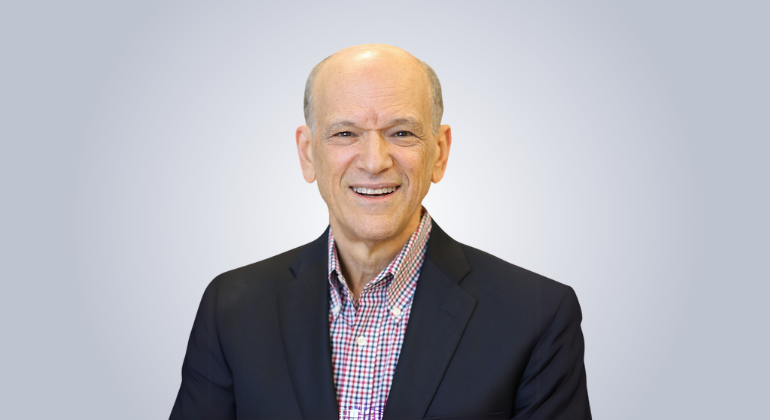
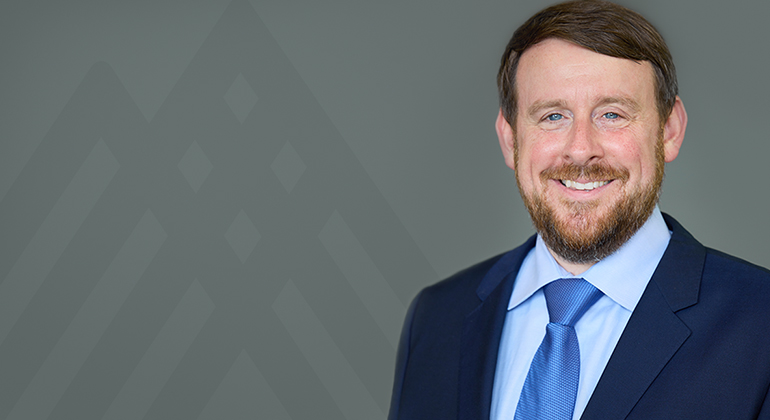
Eric J. Nestler, MD, PhD, a world-leading expert on the biological basis of addiction and depression, who serves as the Nash Family Professor of Neuroscience, Interim Dean for the Icahn School of Medicine at Mount Sinai, and Chief Scientific Officer for the Mount Sinai Health System, has been elected to the National Academy of Sciences (NAS). Election to the NAS is considered one of the highest honors a scientist can achieve, recognizing individuals for their distinguished and continuing achievements in original research.
“The recognition of Dr. Nestler is well deserved for the extraordinary achievements and internationally recognized contributions he has made to the field of neuroscience,” said Brendan G. Carr, MD, MA, MS, Chief Executive Officer, Professor and Kenneth L. David, MD Distinguished Chair of the Mount Sinai Health System. “In addition to being one of the best neuroscientists in the world, whose research has the potential to help millions of patients with neuropsychiatric disorders, here at Mount Sinai he has cultivated one of the top translational brain science institutes in the country.”
“Under his exemplary leadership over the past 17 years, The Friedman Brain Institute at Mount Sinai has attracted some of the most innovative researchers from around the world, who have made tremendous contributions to scientific knowledge, pioneering treatment approaches and new technologies,” said Dennis S. Charney, PhD, Anne and Joel Ehrenkranz Dean of Icahn Mount Sinai and President for Academic Affairs of the Mount Sinai Health System. “Dr. Nestler’s extensive scientific experience and acumen, steady hand, and deep relationships across Mount Sinai and around the world have him poised to take on the role of Interim Dean of our Icahn School of Medicine upon my retirement in June. We are thrilled to have him take the helm and look forward to seeing how he will help shape Mount Sinai’s next chapter.” Dr. Charney will step down as Dean on June 30, and will remain on faculty at the Icahn School of Medicine at Mount Sinai.
Dr. Nestler has significantly advanced the understanding of the molecular, cellular, and physiological changes in the brain caused by drugs of abuse. Through the pioneering use of viral-mediated gene transfer and inducible genetic mutant mice, his laboratory experimentally altered the activity of specific genes within the brain’s reward pathways and studied the consequences on the functioning of neural circuits and their behavioral outputs. This work was the first to causally link drug-induced molecular and cellular adaptations with the behavioral abnormalities that define addiction.
Dr. Nestler was also the first to demonstrate how common molecular mechanisms underlie different types of addictions. In addition, he and his coworkers developed one of the best-validated mouse models of depression and other human stress disorders and used it to establish a critical role for the brain’s reward circuits in depression, a discovery since validated in humans. The Nestler Laboratory also used gene and chromatin analyses to discover numerous proteins that mediate either susceptibility or resilience to chronic stress in animals, work that is now guiding new approaches to treatment.
Since 2016, Dr. Nestler has been Dean for Academic Affairs of the Icahn School of Medicine and Chief Scientific Officer of the Mount Sinai Health System. He was recruited to Mount Sinai in 2008 by Dr. Charney to lead The Friedman Brain Institute after serving as Chair of the Department of Psychiatry at UT Southwestern at Dallas and Director of Molecular Psychiatry at Yale.
Dr. Nestler has authored more than 750 publications and five books. He has been Principal Investigator or Co-Principal Investigator of numerous National Institutes of Health grants. He earned his MD and PhD at Yale and has received many esteemed awards, including the Wilbur Cross Distinguished Alumnus Medal from Yale University and the Peter Seeburg Prize in Integrative Neuroscience from the Society for Neuroscience.
Mount Sinai now has six current faculty members in the National Academy of Sciences, including: Adolfo García-Sastre, PhD, Professor of Microbiology, Medicine (Infectious Diseases) and Pathology, Molecular, and Cell-Based Medicine, and Director of the Global Health and Emerging Pathogens Institute; Peter Palese, PhD, Horace W. Goldsmith Professor and Chair of Microbiology, and Professor of Medicine (Infectious Diseases); Miriam Merad, MD, PhD, Professor of Oncological Sciences and Medicine (Hematology and Medical Oncology), and Director of the Precision Immunology Institute; Yasmin Hurd, PhD, Ward Coleman Chair of Translational Neuroscience and Director of the Addiction Institute; and Helen S. Mayberg, MD, founding Director of the Nash Family Center for Advanced Circuit Therapeutics.
About the Mount Sinai Health System
Mount Sinai Health System is one of the nation’s leading integrated academic health systems and one of the largest in the New York metropolitan area. Its comprehensive system includes seven hospitals, more than 400 outpatient practices, over 600 research and clinical laboratories, the Icahn School of Medicine at Mount Sinai, the Graduate School of Biomedical Sciences, and the Mount Sinai Phillips School of Nursing. Together, the Health System comprises approximately 48,000 employees, more than 9,000 physicians, and 8,600 nurses.
As a leading learning health system, Mount Sinai combines clinical expertise with scientific discovery to improve patient care while training the next generation of health care and biomedical leaders. The Health System provides care across every stage of life, from prenatal care through geriatrics, while advancing personalized medicine through artificial intelligence, data science, and biomedical research.
Mount Sinai is consistently recognized among the nation’s leading academic health systems for patient care, research, and education. The Mount Sinai Hospital is ranked No. 1 in New York by Newsweek and No. 5 on the magazine’s World’s Best Hospitals list. The Icahn School of Medicine at Mount Sinai ranks No. 11 among U.S. medical schools and No. 1 among freestanding medical schools for National Institutes of Health funding, reflecting the strength of its scientific enterprise and leadership in biomedical research.

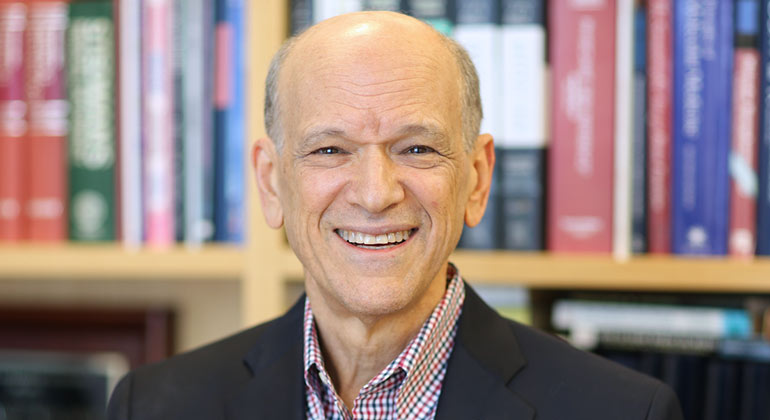
Eric J. Nestler, MD, PhD, Wins the 2023 Peter Seeburg Integrative Neuroscience Prize
Oct 30, 2023 View All Press Releases
Mount Sinai Neurobiologist Selected as a Howard Hughes Medical Institute Investigator
Sep 23, 2021 View All Press Releases