
The Tisch Cancer Institute Emphasizes Critical Role of BRCA Testing For All Genders
Mount Sinai invites people to complete a free survey to better understand their genetic risk for breast and other cancers
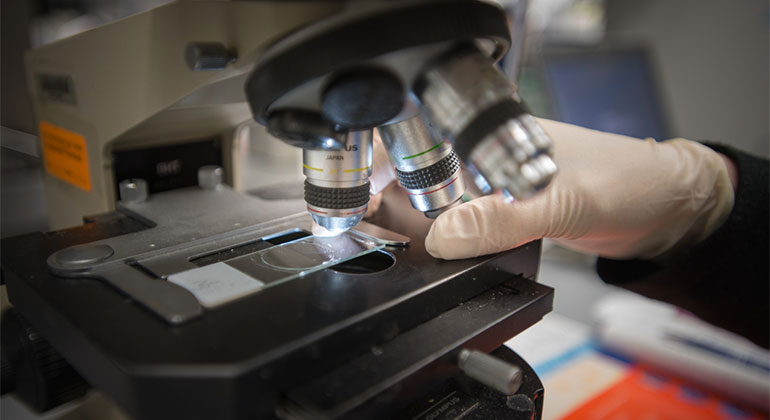
This Breast Cancer Awareness Month, The Tisch Cancer Institute at Mount Sinai emphasizes the importance of genetic testing for the BRCA and other genes for both women and men. This simple test is available throughout the Mount Sinai Health System and requires only a blood or saliva sample. BRCA testing is an important tool in identifying breast cancer risk, and not just for women. Increased access to this genetic test is a vital component of cancer identification and care for everyone.
“BRCA1 and BRCA2 gene mutations significantly elevate the risk of breast, ovarian, and other cancers,” said Elisa Port, MD, Director of the Center of Excellence for Breast Cancer at The Tisch Cancer Institute. “While awareness has traditionally centered on women, men with BRCA mutations are also at increased risk—for prostate cancer, male breast cancer, and pancreatic cancer. It is essential that both women and men understand their genetic predispositions, as early detection can lead to proactive health measures.”
Dr. Port says that understanding your BRCA status can help you take steps toward cancer prevention and early detection.
“At Mount Sinai, we make the testing process simple and accessible. Knowledge is power, and with BRCA testing, you can empower yourself and your family to make informed health decisions,” she said. “If you have been found to have a BRCA or other mutation through testing somewhere else, you are welcome to come to Mount Sinai for expert guidance through our comprehensive BRCA program (www.mountsinai.org/brca).”
Increased Risk With a BRCA Mutation:
- Female Breast Cancer (BRCA1): Women with a BRCA1 mutation face a lifetime risk for developing breast cancer by age 80 of approximately 72 percent, compared to 12 percent in the general population. Breast cancer often occurs at a younger age in BRCA1 carriers, peaking between 41 and 50 years. Regular clinical breast examinations every 6-12 months, along with MRI screening beginning at age 25 and mammography starting at 30, are essential for early detection. Risk-reducing medications and bilateral mastectomy can also significantly lower risks.
- Female Breast Cancer (BRCA2): Women with a BRCA2 mutation have a lifetime risk of about 69 percent for developing breast cancer by age 80, peaking between 51 and 60 years. Women are encouraged to follow the same guidelines as for BRCA1.
- Ovarian Cancer (BRCA1 and BRCA2): Women with BRCA1 mutations have a lifetime risk of about 44 percent for developing ovarian cancer, while those with BRCA2 mutations face a 17 percent risk. Risk-reducing salpingo-oophorectomy is recommended for BRCA1 carriers by age 40, and for BRCA2 carriers between ages 40 and 45 or upon completion of childbearing.
- Male Breast Cancer (BRCA1): Men with a BRCA1 mutation have a lifetime risk of breast cancer of approximately 1-2 percent by age 80, compared to about less than one percent for average-risk men. Self-examinations and annual clinical breast exams starting at age 35 are recommended.
- Male Breast Cancer (BRCA2): Men with a BRCA2 mutation have a lifetime risk of about 7 percent for developing breast cancer by age 80. Screening for male breast cancer in BRCA2 mutation carriers is not recommended before age 35.
- Prostate Cancer (BRCA1 and BRCA2): Men with BRCA1 mutations have a 30 percent lifetime risk of prostate cancer than those without the mutation, while those with BRCA2 mutations face a risk of approximately 20-30 percent. Screening should begin at age 40.
- Pancreatic Cancer (BRCA1/2): Both men and women with BRCA mutations have an increased lifetime risk of pancreatic cancer (1-3 percent for BRCA1, 2-7 percent for BRCA2). Screening should be individualized and may start at age 50.
- Skin Cancer: BRCA mutation carriers are at increased risk for melanoma, with annual skin and eye examinations recommended.
“This October, as we raise awareness about breast cancer, we extend the conversation to include everyone affected by BRCA and other mutations,” says Dr. Port. “By advocating for widespread testing and education, we can enhance prevention efforts and ultimately reduce cancer incidence. BRCA testing offers insights into inherited cancer risks.”
Take a short survey to understand your risk: www.mountsinai.org/brca
About the Mount Sinai Health System
Mount Sinai Health System is one of the nation’s leading integrated academic health systems and one of the largest in the New York metropolitan area. Its comprehensive system includes seven hospitals, more than 400 outpatient practices, over 600 research and clinical laboratories, the Icahn School of Medicine at Mount Sinai, the Graduate School of Biomedical Sciences, and the Mount Sinai Phillips School of Nursing. Together, the Health System comprises approximately 48,000 employees, more than 9,000 physicians, and 8,600 nurses.
As a leading learning health system, Mount Sinai combines clinical expertise with scientific discovery to improve patient care while training the next generation of health care and biomedical leaders. The Health System provides care across every stage of life, from prenatal care through geriatrics, while advancing personalized medicine through artificial intelligence, data science, and biomedical research.
Mount Sinai is consistently recognized among the nation’s leading academic health systems for patient care, research, and education. The Mount Sinai Hospital is ranked No. 1 in New York by Newsweek and No. 5 on the magazine’s World’s Best Hospitals list. The Icahn School of Medicine at Mount Sinai ranks No. 11 among U.S. medical schools and No. 1 among freestanding medical schools for National Institutes of Health funding, reflecting the strength of its scientific enterprise and leadership in biomedical research.


Mount Sinai Launches Clinic to Help Breast Cancer Patients in Need of Legal Services
Aug 02, 2023 View All Press Releases
Mount Sinai’s Dubin Breast Center Raises More than $3 Million for 12th Anniversary
Dec 16, 2022 View All Press Releases
Mount Sinai’s Dubin Breast Center Annual Benefit Raises Over $2.5 Million
Feb 08, 2022 View All Press ReleasesFuture Breast Imaging and Biopsy Are Not Eliminated After Mastectomy
Oct 09, 2018 View All Press Releases