Group Therapy is an Effective Way to Promote Cardiovascular Health
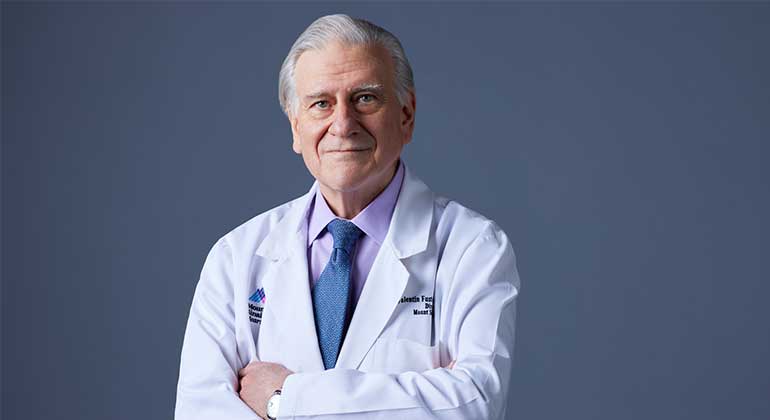
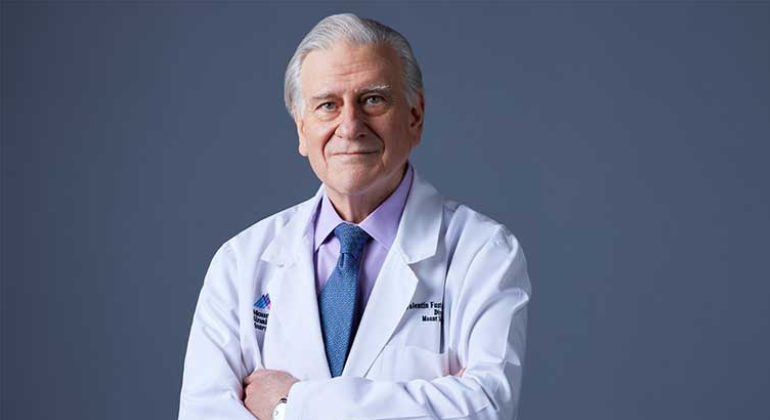
Peer group support, in the form of group therapy, was found to help improve healthy behavior in people with cardiovascular risk factors, according to a study released today by Valentin Fuster, MD, PhD, Director of Mount Sinai Heart and Physician-in-Chief of The Mount Sinai Hospital. Mount Sinai Heart is ranked No. 7 in the nation by U.S. News & World Report in its 2015 “Best Hospitals” issue.
The embargoed abstract was presented today at the AHA Scientific Sessions 2015 in Orlando, Florida, and will be published simultaneously by the Journal of American College of Cardiology (JACC), the world’s leading peer-reviewed journal on cardiovascular disease.
“Peer group support is a proven strategy for addressing substance abuse, eating disorders and chronic illness. We now have proof that peer group support also helps improve healthy behaviors in people who are at a higher risk for cardiovascular issues and has a significantly positive impact on smoking cessation,” Dr. Fuster said.
Researchers from the National Center for Cardiovascular Research (CNIC) in Madrid, Spain, the Barcelona-based Foundation for Science, Health and Education (SHE Foundation), and the Icahn School of Medicine at Mount Sinai followed 543 adults, aged 25-50, with at least one of the following cardiovascular disease risk factors: hypertension, overweight, smoking, and physical inactivity.
Over a three-month period, all participants took part in training and motivational group sessions aimed at promoting healthy lifestyle habits. These meetings focused on motivations for change, stress management, stopping smoking, a healthy diet, taking regular exercise, and self-control of blood pressure. From this shared starting point, the participants were then divided into two groups: 277 in the peer intervention group and 266 in the control group. Over the next 12 months, the intervention group met for monthly group-therapy sessions aimed at promoting changes in attitudes and behavior, encouraging participants to go beyond simple awareness and make real progress in the control of cardiovascular risk factors. The control group received individual medical check-ups during the same period.
After the training sessions at the start of the program, most participants (71 percent) showed an improvement in the Fuster-BEWAT index, irrespective of group assignment. The FUSTER-BEWAT score is a newly developed composite score related to blood pressure, exercise, weight, body mass index, fruit and vegetable consumption and smoking.
However, at subsequent stages, significant differences appeared between the intervention and control groups. In the intervention group, 67 percent of participants showed an improvement in cardiovascular risk factors, compared with 56 percent in the control group. The results were even more positive for tobacco consumption, with almost twice as many intervention-group participants stopping smoking (39 percent versus 20 percent). Similarly, 46 percent of the intervention group members increased their level of physical activity.
Continuing Education
According to the research team, the data confirm that although training in healthy habits is important and has a positive impact on health, these benefits tail off if not reinforced over time. A combination of education training and a peer-based intervention may be an effective strategy for enhancing the overall cardiovascular health in an adult at-risk population.
“We are currently evaluating peer-group intervention programs in different national and international socio-economic communities to see if the results are consistent,” said Dr. Fuster.
Abstract 20189 was presented at the AHA Scientific Sessions 2015 as Peer-group Intervention Improves Cardiovascular Risk Factors: A Randomized Controlled Trial.
About the Mount Sinai Health System
Mount Sinai Health System is one of the nation’s leading integrated academic health systems and one of the largest in the New York metropolitan area. Its comprehensive system includes seven hospitals, more than 400 outpatient practices, over 600 research and clinical laboratories, the Icahn School of Medicine at Mount Sinai, the Graduate School of Biomedical Sciences, and the Mount Sinai Phillips School of Nursing. Together, the Health System comprises approximately 48,000 employees, more than 9,000 physicians, and 8,600 nurses.
As a leading learning health system, Mount Sinai combines clinical expertise with scientific discovery to improve patient care while training the next generation of health care and biomedical leaders. The Health System provides care across every stage of life, from prenatal care through geriatrics, while advancing personalized medicine through artificial intelligence, data science, and biomedical research.
Mount Sinai is consistently recognized among the nation’s leading academic health systems for patient care, research, and education. The Mount Sinai Hospital is ranked No. 1 in New York by Newsweek® and No. 7 in the U.S. on the magazine’s World’s Best Hospitals 2026 list. The Icahn School of Medicine at Mount Sinai ranks No. 9 among U.S. medical schools and No. 1 among freestanding medical schools for National Institutes of Health grant funding, reflecting the strength of its scientific enterprise and leadership in biomedical research.


Valentin Fuster, MD, PhD, Receives Prestigious Award From World Heart Federation
May 28, 2024 View All Press Releases