Mount Sinai School of Medicine Study Shows Vitamin C Prevents Bone Loss in Animal Models
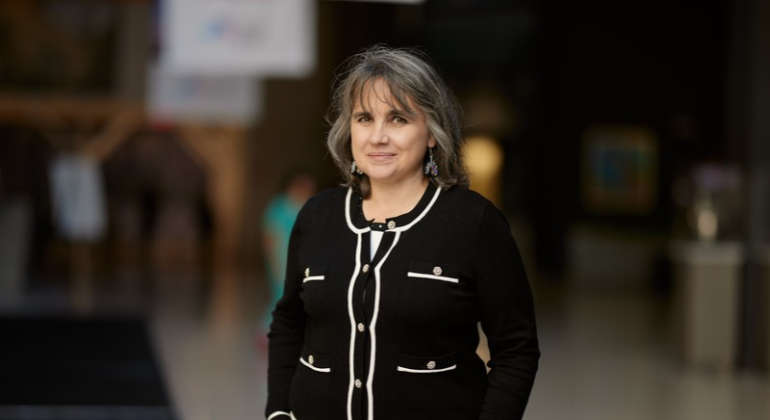
The findings from Mone Zaidi, MD, Director of the Mount Sinai Bone Program, and his team are published in the online edition of PLoS ONE.
Researchers at Mount Sinai School of Medicine have shown for the first time in an animal model that vitamin C actively protects against osteoporosis, a disease affecting large numbers of elderly women and men in which bones become brittle and can fracture. The findings are published in the October 8 online edition of PLoS ONE.
"This study has profound public health implications, and is well worth exploring for its therapeutic potential in people," said lead researcher Mone Zaidi, MD, Professor of Medicine (Endocrinology, Diabetes and Bone Disease), and of Structural and Chemical Biology, and Director of the Mount Sinai Bone Program.
"The medical world has known for some time that low amounts of vitamin C can cause scurvy and brittle bones, and that higher vitamin C intake is associated with higher bone mass in humans, "said Dr. Zaidi. "What this study shows is that large doses of vitamin C, when ingested orally by mice, actively stimulate bone formation to protect the skeleton. It does this by inducing osteoblasts, or premature bone cells, to differentiate into mature, mineralizing specialty cells."
The researchers worked with groups of mice whose ovaries had been removed, a procedure known to reduce bone density, and compared them with control mice that had "sham" operations, which left their ovaries intact. The mice with ovariectomies were divided into two groups, one of which was given large doses of vitamin C over eight weeks. The scientists measured the bone mineral density in the lumbar spine, femur, and tibia bones.
The mice who received an ovariectomy – and no vitamin C – had a much lower bone mineral density (BMD) versus controls, whereas mice who received a ovariectomy and large doses of vitamin C, had roughly the same BMD as the controls, suggesting vitamin C prevented BMD loss in this group.
"Further research may discover that dietary supplements may help prevent osteoporosis in humans," said Dr. Zaidi. "If so, the findings could be ultimately useful to developing nations where osteoporosis is prevalent and standard medications are sparse and expensive."
About The Mount Sinai Medical Center
The Mount Sinai Medical Center encompasses both The Mount Sinai Hospital and Mount Sinai School of Medicine. Established in 1968, Mount Sinai School of Medicine is one of the leading medical schools in the United States. The Medical School is noted for innovation in education, biomedical research, clinical care delivery, and local and global community service. It has more than 3,400 faculty in 32 departments and 14 research institutes, and ranks among the top 20 medical schools both in National Institutes of Health (NIH) funding and by U.S. News & World Report.
The Mount Sinai Hospital, founded in 1852, is a 1,171-bed tertiary- and quaternary-care teaching facility and one of the nation’s oldest, largest and most-respected voluntary hospitals. In 2012, U.S. News & World Report ranked The Mount Sinai Hospital 14th on its elite Honor Roll of the nation’s top hospitals based on reputation, safety, and other patient-care factors. Mount Sinai is one of 12 integrated academic medical centers whose medical school ranks among the top 20 in NIH funding and by U.S. News & World Report and whose hospital is on the U.S. News & World Report Honor Roll. Nearly 60,000 people were treated at Mount Sinai as inpatients last year, and approximately 560,000 outpatient visits took place.
For more information, visit http://www.mountsinai.org.
Find Mount Sinai on:
Facebook: http://www.facebook.com/mountsinainyc
Twitter @mountsinainyc
YouTube: http://www.youtube.com/mountsinainy
# # #
About the Mount Sinai Health System
Mount Sinai Health System is one of the nation’s leading integrated academic health systems and one of the largest in the New York metropolitan area. Its comprehensive system includes seven hospitals, more than 400 outpatient practices, over 600 research and clinical laboratories, the Icahn School of Medicine at Mount Sinai, the Graduate School of Biomedical Sciences, and the Mount Sinai Phillips School of Nursing. Together, the Health System comprises approximately 48,000 employees, more than 9,000 physicians, and 8,600 nurses.
As a leading learning health system, Mount Sinai combines clinical expertise with scientific discovery to improve patient care while training the next generation of health care and biomedical leaders. The Health System provides care across every stage of life, from prenatal care through geriatrics, while advancing personalized medicine through artificial intelligence, data science, and biomedical research.
Mount Sinai is consistently recognized among the nation’s leading academic health systems for patient care, research, and education. The Mount Sinai Hospital is ranked No. 1 in New York by Newsweek and No. 5 on the magazine’s World’s Best Hospitals list. The Icahn School of Medicine at Mount Sinai ranks No. 11 among U.S. medical schools and No. 1 among freestanding medical schools for National Institutes of Health funding, reflecting the strength of its scientific enterprise and leadership in biomedical research.


Scott J. Russo, PhD, Appointed Chair of the Nash Family Department of Neuroscience
Oct 13, 2026 View All Press Releases
Mount Sinai Study Finds Safety Prompts Can Help AI Models Make Safer Clinical Choices
Oct 08, 2026 View All Press Releases