
Mount Sinai Tisch Cancer Center Cuts Clinical Trial Data-Entry Time by More Than Half With Real-Time EHR-to-EDC Technology
IgniteData’s technology platform is now live across all 16 cancer disease groups, automatically transferring approximately 70 percent of data with 100 percent accuracy
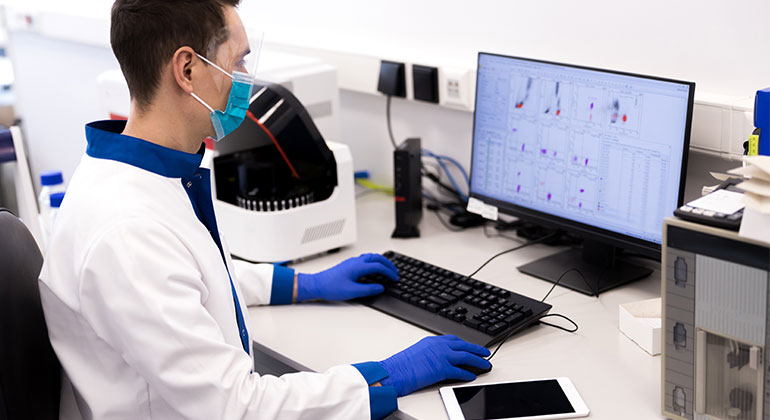
The Mount Sinai Tisch Cancer Center has brought its electronic health record (EHR)-to-electronic data capture (EDC) technology into routine use across its cancer research program. Powered by IgniteData’s Archer platform and integrated with Epic, the technology has produced early results, reducing clinical trial data-entry time by more than half while improving the efficiency and reliability of research data collection.
IgniteData’s technology automatically transfers structured clinical information from patients’ records in Mount Sinai’s Epic EHR system to EDC systems used in clinical trials. Since its launch at Mount Sinai in 2025, the system has been activated across all 16 disease groups at the Mount Sinai Tisch Cancer Center and is now incorporated into the startup process for new clinical trials.
Early results show that approximately 70 percent of the clinical trial data required on electronic case report forms (the standardized forms used to collect information for clinical studies) is populated automatically at each patient visit. Average clinical trial data-entry time has decreased from 5.5 minutes to 2.5 minutes per visit—a reduction of more than 50 percent. In the data evaluated to date, the system has demonstrated 100 percent data accuracy, with a 0 percent re-query rate.
“This is an important step forward in how we conduct clinical research at Mount Sinai,” said Karyn Goodman, MD, MS, Professor and Vice Chair of Clinical Research in the Department of Radiation Oncology and Associate Director of Clinical Research at the Mount Sinai Tisch Cancer Center. “When we can move accurate information directly from the electronic health record into a clinical trial system, our research teams spend less time entering the same information twice and more time focused on caring for patients and advancing research.”
Traditional clinical trial workflows often require research teams to manually enter and transfer information from the EHR into separate EDC systems. This is time-consuming, creates opportunities for transcription errors, and pulls research staff into repetitive administrative work. IgniteData’s Archer reduces this duplicate data entry and makes information available to research teams more efficiently.
IgniteData CEO Zach Taft highlights the value of EHR-to-EDC technology. “IgniteData is focused not just on moving data but moving the data that matter. Our commitment to sites and sponsors is to seamlessly transfer the data required for clinical trials in the required formats. This ensures data are consistent, accurate, and traceable—ultimately fueling more efficient clinical trials.”
“This technology is making a real difference in the day-to-day work of clinical research teams,” said Alex Lieberman-Cribbin, Clinical Trials Manager at the Icahn School of Medicine at Mount Sinai. “By reducing the amount of time spent on manual data entry, we can focus more of our time on study coordination, patient care, and making sure our clinical trials run as efficiently as possible.”
The EHR-to-EDC technology is also expanding to support more complex clinical trial data. Mount Sinai is extending the workflow to include real-world medical history, concomitant medications, and efficacy laboratory data. The program has already expanded to support cellular therapies, including CAR-T cell therapy. By incorporating EHR-to-EDC integration into clinical trial startup and expanding its use across disease groups and data types, the Tisch Cancer Center is making automated data collection an increasingly standard part of its clinical research operations.
The initiative builds on the Mount Sinai Tisch Cancer Center’s designation as a National Cancer Institute-designated Comprehensive Cancer Center and Mount Sinai’s commitment to advancing research infrastructure, data quality, and access to innovative clinical trials.
About the Mount Sinai Tisch Cancer Center
The Mount Sinai Tisch Cancer Center is a vital component of the Icahn School of Medicine at Mount Sinai and the Mount Sinai Health System, which encompasses seven hospitals and more than 400 physician practices across the New York City metropolitan area. The mission of the Mount Sinai Tisch Cancer Center—a National Cancer Institute-designated Comprehensive Cancer Center—is to advance basic, clinical, and population health cancer research in order to prevent cancer in healthy individuals and improve the lives of people with cancer and their families in its communities. Its research programs are focused on the needs of its catchment area population and include extensive research in liver, prostate, breast, bladder, and lung cancers; myeloid preleukemia and leukemia; and multiple myeloma. The Mount Sinai Tisch Cancer Center features multidisciplinary, innovative cancer care. It has a robust portfolio of cancer clinical trials and an Early-Phase Trial Unit focused on novel therapies for optimal patient outcomes. Construction of the state-of-the-art Mount Sinai Tisch Cancer Hospital began in spring 2026 and is expected to be completed in the coming years, further expanding Mount Sinai’s capacity to deliver innovative, patient-centered cancer care.
* Mount Sinai Health System hospitals: The Mount Sinai Hospital; Mount Sinai Brooklyn; Mount Sinai Morningside; Mount Sinai Queens; Mount Sinai South Nassau; Mount Sinai West; and New York Eye and Ear Infirmary of Mount Sinai.
About IgniteData
IgniteData is on a mission to revolutionize clinical trials through intelligent automation. By enabling real-time, secure transfer of clinical data between sites and sponsors, IgniteDataaccelerates research whilereducing the burden on clinical sites.IgniteData’s Archer is a 100 percent agnostic technologythat allows fordeployments across premier research centers and top pharmaceutical sponsors. By minimizing manual errors, reducing data discrepancies, and limiting downstream queries, IgniteData’s Archer improves data quality, accelerates study timelines, and allows teams to focus on advancing research and delivering better patient outcomes faster.
About the Mount Sinai Health System
Mount Sinai Health System is one of the nation’s leading integrated academic health systems and one of the largest in the New York metropolitan area. Its comprehensive system includes seven hospitals, more than 400 outpatient practices, over 600 research and clinical laboratories, the Icahn School of Medicine at Mount Sinai, the Graduate School of Biomedical Sciences, and the Mount Sinai Phillips School of Nursing. Together, the Health System comprises approximately 48,000 employees, more than 9,000 physicians, and 8,600 nurses.
As a leading learning health system, Mount Sinai combines clinical expertise with scientific discovery to improve patient care while training the next generation of health care and biomedical leaders. The Health System provides care across every stage of life, from prenatal care through geriatrics, while advancing personalized medicine through artificial intelligence, data science, and biomedical research.
Mount Sinai is consistently recognized among the nation’s leading academic health systems for patient care, research, and education. The Mount Sinai Hospital is ranked No. 1 in New York by Newsweek® and No. 7 in the U.S. on the magazine’s World’s Best Hospitals 2026 list. The Icahn School of Medicine at Mount Sinai ranks No. 9 among U.S. medical schools and No. 1 among freestanding medical schools for National Institutes of Health grant funding, reflecting the strength of its scientific enterprise and leadership in biomedical research.