Mount Sinai Awarded Five-Year, $20.7 Million Vaccine Development Agreement to Advance Next-Generation Technologies Against Respiratory Threats
Project will begin with an H5N1 flu vaccine prototype and development of a vaccine platform framework for broader, safer, and more durable immune protection
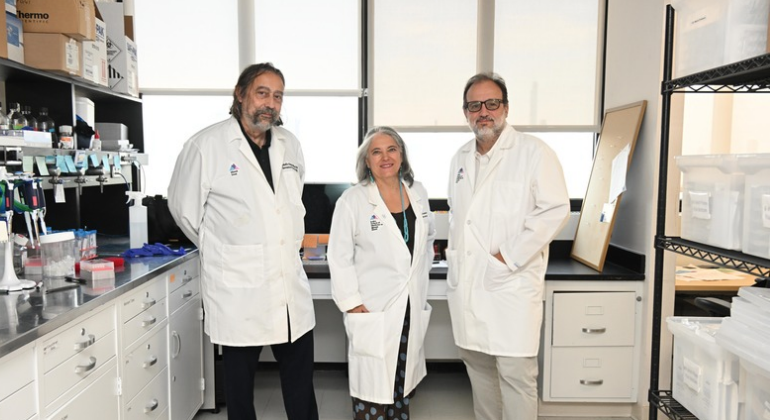
Credit: Brittainy Newman for Mount Sinai Health System
Researchers at the Icahn School of Medicine at Mount Sinai have been awarded a five-year project agreement to develop Vaccine Immunoengineering for Targeted Antigen Presentation and Layered Control (VITAL), a research program exploring an improved approach to vaccination against respiratory pathogens.
The project is supported by the Defense Threat Reduction Agency’s Joint Science and Technology Office (JSTO) through the Medical CBRN Defense Consortium. The agreement has a total estimated project cost of approximately $20.7 million over its period of performance, with funding provided incrementally.
VITAL was selected under Reimagining Available Vaccines and Envisioning Novelty (RAVEN), a JSTO program focused on advancing multivalent prophylactic biological countermeasures. RAVEN seeks both improvements to existing technologies and new vaccine or preventive platforms capable of addressing multiple biological threats, moving beyond approaches that are focused on one threat at a time.
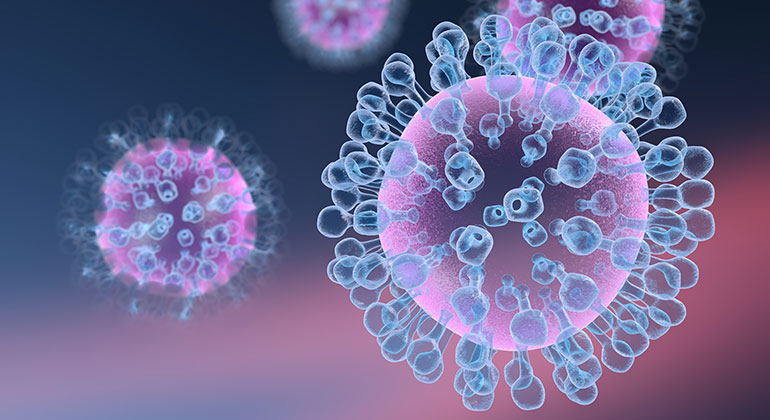
The initial proof of concept will focus on a highly pathogenic avian influenza A virus, H5N1. Researchers will develop an unmodified mRNA-based vaccine prototype designed for intranasal delivery that will restrict primarily the immunogen expression to immune cells known as macrophages in the respiratory tract, avoiding potential adverse events by expression of the antigen in other type of cells that do not participate in this process during natural infection. The program will evaluate how this targeting affects antigen presentation, immune stimulation, safety, and protection.
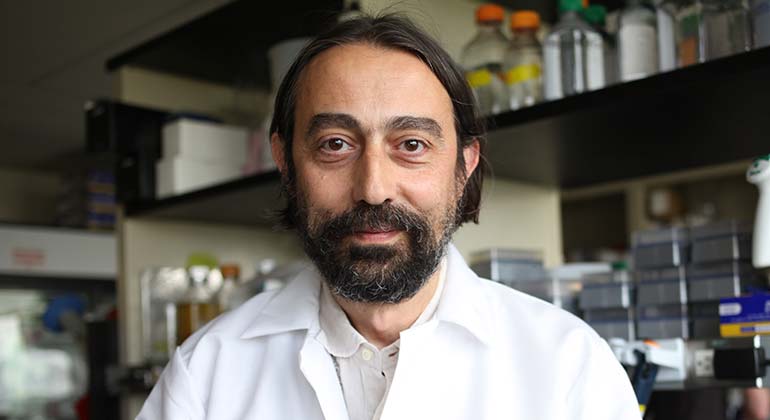
“VITAL is designed to directly support RAVEN’s objective by asking a broader question than whether we can make a vaccine against one virus,” said Gustavo Palacios, PhD, Professor of Microbiology at the Icahn School of Medicine and VITAL project lead. “Rather than focusing only on which antigens are delivered, we want to understand which biological principles can be incorporated into vaccination so that the same framework can eventually be adapted across different respiratory threats. H5N1 gives us a rigorous starting point to test those principles.”
The approach is built around five biological principles: targeting exclusively the expression of the immunogen in immune cells that help activate the body’s immune response; providing appropriate stimulation to those cells; engineering antigens to reduce toxicity and adverse responses; matching antigen delivery to a pathogen’s natural route of entry; and developing pulse immunization, a strategy designed to generate an immune response that mimic aspects of natural infection through controlled patterns of exposure.
The program brings together complementary expertise in viral genomics, molecular virology, vaccine development, and human immunology from internationally renowned investigators, including Dr. Palacios, Adolfo García-Sastre, PhD, and Ana Fernandez-Sesma, PhD, all faculty members in the Department of Microbiology at the Icahn School of Medicine at Mount Sinai.
A central component of VITAL is antigen detoxification: engineering viral antigens to reduce potential toxicity while preserving antigen expression and immunogenicity. The program will also investigate different intranasal immunization schedules, including repeated low-dose regimens designed to mimic aspects of the timing of natural infection.
For Dr. García-Sastre, whose research has focused extensively on influenza virus biology, virus-host interactions, and vaccine development, VITAL provides an opportunity to explore new strategies for a longstanding challenge in influenza vaccination: generating long-lasting immune protection against a range of virus variants.
“One of the central challenges in influenza vaccination is achieving protection that is broad and durable rather than narrowly focused on a single circulating influenza virus variant,” said Dr. García-Sastre, Irene and Dr. Arthur M. Fishberg Professor of Medicine and Director of the Global Health and Emerging Pathogens Institute at the Icahn School of Medicine. “VITAL gives us an opportunity to explore a different way of approaching that problem—by engineering not only the antigen, but also how, where, and over what time course the immune system encounters it.”
To understand those responses in greater depth, VITAL will combine human immune tissue models and animal models with single-cell and spatial analysis, proteomics, and artificial intelligence and computational approaches. The research will examine how targeted antigen-presenting cells, such as macrophages and dendritic cells, respond to vaccination, interact with each other, and how those interactions contribute to downstream B and T cell responses.
That component of the program aligns closely with Dr. Fernandez-Sesma’s research on virus-host interactions and immune responses in human systems, including work involving macrophages, dendritic cells, and human tonsil-based models.
“A major strength of VITAL is the ability to study how vaccination shapes the immune response in physiologically relevant human systems,” said Dr. Fernandez-Sesma, Chair of the Department of Microbiology at the Icahn School of Medicine. “By looking closely at macrophages, dendritic cells, and other immune populations using primary human tissues, we can predict whether a vaccine generates the appropriate immune response in humans as an alternative to animal models.”
If the initial principles are successfully validated, VITAL is structured to expand beyond H5N1. The program is designed to scale toward a multivalent strategy encompassing at least 20 respiratory viruses, creating a framework that can be evaluated across a broader range of respiratory threats.
Preclinical studies will evaluate the durability and breadth of immune responses across multiple experimental systems, including young and aged mice and ferrets, in addition to the human primary systems mentioned above. Animal models remain necessary under the current regulatory framework to characterize integrated immune responses, safety, and protection in vivo. These studies provide a bridge to a future framework in which validated human organoid systems may be accepted by regulatory agencies for defined aspects of preclinical evaluation. The program also includes regulatory planning and Investigational New Drug-enabling activities to support the potential clinical translation of selected vaccine candidates.
The VITAL project agreement runs through August 28, 2031.
About the Mount Sinai Health System
Mount Sinai Health System is one of the nation’s leading integrated academic health systems and one of the largest in the New York metropolitan area. Its comprehensive system includes seven hospitals, more than 400 outpatient practices, over 600 research and clinical laboratories, the Icahn School of Medicine at Mount Sinai, the Graduate School of Biomedical Sciences, and the Mount Sinai Phillips School of Nursing. Together, the Health System comprises approximately 48,000 employees, more than 9,000 physicians, and 8,600 nurses.
As a leading learning health system, Mount Sinai combines clinical expertise with scientific discovery to improve patient care while training the next generation of health care and biomedical leaders. The Health System provides care across every stage of life, from prenatal care through geriatrics, while advancing personalized medicine through artificial intelligence, data science, and biomedical research.
Mount Sinai is consistently recognized among the nation’s leading academic health systems for patient care, research, and education. The Mount Sinai Hospital is ranked No. 1 in New York by Newsweek and No. 5 on the magazine’s World’s Best Hospitals list. The Icahn School of Medicine at Mount Sinai ranks No. 11 among U.S. medical schools and No. 1 among freestanding medical schools for National Institutes of Health funding, reflecting the strength of its scientific enterprise and leadership in biomedical research.