National Institutes of Health Awards Mount Sinai Contract to Further Influenza Research
Award will support pandemic preparedness, advancing the understanding of flu biology.
Seasonal influenza causes approximately 30,000 deaths yearly in the US, despite the availability of vaccines and antivirals. During pandemic years, these numbers can increase significantly. To insure pandemic preparedness, the National Institutes of Health has awarded $26 million to five institutions, including the Icahn School of Medicine at Mount Sinai. The multimillion dollar award is part of an international collaboration of Centers of Excellence for Influenza Research and Surveillance (CEIRS) network.
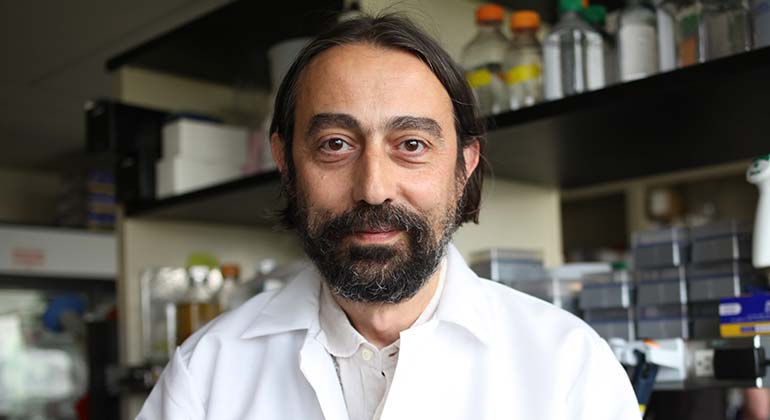
Adolfo García-Sastre, PhD, Director of the Global Health and Emerging Pathogens Institute at the Icahn School of Medicine at Mount Sinai, will serve as principal investigator for the Center for Research on Influenza Pathogenesis (CRIP), one of the five centers.
To head off flu pandemics, researchers at Mount Sinai will look at human exposure¬ airborne of direct contact transmission, and the transmission of the virus between animals and human. "We are thrilled to be part of an international collaboration that will collect samples from around the globe," said Dr.García-Sastre. "Researchers from the far corners of the world will send samples collected from animals with a swab and transport them to laboratories at Mount Sinai and other institutions." (A full list of institutions participating in the contract appears at the bottom of this release.)
The Icahn School of Medicine at Mount Sinai team is set to conduct animal surveillance studies, including surveys of marine animals and wild birds in the Atlantic region. This information will shed light on virus evolution in animal reservoirs. Basic research will be performed at Mount Sinai's microbiology and genetics laboratories, as well as labs within this network. The focus of the research will include analyses of virus-host interactions, with the goal of determining why some influenza virus types cause more serious disease than others.
"What we hope to provide is basic understanding of the biology and transmission of novel influenza viruses so that the World Health Organization and the Centers for Disease Control and Prevention may develop the best countermeasures when an outbreak occurs."
Dr. García-Sastre added, "We are grateful to the National Institute of Allergy and Infectious Diseases [part of the National Institutes of Health] for its generous support of this work. We hope that with new knowledge, better vaccines to prevent transmission may be developed."
Other members of the Center for Research on Influenza Pathogenesis, at the Icahn School of Medicine at Mount Sinai, include Peter Palese, PhD, Professor and Chairman of Microbiology, Megan Shaw PhD, Ana Fernandez-Sesma PhD, Nicole Bouvier MD, Harm van Bakel PhD, Florian Krammer PhD, Randy Albrecht PhD, and Melissa Uccellini PhD. CRIP collaborators also include investigators from the following institutions: University of Maryland; University of Wisconsin-Madison; MIT; University of California, Davis; University of Alaska, Anchorage; Erasmus Medical Center, The Netherlands; University of Cambridge, UK; Catholic University of Chile; and Instituto Nacional de Investigación y Tecnología Agraria y Alimentaria, in Madrid, Spain.
The CEIRS Network will have a worldwide reach, with established or planned collaborations at more than two dozen sites in the United States, Asia, South America, Europe, and Australia.
The Mount Sinai team previously received a 2007 award from the National Institutes of Health's National Institute of Allergy and Infectious Diseases. With that award, the team characterized the pandemic H1N1 virus of 2009.
About the Mount Sinai Health System
Mount Sinai Health System is one of the nation’s leading integrated academic health systems and one of the largest in the New York metropolitan area. Its comprehensive system includes seven hospitals, more than 400 outpatient practices, over 600 research and clinical laboratories, the Icahn School of Medicine at Mount Sinai, the Graduate School of Biomedical Sciences, and the Mount Sinai Phillips School of Nursing. Together, the Health System comprises approximately 48,000 employees, more than 9,000 physicians, and 8,600 nurses.
As a leading learning health system, Mount Sinai combines clinical expertise with scientific discovery to improve patient care while training the next generation of health care and biomedical leaders. The Health System provides care across every stage of life, from prenatal care through geriatrics, while advancing personalized medicine through artificial intelligence, data science, and biomedical research.
Mount Sinai is consistently recognized among the nation’s leading academic health systems for patient care, research, and education. The Mount Sinai Hospital is ranked No. 1 in New York by Newsweek® and No. 7 in the U.S. on the magazine’s 2026 World’s Best Hospitals list and No. 3 in the world in its World’s Best Smart Hospitals list. The Icahn School of Medicine at Mount Sinai ranks No. 9 among U.S. medical schools and No. 1 among freestanding medical schools for National Institutes of Health grant funding, reflecting the strength of its scientific enterprise and leadership in biomedical research.
Scientists Uncover How COVID-19 Variants Outsmart the Immune System
Nov 21, 2025 View All Press Releases