Mount Sinai Study Detects Immune Changes Up to 10 Years Before Inflammatory Bowel Disease Is Diagnosed
Researchers identify antibody signatures years before symptoms appear, opening new avenues for earlier detection and prevention
Researchers at the Icahn School of Medicine at Mount Sinai have identified immune system changes that can be detected up to 10 years before inflammatory bowel disease (IBD) develops, offering new insight into how the disease begins.
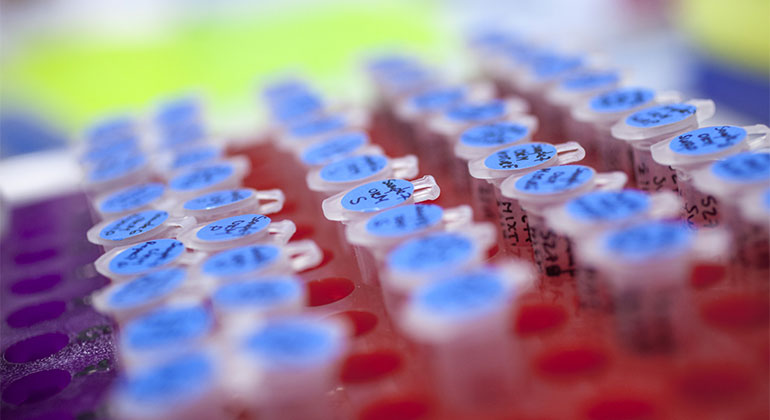
Published July 21 in Gut, the study is one of the most comprehensive investigations to date of the preclinical phase of IBD. Using antibody profiling technology, researchers analyzed nearly 2,000 blood samples collected over about a decade from people who later developed Crohn's disease or ulcerative colitis. They identified unique antibody signatures against viruses and bacteria—particularly Epstein-Barr virus and bacterial flagellins—that were present years before diagnosis, suggesting that abnormal immune activity begins long before the disease becomes clinically apparent.
"IBD does not develop overnight," said Saurabh Mehandru, MD, corresponding author of the study and Professor of Medicine (Gastroenterology) at the Icahn School of Medicine at Mount Sinai. "Our findings show that the immune system is already changing years before patients experience their first symptoms. By understanding these early immune changes, we hope to uncover the biological events that trigger disease and ultimately develop strategies to identify, and one day prevent, IBD before it starts."
Researchers profiled antibody responses against 357,000 viral, bacterial, and other antigens in blood samples collected approximately 10 years, 4 years, and 2 years before diagnosis, as well as shortly after diagnosis. The study included 200 people who later developed Crohn's disease, 200 people who developed ulcerative colitis, and 100 healthy individuals. Antibody responses evolved over time and differed significantly between people who developed IBD and those who remained healthy. Many of the strongest signals were already detectable at the earliest time point, approximately 10 years before diagnosis.
Among the most striking findings were elevated antibody responses against Epstein-Barr virus and bacterial flagellins in people who later developed Crohn's disease. These immune signatures remained detectable years before diagnosis and support growing evidence that interactions between infections, the gut microbiome, and the immune system may contribute to the earliest stages of IBD. The findings also support the theory of molecular mimicry, in which immune responses to viruses or bacteria may inadvertently target the body's own tissues.
"This study allowed us to watch the immune system evolve over an entire decade before disease was diagnosed," said Arno R. Bourgonje, MD, PhD, first author of the study and a postdoctoral fellow in gastroenterology at the Icahn School of Medicine at Mount Sinai. "By mapping antibody responses over time, we identified distinct patterns that separate people who later develop IBD from those who remain healthy. These findings provide an important framework for understanding the earliest stages of disease development."
While additional research is needed before these antibody signatures can be used clinically, the findings could eventually help identify people at increased risk for IBD, particularly relatives of patients with the disease, and guide future prevention strategies.
"For years, we've known that inflammatory bowel disease has a long silent phase before symptoms emerge, but we have had limited insight into what is happening during that period," said Jean-Frédéric Colombel, MD, co-corresponding author of the study and Director of the Susan and Leonard Feinstein Inflammatory Bowel Disease Clinical Center at the Icahn School of Medicine at Mount Sinai. "This work provides one of the clearest pictures yet of the immune changes that precede IBD and moves the field closer to earlier diagnosis and, ultimately, disease prevention." Dr. Colombel is also a Professor of Medicine (Gastroenterology) at Mount Sinai.
The study was conducted by researchers at the Icahn School of Medicine at Mount Sinai in collaboration with the Medical University of Vienna in Austria. The research was supported through institutional and philanthropic funding. The investigators will continue studying the biology of the preclinical phase of IBD to better understand disease initiation and develop strategies to identify and prevent disease before symptoms arise.
About the Mount Sinai Health System
Mount Sinai Health System is one of the nation’s leading integrated academic health systems and one of the largest in the New York metropolitan area. Its comprehensive system includes seven hospitals, more than 400 outpatient practices, over 600 research and clinical laboratories, the Icahn School of Medicine at Mount Sinai, the Graduate School of Biomedical Sciences, and the Mount Sinai Phillips School of Nursing. Together, the Health System comprises approximately 48,000 employees, more than 9,000 physicians, and 8,600 nurses.
As a leading learning health system, Mount Sinai combines clinical expertise with scientific discovery to improve patient care while training the next generation of health care and biomedical leaders. The Health System provides care across every stage of life, from prenatal care through geriatrics, while advancing personalized medicine through artificial intelligence, data science, and biomedical research.
Mount Sinai is consistently recognized among the nation’s leading academic health systems for patient care, research, and education. The Mount Sinai Hospital is ranked No. 1 in New York by Newsweek and No. 5 on the magazine’s World’s Best Hospitals list. The Icahn School of Medicine at Mount Sinai ranks No. 11 among U.S. medical schools and No. 1 among freestanding medical schools for National Institutes of Health funding, reflecting the strength of its scientific enterprise and leadership in biomedical research.