
National Healthy Eating Day is November 6th
The Mount Sinai Hospital raises awareness of the importance of heart-healthy food choices when cooking at home, eating-out, and at work.
National Healthy Eating Day is this Wednesday, November 6. Mount Sinai Heart and Food and Nutrition Services at The Mount Sinai Hospital are teaming up on this special day to raise awareness of the importance of making daily heart-healthy food choices when you are cooking at home, eating-out, or at work.
In honor of National Healthy Eating Day, the top chefs at The Mount Sinai Hospital will be offering heart-healthy food options in their cafeteria, and an interactive cooking demonstration with free heart-healthy food samples. Also a free apple, a heart healthy snack, will also be shared as a giveaway to the thousands of expected event participants, along with free educational materials and heart-healthy recipe cards.
"National Healthy Eating Day" Celebration
- Free cooking demonstration
- Free heart-healthy food samples
- Free apples
- Free heart-healthy recipe cards
- Free educational brochures
Wednesday, November 6
11:00am-2:00pm
Cafeteria at The Mount Sinai Hospital
1468 Madison Avenue, at E100th Street
New York, NY, 10029
- Beth Oliver, DNP, RN, VP of Clinical Operations,Mount Sinai Heart
- Matthew Krimsky, Senior Exec. Chef, Food and Nutrition Services, Mount Sinai Hospital
- Rolando Rivera, Exec. Retail Chef, Food and Nutrition Services, Mount Sinai Hospital
National Healthy Eating Day, sponsored by the American Heart Association (AHA) on the first Wednesday of each November, is part of its new nationwide program initiative called My Heart.My Life. The AHA is calling on all Americans, communities, and workplaces like The Mount Sinai Hospital to make a pledge to come together to take steps toward living a healthier life by promoting daily healthy eating, exercise, and an overall heart-healthy lifestyle.
More than 144 million adult Americans are overweight or obese, along with more than one-third of children and teens. The obesity epidemic is leading to a greater prevalence of heart disease — the number one killer of Americans. Contributing to this healthcare crisis may be the increased level of eating-out dining which has doubled over the last few decades causing more Americans to consume meals higher in portion size, fat, calories, and sodium. The AHA is urging Americans to prepare more healthy meals for themselves and their families at home while choosing more healthy foods when at work or eating-out.
"A heart-healthy diet starts at home, and then at work where we spend a great deal of our time," says Beth Oliver, DNP, RN, VP of Clinical Operations at Mount Sinai Heart. "Our goal at Mount Sinai is to raise awareness of the vital importance of a daily heart-healthy lifestyle and to start to offer the healthiest food choices not only to our patients, but also to our employees as well. Your heart-healthy meal plate should aim to have 1-cup of vegetables, a half-cup of whole grains, and 3 oz. of lean protein. Also, remember to always have five-servings of fruits and vegetables per day."
This is why Food and Nutrition Services at The Mount Sinai Hospital, powered by the Compass Group, is working toward launching in December 2013 its heart-healthy "Great Living" menu to all inpatients, and all employees and visitors to the Mount Sinai cafeteria. The mission is to offerflavorful heart-healthy eating options. Mount Sinai has already taken steps to eliminating some unhealthy foods. For example, it has replaced fried chicken with a dedicated baked meats carving station.
Mount Sinai Hospital's top chefs are recommending you incorporate into your heart-healthy diet and home cooking food choices that they incorporate into Mount Sinai's menus.
Heart-healthy recommended food choices include:
- Colorful fruits and vegetables
- Whole wheat bread (no white bread)
- Brown rice or brown rice blends (no white rice)
- Olive and canola oils (instead of butter)
- Lean-meats
- Fish
- Poultry (free of antibiotics)
- Cage-free eggs
- Low-fat dairy products
- Yogurt
- Nuts
- Cinnamon
- Pomegranate juice
- Strawberries, blueberries, or raspberries
- Beans
- Fresh herbs, garlic, and spices (limit salt)
About the Mount Sinai Health System
Mount Sinai Health System is one of the nation’s leading integrated academic health systems and one of the largest in the New York metropolitan area. Its comprehensive system includes seven hospitals, more than 400 outpatient practices, over 600 research and clinical laboratories, the Icahn School of Medicine at Mount Sinai, the Graduate School of Biomedical Sciences, and the Mount Sinai Phillips School of Nursing. Together, the Health System comprises approximately 48,000 employees, more than 9,000 physicians, and 8,600 nurses.
As a leading learning health system, Mount Sinai combines clinical expertise with scientific discovery to improve patient care while training the next generation of health care and biomedical leaders. The Health System provides care across every stage of life, from prenatal care through geriatrics, while advancing personalized medicine through artificial intelligence, data science, and biomedical research.
Mount Sinai is consistently recognized among the nation’s leading academic health systems for patient care, research, and education. The Mount Sinai Hospital is ranked No. 1 in New York by Newsweek and No. 5 on the magazine’s World’s Best Hospitals list. The Icahn School of Medicine at Mount Sinai ranks No. 11 among U.S. medical schools and No. 1 among freestanding medical schools for National Institutes of Health funding, reflecting the strength of its scientific enterprise and leadership in biomedical research.



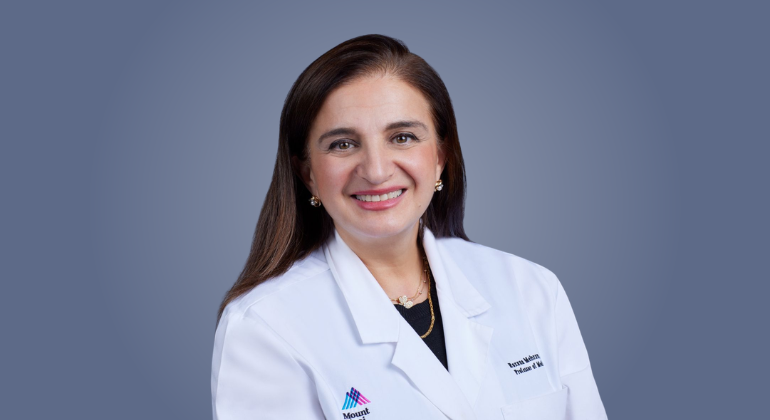
Mount Sinai’s Roxana Mehran, MD, Named President of the American College of Cardiology
Mar 30, 2026 View All Press Releases



Mount Sinai Scientists Uncover Link Between Influenza and Heart Disease
Feb 09, 2026 View All Press Releases