
New Treatment Approach for Calcified Nodules Shown to Improve Coronary Stent Expansion in Mount Sinai Clinical Trial
Study results show combining two techniques can increase stent area by 19 percent and lead to improved patient outcomes
A randomized clinical trial at The Mount Sinai Hospital found that combining two techniques for removing calcium nodules—rotational atherectomy and intravascular lithotripsy (IVL)—before coronary stent placement allowed stents to expand more fully than IVL alone in patients with calcified coronary nodules.
Using this novel treatment approach yielded a stent area approximately 19 percent larger than that achieved with the standard, single, treatment, the NODULE-SHOCK study found. The researchers presented their findings Sunday, November 1, during a Featured Clinical Research session at the Transcatheter Cardiovascular Therapeutics conference in San Diego. The results were simultaneously published in JACC: Cardiovascular Interventions.
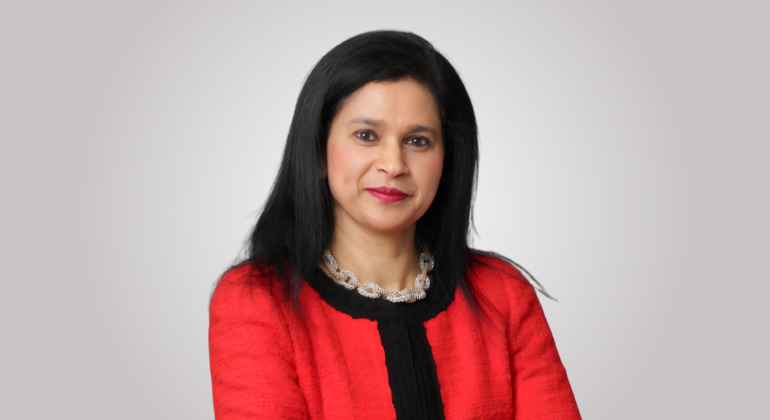
“Calcified nodules are among the most challenging coronary lesions because their hard, irregular structure prevents stents from fully expanding. Our study introduces the 'Shave and Shake' concept: using rotational atherectomy to modify protruding calcium, followed by lithotripsy to fracture deeper calcium," explains lead researcher Annapoorna S. Kini, MD, Director of the Cardiac Catheterization Lab at The Mount Sinai Hospital, and the Zena and Michael A. Wiener Professor of Medicine at the Icahn School of Medicine at Mount Sinai. “Combining these complementary technologies resulted in larger and more uniformly expanded stents. This supports taking a more personalized approach for these complex cases, based on the type of calcium, rather than treating all calcified lesions the same way.”
Patients with severely blocked coronary arteries require percutaneous coronary intervention (PCI). In this non-surgical procedure, interventional cardiologists use a catheter to place stents in the blocked coronary arteries to restore blood flow. Calcium nodules appear in up to 30 percent of PCI cases. They are hard, irregular calcium deposits that protrude into coronary arteries, making it difficult to fully expand a stent. Inadequate stent expansion is associated with worse long-term outcomes, including re-narrowing of the artery, blood clots, and repeat procedures.
Cardiologists detect these nodules with advanced intravascular imaging and treat them using one of two comparable technologies: they either shave the nodules with rotational atherectomy, which uses a small rotating burr to smooth the nodules down, or break them up with IVL using shockwave pulses from a specialized balloon to fracture or “shake” the calcium deposits and improve vessel flexibility.
Dr. Kini and her research team tested whether using rotational atherectomy plus IVL could achieve better stent expansion than IVL alone for patients with calcified nodules. The team also tested whether delivering additional IVL pulses provided further benefit. NODULE-SHOCK is the first randomized trial specifically analyzing these techniques in patients with calcified nodules.
Researchers enrolled 120 patients at The Mount Sinai Hospital with severely calcified coronary arteries. They assessed coronary calcium nodules using optical coherence tomography (OCT), an intravascular imaging technique.
Among 66 patients with calcified nodules, 33 were assigned to rotational atherectomy plus IVL and 33 to IVL alone. Researchers used OCT to characterize the calcium nodules before treatment, assess its response to the treatment techniques, and measure the final stent expansion. Combining rotational atherectomy and IVL resulted in approximately a 19 percent greater stent area than IVL alone. More specifically, the final stent area averaged 7.41 mm² with rotational atherectomy plus IVL versus 6.23 mm² with IVL alone. Stents in the combined therapy group were also more circular and symmetric. Procedural success was 100 percent in the combined therapy group versus 97 percent with IVL alone.
The same study also looked at a different cohort of patients with severely calcified lesions but without calcified nodules. All patients were treated with IVL alone, and researchers wanted to test whether additional IVL pulses were effective in improving stent expansion. Among a total of 54 enrolled patients, 27 patients were assigned to a maximum-pulse IVL strategy (up to 120 pulses) and 27 to physician-selected IVL dosing (approximately 75-80 pulses). Researchers found that extra pulses did not improve stent expansion. More specifically, patients in the maximum-pulse group received an average of 114 pulses, compared with 75 in the physician-selected group, but the final stent area was similar (5.50 versus 5.56 mm²).
Across both cohorts in the entire study, investigators reported no deaths, heart attacks, repeat procedures involving the treated artery, or stent thromboses during the first 30 days.
"The important message from NODULE-SHOCK is that more treatment is not always better, but choosing the right treatment for the right type of calcium may be,” adds Dr. Kini. “Our findings support moving toward more personalized coronary interventions, guided by the characteristics of each patient's calcium deposits."
One-year follow-up is ongoing. Larger, randomized trials at multiple centers are needed to determine whether greater stent expansion improves longer-term clinical outcomes.
Mount Sinai Is a World Leader in Cardiology and Heart Surgery
Mount Sinai Fuster Heart Hospital at The Mount Sinai Hospital ranks No. 5 nationally for cardiology, heart and vascular surgery, according to U.S. News & World Report®. It also ranks No. 1 in New York and No. 6 globally for cardiology, according to Newsweek’s “World’s Best Specialized Hospitals” for 2026.
It is part of the Mount Sinai Health System, which is New York City's largest academic medical system, encompassing seven hospitals, a leading medical school, and a vast network of ambulatory practices throughout the greater New York region. We advance medicine and health through unrivaled education and translational research and discovery to deliver care that is the safest, highest-quality, most accessible and equitable, and the best value of any health system in the nation. The Health System includes more than 9,000 primary and specialty care physicians; 10 free-standing joint-venture centers throughout the five boroughs of New York City, Westchester, Long Island, and Florida; and 47 multidisciplinary research, educational, and clinical institutes. Hospitals within the Health System are consistently ranked by Newsweek’s® “World’s Best Specialized Hospitals” and “World’s Best Smart Hospitals,” and by U.S. News & World Report's® “Best Hospitals” and “Best Children’s Hospitals.” The Mount Sinai Hospital is on the U.S. News & World Report's® “Best Hospitals” Honor Roll for 2026-27. For more information, visit https://www.mountsinai.org or find Mount Sinai on Facebook, Instagram, LinkedIn, X, and YouTube.
About the Mount Sinai Health System
Mount Sinai Health System is one of the nation’s leading integrated academic health systems and one of the largest in the New York metropolitan area. Its comprehensive system includes seven hospitals, more than 400 outpatient practices, over 600 research and clinical laboratories, the Icahn School of Medicine at Mount Sinai, the Graduate School of Biomedical Sciences, and the Mount Sinai Phillips School of Nursing. Together, the Health System comprises approximately 48,000 employees, more than 9,000 physicians, and 8,600 nurses.
As a leading learning health system, Mount Sinai combines clinical expertise with scientific discovery to improve patient care while training the next generation of health care and biomedical leaders. The Health System provides care across every stage of life, from prenatal care through geriatrics, while advancing personalized medicine through artificial intelligence, data science, and biomedical research.
Mount Sinai is consistently recognized among the nation’s leading academic health systems for patient care, research, and education. The Mount Sinai Hospital is ranked No. 1 in New York by Newsweek® and No. 7 in the U.S. on the magazine’s 2026 World’s Best Hospitals list and No. 3 in the world in its World’s Best Smart Hospitals list. The Icahn School of Medicine at Mount Sinai ranks No. 9 among U.S. medical schools and No. 1 among freestanding medical schools for National Institutes of Health grant funding, reflecting the strength of its scientific enterprise and leadership in biomedical research.