
Mount Sinai and King Saud University Medical City Forge a Three-Year Collaboration to Advance Precision Medicine in Familial Inflammatory Bowel Disease
Mount Sinai and King Saud University Medical City in Riyadh, Saudi Arabia, today announced a three-year collaboration aimed at better understanding why inflammatory bowel disease (IBD) runs in some Saudi families, and how that knowledge can lead to risk ascertainment, earlier diagnosis and more personalized treatment options.
The project will focus on Saudi families with multiple members affected by IBD, including Crohn’s disease and ulcerative colitis. By identifying exposure and biological markers that drive disease mechanisms and outcomes in these high-risk families, the parties aim to accelerate the development of new diagnostics and therapies tailored to individual patients around the world.
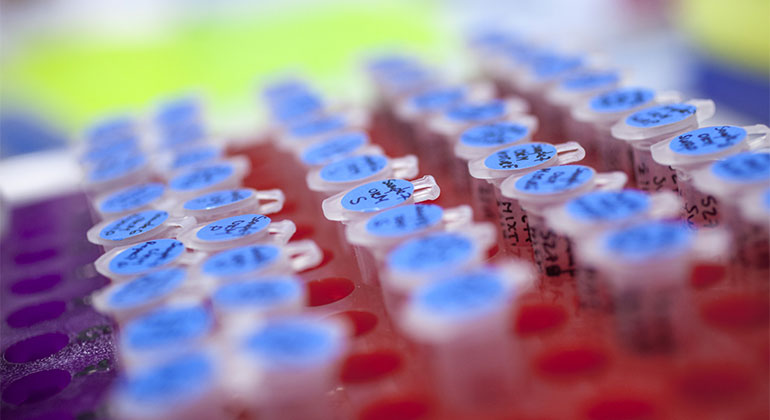
As part of the collaboration, King Saud University Medical City will identify and enroll eligible participants and collect whole blood, serum, and stool samples, along with de-identified health and family history information, from individuals with IBD and relatives at increased risk. Mount Sinai will lead advanced biomarker discovery and integrative analyses using multi-omics profiling and other state-of-the-art research tools.
“Familial IBD is still poorly understood, even though families with several affected members can teach us a great deal about how these diseases develop,” says Jean-Frédéric Colombel, MD, Professor of Medicine (Gastroenterology) and Director of the Susan and Leonard Feinstein Inflammatory Bowel Disease Clinical Center at the Icahn School of Medicine at Mount Sinai. “What makes this collaboration exciting is the ability to study well-characterized families alongside comprehensive molecular data. That combination is rare, and it gives us a real chance to pinpoint early signals of disease. Over time, we hope these insights will help clinicians recognize risk sooner and make more informed decisions about which treatments are likely to help.”
The collaboration is designed to enable structured sample collection, data sharing, and joint analyses, creating a unique resource of high-quality biospecimens linked with detailed clinical information and family pedigrees. By studying families particularly likely to experience the genetic, nongenetic, and biological factors that influence IBD, the project aims to inform the development of next-generation diagnostic tools and therapies. If successful, the findings could help clinicians identify at-risk individuals sooner, stratify risk in high-burden families, and tailor treatments with greater precision.
“Familial IBD gives us a rare opportunity to study the immune system in a context where genetics and environment are clearly interacting,” says Miriam Merad, MD, PhD, Chair of Immunology and Immunotherapy and Director of the Marc and Jennifer Lipschultz Precision Immunology Institute at the Icahn School of Medicine at Mount Sinai. “When several people in the same family are affected, we can follow how immune signals shift over time and begin to understand why some relatives develop disease while others do not. The combination of high-quality samples and detailed clinical histories will allow us to map those immune changes with much more clarity. That knowledge is critical if we want to build diagnostics or treatments that truly meet patients where they are, rather than relying on a one-size-fits-all model of care.”
Operational next steps include finalizing cohort size, visit schedule, and logistics for regulatory approvals, sample handling, and data transfer. After the initial three-year term, Mount Sinai and King Saud University Medical City may consider extending the collaboration to pursue promising discoveries into translational studies.
“For families living with IBD, uncertainty can last for years—especially for relatives who worry they may be next,” says Nahla Azzam, MD, Professor of Medicine at King Saud University and IBD consultant at King Saud University Medical City. “Familial clustering gives us a valuable opportunity to recognize earlier patterns of risk and disease activity. By following families carefully and linking clinical histories with high-quality biospecimens, we hope to shorten the time to diagnosis and guide treatment choices with greater confidence and better outcomes.”
“This collaboration reflects our commitment to building a discovery platform that translates rigorous clinical data into actionable precision medicine,” says Abdurahman Niazy, PhD, Director of the Prince Naif Bin Abdulaziz Health Research Center, the research arm of King Saud University Medical City. “By combining KSUMC’s ability to identify and characterize high-risk familial cohorts with Mount Sinai’s advanced multi-omics and integrative biomarker discovery capabilities, we aim to define clearer biological signals that support earlier risk assessment and more precise, individualized treatment strategies—first for families in Saudi Arabia, and ultimately for patients worldwide.”
“This work exemplifies a shared dedication to advancing science in immune-mediated diseases through truly global collaboration,” says Manasi Agrawal, MD, MS, inaugural Director of Environmental Gastroenterology in the Henry D. Janowitz Division of Gastroenterology, and Assistant Professor in the Departments of Medicine and Environmental Medicine at the Icahn School of Medicine at Mount Sinai. “As inflammatory bowel disease continues to increase worldwide at an unprecedented pace—closely tracking major environmental and lifestyle changes—the need to unite complementary strengths has never been more urgent. By combining rigorous clinical and biomarker data, deep scientific expertise, and a common focus on the lived experiences of families affected by IBD, we are creating opportunities for discovery that would not be possible independently. Together, we are laying the groundwork to uncover clearer biological signals and to chart a path toward earlier diagnosis and more effective, personalized treatment strategies—and, ultimately, enabling IBD prevention and risk mitigation.”
About the Icahn School of Medicine at Mount Sinai
The Icahn School of Medicine at Mount Sinai is internationally renowned for its outstanding research, educational, and clinical care programs. It is the sole academic partner for the seven member hospitals* of the Mount Sinai Health System, one of the largest academic health systems in the United States, providing care to New York City’s large and diverse patient population.
The Icahn School of Medicine at Mount Sinai offers highly competitive MD, PhD, MD-PhD, and master’s degree programs, with enrollment of more than 1,200 students. It has the largest graduate medical education program in the country, with more than 2,600 clinical residents and fellows training throughout the Health System. Its Graduate School of Biomedical Sciences offers 13 degree-granting programs, conducts innovative basic and translational research, and trains more than 560 postdoctoral research fellows.
Ranked 11th nationwide in National Institutes of Health (NIH) funding, the Icahn School of Medicine at Mount Sinai is among the 99th percentile in research dollars per investigator according to the Association of American Medical Colleges. More than 4,500 scientists, educators, and clinicians work within and across dozens of academic departments and multidisciplinary institutes with an emphasis on translational research and therapeutics. Through Mount Sinai Innovation Partners (MSIP), the Health System facilitates the real-world application and commercialization of medical breakthroughs made at Mount Sinai.
About King Saud University Medical City ,King Saud University
King Saud University Medical City (KSUMC) in Riyadh is a tertiary-care academic medical center affiliated with King Saud University (KSU). KSUMC is a multi-hospital, multi-specialty complex that includes King Khalid University Hospital, King Abdul-Aziz University Hospital, and the University Dental Hospital, alongside specialized centers such as the University Diabetes Center, King Fahad Cardiac Center, University Oncology Center, King Abdullah Ear Specialists, and a Clinical Skills and Simulation Center.
KSUMC supports integrated clinical care, education, and training at scale. The Medical City includes more than 1,300 full-time physicians, 853 residents and fellows, and approximately 2,072 allied health personnel. Collectively, the system provides care to more than 1,229,628 outpatients, admits 45,966 patients, and performs around 14,231 procedures each year.
Research at KSUMC is advanced through the Prince Naif Bin Abdulaziz Health Research Center (PNHRC), which supports investigators through specialized laboratories, research infrastructure, and national and international partnerships, and promotes engagement of postgraduate trainees and intern physicians in health research. Underpinning this ecosystem, King Saud University was established by Royal Decree in 1377H (1957) and operates under an institutional charter as an independent, non-profit academic institution.
-------------------------------------------------------
* Mount Sinai Health System member hospitals: The Mount Sinai Hospital; Mount Sinai Brooklyn; Mount Sinai Morningside; Mount Sinai Queens; Mount Sinai South Nassau; Mount Sinai West; and New York Eye and Ear Infirmary of Mount Sinai
About the Mount Sinai Health System
Mount Sinai Health System is one of the nation’s leading integrated academic health systems and one of the largest in the New York metropolitan area. Its comprehensive system includes seven hospitals, more than 400 outpatient practices, over 600 research and clinical laboratories, the Icahn School of Medicine at Mount Sinai, the Graduate School of Biomedical Sciences, and the Mount Sinai Phillips School of Nursing. Together, the Health System comprises approximately 48,000 employees, more than 9,000 physicians, and 8,600 nurses.
As a leading learning health system, Mount Sinai combines clinical expertise with scientific discovery to improve patient care while training the next generation of health care and biomedical leaders. The Health System provides care across every stage of life, from prenatal care through geriatrics, while advancing personalized medicine through artificial intelligence, data science, and biomedical research.
Mount Sinai is consistently recognized among the nation’s leading academic health systems for patient care, research, and education. The Mount Sinai Hospital is ranked No. 1 in New York by Newsweek® and No. 7 in the U.S. on the magazine’s World’s Best Hospitals 2026 list. The Icahn School of Medicine at Mount Sinai ranks No. 9 among U.S. medical schools and No. 1 among freestanding medical schools for National Institutes of Health grant funding, reflecting the strength of its scientific enterprise and leadership in biomedical research.