
Mount Sinai Researchers Develop Method to Identify Dormant Cells That Carry HIV
Study findings provide a new gene pathway for potential treatment of the virus affecting millions
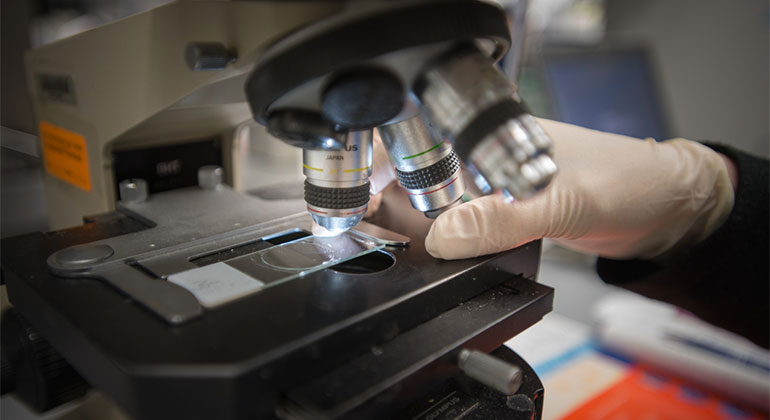
Mount Sinai researchers have developed a method to uncover the hidden immune cells that harbor the human immunodeficiency virus (HIV), a discovery that brings medical experts one step closer to a cure for the infection affecting nearly 40 million people globally. The findings were published in Nature Communications on March 6.
HIV is a virus that attacks cells in the body fighting off infections, thus weakening the immune system. Antiretroviral therapies can treat the HIV infection by halting the spread of the virus and protecting the immune system, but do not cure the virus. Mount Sinai researchers have developed a method to genetically mark immune cells that carry HIV, an important milestone that could potentially lead to approaches that eliminate the dormant HIV-infected cells and cure the virus.
The team created a novel cell lineage-tracing model to reveal where the virus hides, and developed genetic profiles of T cells, or white blood cells that are crucial to immune response and retain either active or inactive HIV. The researchers said their genetic analysis of the dormant HIV-infected cells provides a new gene pathway for potential treatment.
“The main obstacle to cure the infection is the virus hides in immune cells that are difficult to identify and study. If we can identify the cells infected with HIV, it will help bring us closer to figuring out how to eliminate them,” said corresponding author Benjamin K. Chen, MD, PhD, Professor of Medicine (Infectious Diseases), Microbiology, Pharmacological Sciences, and Immunology and Immunotherapy at the Icahn School of Medicine at Mount Sinai.
The researchers developed a genetic system to mark HIV-infected cells and then study both infected and dormant cell populations. They used humanized mice models to develop a fluorescent red-to-green switch triggered by the HIV infection that persists even if the virus is dormant. This switch results in the permanent marking of HIV-infected cells in mice and enables lineage tracing of the HIV infection. The research team profiled more than 47,000 T cells including acutely infected, treated, and uninfected cells, to then identify helper T cells (which detect infections), memory cells, naïve cells (which fight off infections), proliferating cells, regulatory T cells, and subsets within these larger groups. Through their analysis, they predicted and identified nine distinct types of T cells that housed inactive HIV cells. Their investigation also identified persistent T cells with HIV even after 10 and 29 days of antiretroviral therapies.
The findings suggest new therapies that target the reservoir of dormant HIV-infected cells as a potential cure for the virus. The Mount Sinai team will next study and test specific approaches to reactivate dormant HIV and determine if it is possible to reduce the reservoir of infected cells.
The study was supported by funding from the National Institute of Allergy and Infectious Diseases and the National Institutes of Health (AI116191, AI162223, S10OD026880, and S10OD030463), and the Clinical and Translational Science Awards (CTSA) grant from the National Center for Advancing Translational Sciences (UL1TR004419).
About the Mount Sinai Health System
Mount Sinai Health System is one of the nation’s leading integrated academic health systems and one of the largest in the New York metropolitan area. Its comprehensive system includes seven hospitals, more than 400 outpatient practices, over 600 research and clinical laboratories, the Icahn School of Medicine at Mount Sinai, the Graduate School of Biomedical Sciences, and the Mount Sinai Phillips School of Nursing. Together, the Health System comprises approximately 48,000 employees, more than 9,000 physicians, and 8,600 nurses.
As a leading learning health system, Mount Sinai combines clinical expertise with scientific discovery to improve patient care while training the next generation of health care and biomedical leaders. The Health System provides care across every stage of life, from prenatal care through geriatrics, while advancing personalized medicine through artificial intelligence, data science, and biomedical research.
Mount Sinai is consistently recognized among the nation’s leading academic health systems for patient care, research, and education. The Mount Sinai Hospital is ranked No. 1 in New York by Newsweek® and No. 7 in the U.S. on the magazine’s World’s Best Hospitals 2026 list. The Icahn School of Medicine at Mount Sinai ranks No. 9 among U.S. medical schools and No. 1 among freestanding medical schools for National Institutes of Health grant funding, reflecting the strength of its scientific enterprise and leadership in biomedical research.