
Mount Sinai Researchers Develop a Rapid Test to Measure Immunity to COVID-19
New blood assay provides critical information for revaccination strategies in vulnerable individuals
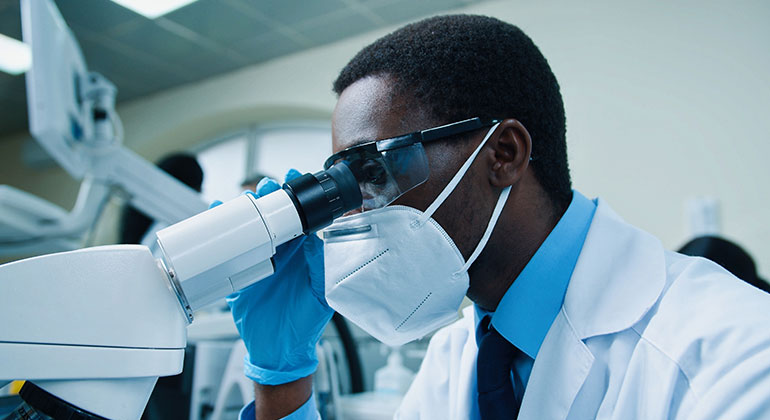
Mount Sinai researchers have developed a rapid blood assay that measures the magnitude and duration of someone’s immunity to SARS-CoV-2, the virus that causes COVID-19. This test will allow large-scale monitoring of the population’s immunity and the effectiveness of current vaccines to help design revaccination strategies for vulnerable immunosuppressed individuals, according to a study published in Nature Biotechnology in June.
The test takes less than 24 hours to perform and is scalable to use broadly in the population. It measures the activation of T cells, which are part of our adaptive immune response to SARS-CoV-2 infection or vaccination and help protect against severe disease outcomes or death.
“The assay we have created has the ability to measure the population’s cellular immunity and broadly test the efficacy of novel vaccines,” said one of the study’s senior authors, Ernesto Guccione, PhD, Professor of Oncological Sciences, and Pharmacological Sciences, at The Tisch Cancer Institute at Mount Sinai. “We know that vulnerable populations don’t always mount an antibody response, so measuring T cell activation is critical to assess the full extent of a person’s immunity. Additionally, the emergence of SARS-CoV-2 variants like Omicron, which evade most of the neutralizing ability of antibodies, points to the need for assays that can measure T cells, which are more effective against emerging variants of concern.”
Long-term protection from viral infection is mediated by both antibodies and T cell response. Many recent studies point to the importance of determining T cell function in individuals who have recovered from or been vaccinated against COVID-19 to help design vaccination campaigns. However, before this study, measurement of T cell responses has been rarely performed because of the associated technical challenges.
In conducting this study, Mount Sinai researchers and partners at Duke-NUS Medical School optimized qPCR-based assays that had the potential to be globally scalable, sensitive, and accurate tests. Researchers narrowed their focus to the two assays that offered the most scalability. One, the qTACT assay, was accurate and sensitive but had a relatively longer processing time of 24 hours per 200 blood samples, a moderate price, and a medium level of technical skill. The other, the dqTACT assay, was accurate and had a reduced processing time and cost, and required minimal lab experience, making it easy to implement.
The dqTACT assay has recently been granted the European CE-IVD (in vitro diagnostics) certification, while U.S. Food and Drug Administration and European Medicines Agency clinical validation is ongoing.
“The assays presented here are based on the ability of SARS-CoV-2 T cells to respond to peptides covering different proteins of the virus,” said another senior author, Jordi Ochando, PhD, Assistant Professor of Oncological Sciences at the Tisch Cancer Institute at Mount Sinai and Assistant Professor of Medicine (Nephrology), and Pathology, Molecular, and Cell-Based Medicine at the Icahn School of Medicine at Mount Sinai. “With the possibility of using different peptide pools, our approach represents a flexible strategy that can be easily implemented to detect the presence of T cells responding to different viral proteins. These T cells have an important role in protection from emerging mutant strains, thus immediately gauging the impact that viral mutations might have on cellular immunity.”
Megan Schwarz, a graduate student at Icahn Mount Sinai and first author of the study, added, “Precise measurement of cellular responses underlying virus protection represents a crucial parameter of our levels of immune defense.”
This new study was conducted using laboratory diagnostic services of Synlab and Hyris SystemTM, Hyris' signature qPCR technology.
About the Mount Sinai Health System
Mount Sinai Health System is one of the nation’s leading integrated academic health systems and one of the largest in the New York metropolitan area. Its comprehensive system includes seven hospitals, more than 400 outpatient practices, over 600 research and clinical laboratories, the Icahn School of Medicine at Mount Sinai, the Graduate School of Biomedical Sciences, and the Mount Sinai Phillips School of Nursing. Together, the Health System comprises approximately 48,000 employees, more than 9,000 physicians, and 8,600 nurses.
As a leading learning health system, Mount Sinai combines clinical expertise with scientific discovery to improve patient care while training the next generation of health care and biomedical leaders. The Health System provides care across every stage of life, from prenatal care through geriatrics, while advancing personalized medicine through artificial intelligence, data science, and biomedical research.
Mount Sinai is consistently recognized among the nation’s leading academic health systems for patient care, research, and education. The Mount Sinai Hospital is ranked No. 1 in New York by Newsweek and No. 5 on the magazine’s World’s Best Hospitals list. The Icahn School of Medicine at Mount Sinai ranks No. 11 among U.S. medical schools and No. 1 among freestanding medical schools for National Institutes of Health funding, reflecting the strength of its scientific enterprise and leadership in biomedical research.