Low-cost Drug May Lessen Blood Loss in Hip and Knee Surgery
Treatment with an inexpensive, decades-old clotting drug reduces the need for blood transfusions during and after hip and knee replacement surgeries without increasing the risk of complications, according to a study by researchers at Icahn School of Medicine at Mount Sinai and Hospital for Special Surgery published online today in the British Medical Journal.
While commonly used in patients with bleeding disorders or heavy menstrual bleeding, the clotting drug tranexamic acid is now increasingly used to prevent excessive blood loss during hip and knee replacement surgery, a million of which are now performed each year in the United States. While there are benefits to this drug, there are also safety concerns as it prevents enzymes in the body from breaking down blood clots that could potentially cause complications such as thrombosis.
“Our study, an analysis of past data, found that the use of tranexamic acid in patients undergoing hip or knee replacement surgery was associated with an up to 70 percent decrease in the need for a blood transfusion, and without an increased risk of complications related to clotting.” said Jashvant Poeran, MD, PhD, Assistant Professor, Institute of Healthcare Delivery Science, Department of Population Science, Icahn School of Medicine at Mount Sinai, and lead author of the newly published study. “An increasing number of patients will require these surgeries as America ages, and maintaining their safety is very important.”
Using data from a national database, the researchers analyzed 872,416 total hip or knee replacement procedures at 510 US hospitals between 2006 and 2012. After adjusting for factors such as patient age, sex, hospital size and location, type of procedure and anesthesia used, patients given tranexamic acid (1000 mg, 2000 mg, or 3000 mg) on the day of surgery were compared with patients not given the drug.
The research team also found use of tranexamic acid to be associated with lower rates of admission to an intensive care unit (ICU), lower length of hospital stay, and lower costs of hospital stay. A dose of 2000 mg of tranexamic acid appeared to have the best effectiveness and safety profile.
“While there are some limitations to our study, the results appear to support the current practice of increasing use of this drug in hip and knee surgery,” said Dr. Poeran. “Identifying patients most likely to benefit – that is those at increased risk of bleeding and for requiring blood transfusions – is crucial. Additional studies are needed to confirm this benefit, including those that focus on optimal dosing.”
This study was done in partnership with the Department of Anesthesiology at the Hospital for Special Surgery in New York.
About the Mount Sinai Health System
Mount Sinai Health System is one of the nation’s leading integrated academic health systems and one of the largest in the New York metropolitan area. Its comprehensive system includes seven hospitals, more than 400 outpatient practices, over 600 research and clinical laboratories, the Icahn School of Medicine at Mount Sinai, the Graduate School of Biomedical Sciences, and the Mount Sinai Phillips School of Nursing. Together, the Health System comprises approximately 48,000 employees, more than 9,000 physicians, and 8,600 nurses.
As a leading learning health system, Mount Sinai combines clinical expertise with scientific discovery to improve patient care while training the next generation of health care and biomedical leaders. The Health System provides care across every stage of life, from prenatal care through geriatrics, while advancing personalized medicine through artificial intelligence, data science, and biomedical research.
Mount Sinai is consistently recognized among the nation’s leading academic health systems for patient care, research, and education. The Mount Sinai Hospital is ranked No. 1 in New York by Newsweek and No. 5 on the magazine’s World’s Best Hospitals list. The Icahn School of Medicine at Mount Sinai ranks No. 11 among U.S. medical schools and No. 1 among freestanding medical schools for National Institutes of Health funding, reflecting the strength of its scientific enterprise and leadership in biomedical research.






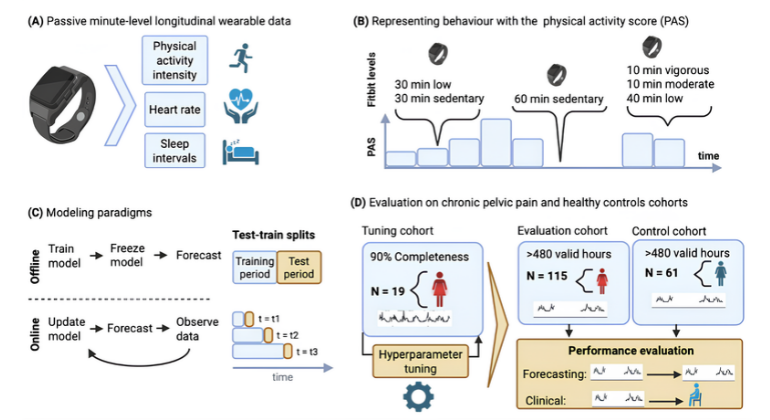
Wearable AI Forecasts Prolonged Sitting in Women With Chronic Pelvic Pain
Sep 30, 2026 View All Press Releases