
Wearable Devices May Help Detect Cytokine Release Syndrome Earlier in Patients Receiving CAR-T Therapy
Mount Sinai study suggests wearable monitoring may enable earlier detection of CAR-T-related toxicity and support safer outpatient care for patients with multiple myeloma

Researchers at the Icahn School of Medicine at Mount Sinai have found that wearable devices may help clinicians detect cytokine release syndrome (CRS)—a common and potentially serious side effect of CAR-T cell therapy—hours earlier than standard hospital monitoring in patients with multiple myeloma, a blood cancer that begins in plasma cells in the bone marrow.
The findings, published in JCI Insight (doi.org/10.1172/jci.insight.203988), suggest wearable technology could help make CAR-T therapy safer, expand access to treatment, and reduce reliance on prolonged hospital stays.
CAR-T therapy is a powerful treatment for relapsed or refractory multiple myeloma, a blood cancer that can be difficult to treat. In multiple myeloma, abnormal plasma cells multiply uncontrollably, crowd out healthy blood cells, and produce dysfunctional proteins, which can lead to bone pain, kidney damage, frequent infections, and fatigue.
The therapy works by engineering a patient’s own immune cells to attack cancer. However, patients receiving CAR-T therapy are at risk for CRS, an inflammatory reaction that can cause fever, low blood pressure, breathing problems, and other serious complications. It falls under the "cytokine storm" umbrella, commonly associated with immunotherapies like CAR-T cell cancer treatments. Because of this risk, many patients require hospitalization or intensive monitoring after treatment to ensure complications are identified and treated promptly.
In this pilot study, Mount Sinai researchers evaluated whether wearable sensors could continuously monitor patients for early signs of CRS and detect problems earlier than standard nursing assessments.
“Our study shows that wearable temperature monitoring may provide an early warning sign that a patient is beginning to develop cytokine release syndrome,” said senior corresponding author Samir Parekh, MD, Professor of Medicine (Hematology and Medical Oncology) at the Icahn School of Medicine at Mount Sinai. “If validated in larger studies, this approach could help expand access to CAR-T therapy by supporting safer outpatient treatment models and reducing the need for prolonged hospitalization.”
The prospective study enrolled 30 patients receiving CAR-T therapy for multiple myeloma at The Mount Sinai Hospital. Researchers used wearable devices to continuously monitor the patient’s skin and underarm temperature, heart rate, oxygen levels, breathing rate, and motion. Blood samples were also collected to study inflammatory proteins called cytokines, which are linked to CRS.
Among 25 evaluable patients, the wearable monitoring system detected 18 of 20 CRS episodes and identified signs of toxicity a median of seven hours before standard nursing recognition. Toxicity occurs when the immune system becomes hyperactive and releases excessive inflammatory proteins into the bloodstream. Researchers also found that changes in a cytokine called interferon gamma (IFN-γ) closely tracked temperature changes and may help improve future prediction models.
“Continuous monitoring gave us a clearer picture of how cytokine release syndrome develops in real time,” said co-corresponding author Adriana Rossi, MD, Associate Professor of Medicine (Hematology and Medical Oncology) at the Icahn School of Medicine at Mount Sinai. “Earlier detection could allow clinicians to intervene sooner, potentially reducing complications and improving the patient experience.”
The researchers say the findings could help expand CAR-T therapy into outpatient and community-based settings, enabling patients to recover at home and improving access for patients who live far from major cancer centers.
“This work highlights the potential of combining wearable technology with biologic markers to improve cancer care,” said co-corresponding author Alessandro Laganà, PhD, Assistant Professor of Genetics and Genomic Sciences, and Oncological Sciences, at the Icahn School of Medicine at Mount Sinai. “Our long-term goal is to develop smarter monitoring systems that help clinicians predict toxicity earlier, personalize care, and improve outcomes for patients receiving advanced cancer therapies.”
The authors caution that the study was small and conducted at a single center. Larger studies will be needed to confirm the findings, particularly in outpatient CAR-T settings.
The study was supported by Bristol Myers Squibb and the Center of Excellence for Multiple Myeloma Philanthropic Fund. Dr. Parekh was also supported by National Cancer Institute grants R01 CA244899 and R01 CA252222 and by Mount Sinai Tisch Cancer Center grant P30 CA196521. Dr. Laganà was supported by an American Society of Hematology Bridge Grant Award.
Full study: https://insight.jci.org/articles/view/203988
About the Icahn School of Medicine at Mount Sinai
The Icahn School of Medicine at Mount Sinai is internationally renowned for its outstanding research, educational, and clinical care programs. It is the sole academic partner for the seven member hospitals* of the Mount Sinai Health System, one of the largest academic health systems in the United States, providing care to New York City’s large and diverse patient population.
The Icahn School of Medicine at Mount Sinai offers highly competitive MD, PhD, MD-PhD, and master’s degree programs, with enrollment of more than 1,200 students. It has the largest graduate medical education program in the country, with more than 2,700 clinical residents and fellows training throughout the Health System. The Graduate School of Biomedical Sciences offers 13 degree-granting programs, conducts innovative basic and translational research, and trains more than 470 postdoctoral research fellows.
Ranked 11th nationwide in National Institutes of Health (NIH) funding, the Icahn School of Medicine at Mount Sinai is among the 90th percentile of U.S. private medical schools in Sponsored Programs Direct Expenditures per Principal Investigator, according to the Association of American Medical Colleges. More than 6,900 scientists, educators, and clinicians work within and across dozens of academic departments and multidisciplinary institutes with an emphasis on translational research and therapeutics. Through Mount Sinai Innovation Partners (MSIP), the Health System facilitates the real-world application and commercialization of medical breakthroughs made at Mount Sinai.
-------------------------------------------------------
* Mount Sinai Health System member hospitals: The Mount Sinai Hospital; Mount Sinai Brooklyn; Mount Sinai Morningside; Mount Sinai Queens; Mount Sinai South Nassau; Mount Sinai West; and New York Eye and Ear Infirmary of Mount Sinai.
About the Mount Sinai Health System
Mount Sinai Health System is one of the nation’s leading integrated academic health systems and one of the largest in the New York metropolitan area. Its comprehensive system includes seven hospitals, more than 400 outpatient practices, over 600 research and clinical laboratories, the Icahn School of Medicine at Mount Sinai, the Graduate School of Biomedical Sciences, and the Mount Sinai Phillips School of Nursing. Together, the Health System comprises approximately 48,000 employees, more than 9,000 physicians, and 8,600 nurses.
As a leading learning health system, Mount Sinai combines clinical expertise with scientific discovery to improve patient care while training the next generation of health care and biomedical leaders. The Health System provides care across every stage of life, from prenatal care through geriatrics, while advancing personalized medicine through artificial intelligence, data science, and biomedical research.
Mount Sinai is consistently recognized among the nation’s leading academic health systems for patient care, research, and education. The Mount Sinai Hospital is ranked No. 1 in New York by Newsweek® and No. 7 in the U.S. on the magazine’s World’s Best Hospitals 2026 list. The Icahn School of Medicine at Mount Sinai ranks No. 9 among U.S. medical schools and No. 1 among freestanding medical schools for National Institutes of Health grant funding, reflecting the strength of its scientific enterprise and leadership in biomedical research.
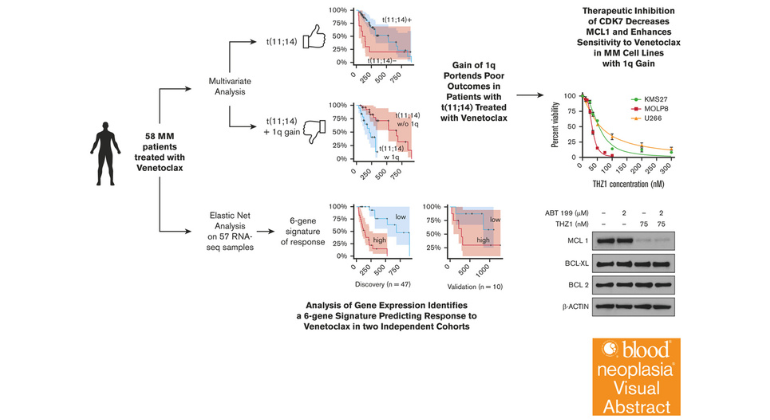

Mount Sinai Researchers Discover Genes That Predict Good Response to Blood Cancer Therapy
Jun 16, 2022 View All Press Releases

Potentially Serious Side Effect Seen in Patient after Immunotherapy
Dec 10, 2021 View All Press Releases
Scientists Identify New Types of a Blood Cancer and Potential Targeted Treatments
Nov 17, 2021 View All Press Releases