Mount Sinai Scientists Validate a Link Between Autoimmunity in a Subset of People With Long COVID
Study results could lead to new therapeutic solutions
A Mount Sinai-led research team has demonstrated that autoimmunity, where the body’s immune system attacks its own tissues, is responsible for the often-debilitating and confounding symptoms of long COVID in a subset of people.
Findings from the study, published in Cell on May 28, could lead to important new approaches to treating patients with long COVID, including already-validated therapies for management of autoimmunity as well as new ways of clinically identifying which patients are most likely to benefit from these therapies.
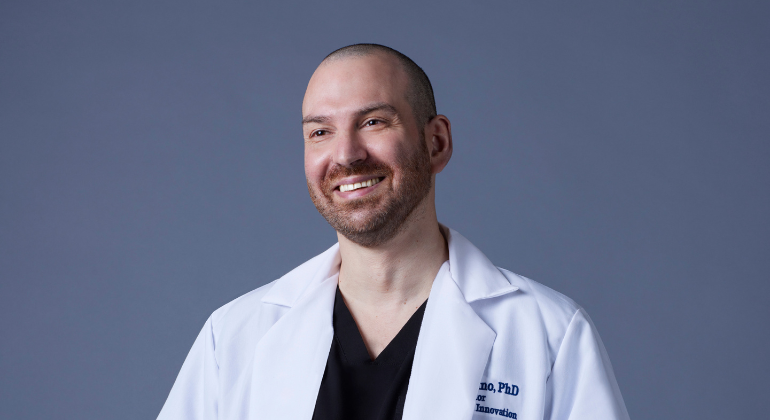
“We’ve known for some time that long COVID involves not just one but a variety of phenotypes, and now we have validated that autoimmunity is a major contributor to the symptom burden,” says David Putrino, PhD, Nash Family Director of the Cohen Center for Recovery From Complex Chronic Illness at Mount Sinai and co-senior author of the study. “This new awareness of the physiology of long COVID will enable us to identify a number of effective treatments for autoimmunity that could significantly improve the symptoms of millions of people with this chronic condition.”
Studies have shown that between 4 and 20 percent of people infected with COVID-19 continue to experience symptoms such as persistent fatigue, cognitive impairment, heart palpitations, and joint and muscle pain for months or even years. Mechanisms behind this prolonged form of the disease are believed to include viral persistence, reactivation of previously latent viruses such as herpesviruses, and immune dysregulation, where the immune system struggles to reset after the infection has cleared, leading to ongoing inflammation and other health issues.
In this new study, researchers sought to better understand the different subtypes of long COVID and the involvement of the immune system in triggering long-term physical symptoms. To that end, researchers collected and purified antibodies from the blood of 87 participants with long COVID and infused them into healthy mice. The results were striking.
Moreover, that awareness could inform which therapies are most likely to reduce the symptom burden. Intravenous immunoglobulin (IVIG), for example, contains antibodies from healthy human donors that are commonly used to treat autoimmune disorders like lupus by strengthening or regulating the recipient’s immune system. FcRn inhibitors are other biologic agents that could help long COVID patients by lowering the amount of antibodies. IVIG and FcRn inhibitors are already being prescribed for some patients with long COVID, though the outcomes have been inconsistent, with some patients responding exceedingly well while others do not. That, in turn, has served to dampen enthusiasm within the industry for long COVID research.
Also on the radar screen of scientists as they investigate new and repurposed therapies for long COVID, according to Dr. Putrino, are CAR-T cell therapy, with the potential to genetically modify a person’s T cells to recognize and target harmful cells secreting autoantibodies, and plasmapheresis, which could simply remove those autoantibodies from the system.
“Before we had no way of predicting who would benefit from therapies like IVIG or FcRn inhibitors,” he says. “Our study now shows that if you are in a subgroup of long COVID patients who have autoantibodies circulating in your body, this is a quantifiable sign that you may be a good candidate for these drugs.”
In addition to its clinical significance, Dr. Putrino believes his study carries an urgent public health warning around the donation of blood and blood products like plasma. He explains: “In the U.K., having long COVID is an exclusion for donating blood, while in the United States these individuals are still allowed to donate. Given the dangers that plasma from people with long COVID can pose for others, this country should be considering fundamental changes to its donation policies that reflect that health threat and are designed to fully protect the public.”
About the Mount Sinai Health System
Mount Sinai Health System is one of the nation’s leading integrated academic health systems and one of the largest in the New York metropolitan area. Its comprehensive system includes seven hospitals, more than 400 outpatient practices, over 600 research and clinical laboratories, the Icahn School of Medicine at Mount Sinai, the Graduate School of Biomedical Sciences, and the Mount Sinai Phillips School of Nursing. Together, the Health System comprises approximately 48,000 employees, more than 9,000 physicians, and 8,600 nurses.
As a leading learning health system, Mount Sinai combines clinical expertise with scientific discovery to improve patient care while training the next generation of health care and biomedical leaders. The Health System provides care across every stage of life, from prenatal care through geriatrics, while advancing personalized medicine through artificial intelligence, data science, and biomedical research.
Mount Sinai is consistently recognized among the nation’s leading academic health systems for patient care, research, and education. The Mount Sinai Hospital is ranked No. 1 in New York by Newsweek and No. 5 on the magazine’s World’s Best Hospitals list. The Icahn School of Medicine at Mount Sinai ranks No. 11 among U.S. medical schools and No. 1 among freestanding medical schools for National Institutes of Health funding, reflecting the strength of its scientific enterprise and leadership in biomedical research.