
Mount Sinai Unveils New Comprehensive Adult Congenital Heart Disease Center
New center will help fill national gap in transition of patient care from adolescence to adulthood
The Mount Sinai Health System has launched a comprehensive Adult Congenital Heart Disease Center (ACHD Center) at Mount Sinai Heart to serve the medical and surgical needs of a growing population of adults born with congenital heart disease.
Congenital heart disease is the No. 1 birth defect in the United States, and every year nearly one out of 100 babies is born with some form of this condition. Scientific advances over the last 40 years have enabled more than 90 percent of these patients to live well into adulthood. Nationwide, 1.4 million adults are living with congenital heart disease, but 90 percent of them aren’t getting the care needed to avoid sudden and severe health issues. Mount Sinai’s ACHD Center aims to change this.
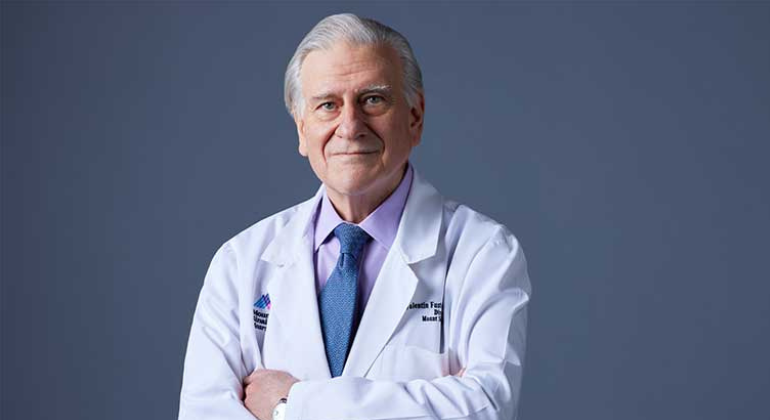
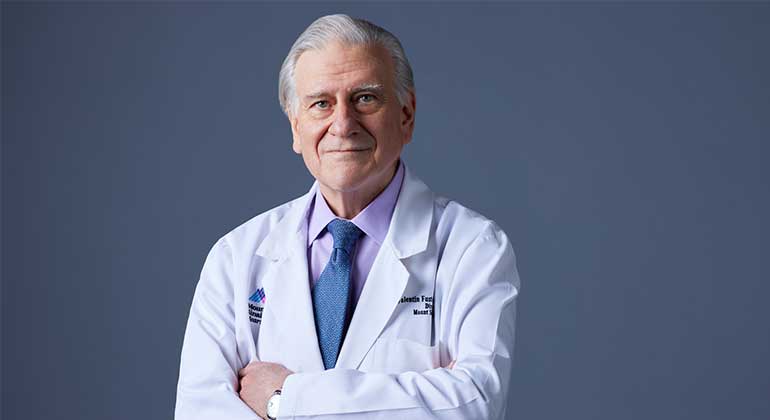
“Our center will leverage the expertise of Mount Sinai Heart, while providing seamless and expert care to patients born with cardiovascular malformations who are surviving well into adulthood and require a constellation of well-coordinated, expert services. The center will bring these services under one roof to ensure lifelong surveillance and specialized care,” says Valentin Fuster, MD, PhD, Director of Mount Sinai Heart and Physician-In-Chief of The Mount Sinai Hospital.
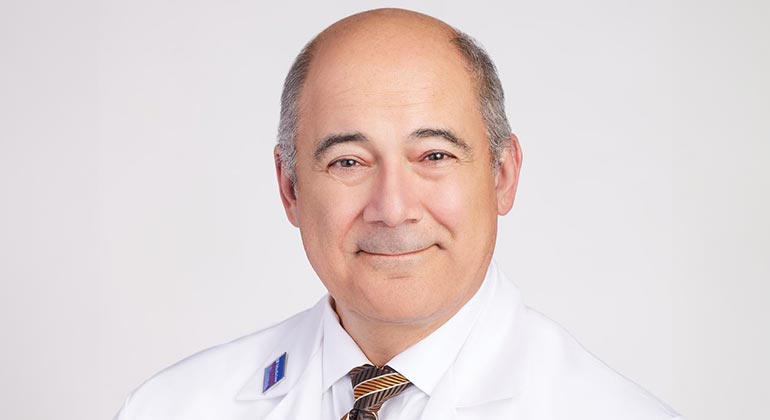
Ali N. Zaidi, MD, is the Director of the Mount Sinai ACHD Center. He is the only physician in New York State trained and board certified in adult congenital heart disease, adult cardiology, pediatric cardiology, internal medicine, and pediatrics and is one of a small group of physicians in the United States who has five boards. Dr. Zaidi has been practicing in the field of adult congenital heart disease for over a decade.
In addition to providing comprehensive care for adults with all forms of congenital heart disease, the Mount Sinai ACHD Center includes a dedicated Fontan Clinic which focuses on adults with single-ventricle Fontan physiology; this includes comprehensive evaluation, screening, and clinical care in a multi-disciplinary care model. Mount Sinai’s Fontan Program is one of the only programs in New York State in which ACHD specialists, hepatologists (liver specialists), nutritionists, cardiac imagers, and mental health and social workers work together in a single setting. It is one of a small group of centers in the country offering a dedicated long-term survivorship program for adults with single-ventricle Fontan physiology.
“Our adult single-ventricle survivors represent an unusual and extremely complex cohort of patients whom we believe will benefit from the care of a highly coordinated team in a clinic created explicitly for their care,” says Dr. Zaidi. “The Fontan procedure refers to the final repair in a multi-stage open-heart surgery to rebuild the heart and reroute blood flow. While single-ventricle survivors are now living longer lives as a result of improvements to Fontan palliation, it is common for them to experience long-term effects of poor blood circulation to the organ systems. To optimize their health, we have designed a program to ensure constant monitoring, expert coordination across multiple specialty lines, and a careful transition of care from adolescence to adulthood that is thoughtfully managed,” explains Dr. Zaidi.
The Mount Sinai ACHD Center will also provide dedicated reproductive health, fertility management, and high-risk pregnancy care for women with congenital heart disease; transition of care for adolescent patients with congenital heart disease; and neurocognitive care to address long-term cognitive difficulties of the adult patient with congenital heart disease. The Mount Sinai Adult Congenital Heart Disease Center will also offer state-of-the-art diagnostics including full cardiopulmonary exercise testing, right heart catheterization with vasoreactivity testing, advanced cardiovascular imaging, transcatheter congenital structural interventions, and dedicated adult congenital heart surgery. The center will work closely with the Mount Sinai Pulmonary Hypertension and the Mount Sinai Advanced Heart Failure Transplant teams in providing state-of-the-art care to ACHD patents with pulmonary hypertension, or those in need of cardiac transplantation. The Mount Sinai Adult Congenial Heart Disease Center will have access to the latest clinical trials and research in adult congential heart disease. Backed by a respected team of specialists and researchers, these clinical trials aim to further the advancement of diagnosing and treating patients with all forms of congenital heart disease and its long term symptoms..
To learn more about Mount Sinai’s ACHD Center please click on the link below:
https://www.mountsinai.org/care/heart/services/congenital-heart-disease
About the Mount Sinai Health System
Mount Sinai Health System is one of the nation’s leading integrated academic health systems and one of the largest in the New York metropolitan area. Its comprehensive system includes seven hospitals, more than 400 outpatient practices, over 600 research and clinical laboratories, the Icahn School of Medicine at Mount Sinai, the Graduate School of Biomedical Sciences, and the Mount Sinai Phillips School of Nursing. Together, the Health System comprises approximately 48,000 employees, more than 9,000 physicians, and 8,600 nurses.
As a leading learning health system, Mount Sinai combines clinical expertise with scientific discovery to improve patient care while training the next generation of health care and biomedical leaders. The Health System provides care across every stage of life, from prenatal care through geriatrics, while advancing personalized medicine through artificial intelligence, data science, and biomedical research.
Mount Sinai is consistently recognized among the nation’s leading academic health systems for patient care, research, and education. The Mount Sinai Hospital is ranked No. 1 in New York by Newsweek and No. 5 on the magazine’s World’s Best Hospitals list. The Icahn School of Medicine at Mount Sinai ranks No. 11 among U.S. medical schools and No. 1 among freestanding medical schools for National Institutes of Health funding, reflecting the strength of its scientific enterprise and leadership in biomedical research.

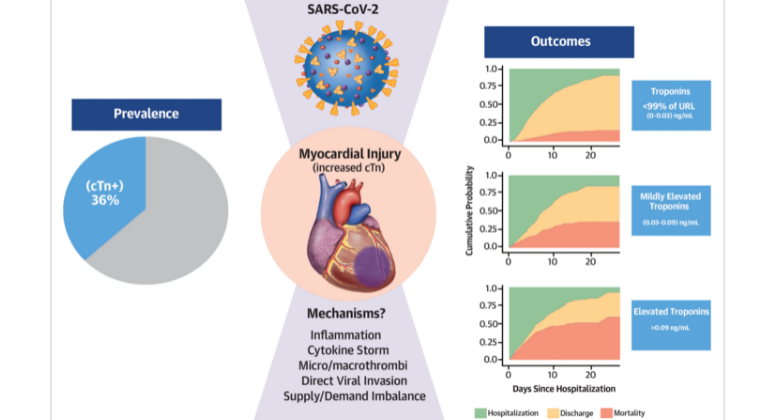
Heart Injury Among Hospitalized COVID-19 Patients Associated with Higher Risk of Death
Jun 08, 2020 View All Press Releases
Blood Thinners may Improve Survival among Hospitalized COVID-19 Patients
May 06, 2020 View All Press Releases