Mount Sinai School of Medicine Receives $17 Million from NIH To Study Patterns of Flu Infection
NIH renews Program for Research on Immune Modeling and Experimentation funding to develop math models to better predict patterns of flu infection.
Mount Sinai School of Medicine today announced that the National Institute of Allergy and Infectious Diseases (NIAID), part of the National Institutes of Health (NIH), has renewed funding of the Program for Research on Immune Modeling and Experimentation (PRIME). This program seeks to develop easy-to-use, predictive mathematical models to better understand patterns of infection among individuals affected by the H1N1 and 1918 influenza viruses and other related viruses.
The renewed contract provides an additional $17.2 million over five years to the initiative, following an initial contract of $16.8 million, bringing the total funding for PRIME to $34 million. Mount Sinai is the primary research site for PRIME, leading five other institutions and organizations around the world.
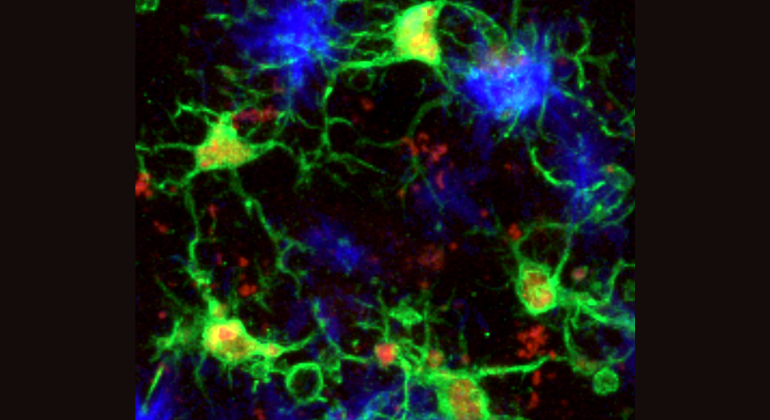
As part of PRIME, researchers at Mount Sinai School of Medicine use data-based models to simulate the response of human dendritic cells, a type of immune cell, to influenza viruses. The PRIME team will test and refine a cutting-edge informatics platform that replaces paper recordkeeping and transmits results to a centralized database sponsored by NIAID. This database will help scientists more effectively design their experiments and make better use of available data. Under the renewed contract, Mount Sinai researchers will perform large-scale experiments to validate mathematical models and test their predictions, with the goal of helping scientists better understand the immune response to these viruses.
"The number of factors contributing to human response to a virus is overwhelming, far too many for scientists to test through traditional experiments," said Stuart C. Sealfon, MD, Glickenhaus Professor and Chair of the Department of Neurology, Director of the Center for Genomics, Proteomics and Bioinformatics, Director of the Center for Translational Systems Biology, Professor of Neurobiology, and Professor of Pharmacology and Systems Therapeutics at Mount Sinai School of Medicine. "Using a computational approach, we can better understand what makes these viruses tick, allowing scientists to refer to a centralized database to better direct their experiments."
During the first five years of the contract, the PRIME team made several advances in working with immunologists on using these tools. With the renewal, the research team will facilitate the use of computational approaches by experimentalists to elucidate the molecular mechanism of action of virus infection.
"The PRIME team is at the forefront of a major transition in medical research to leverage the power of computational biology to help design experiments," said Dr. Sealfon. "This approach can make these experiments much more efficient and accelerate scientific discovery, which is especially critical in studying severe pandemics."
Subcontractors on the contract include Yale University, Princeton University, Ohio State University, Contur Software AB, and Bioanalytics Group LLC.
About The Mount Sinai Medical Center
The Mount Sinai Medical Center encompasses both The Mount Sinai Hospital and Mount Sinai School of Medicine. Established in 1968, Mount Sinai School of Medicine is one of few medical schools embedded in a hospital in the United States. It has more than 3,400 faculty in 32 departments and 15 institutes, and ranks among the top 20 medical schools both in National Institute of Health funding and by U.S. News & World Report. The school received the 2009 Spencer Foreman Award for Outstanding Community Service from the Association of American Medical Colleges.
The Mount Sinai Hospital, founded in 1852, is a 1,171-bed tertiary- and quaternary-care teaching facility and one of the nation's oldest, largest and most-respected voluntary hospitals. U.S. News & World Report consistently ranks The Mount Sinai Hospital among the nation's best hospitals based on reputation, patient safety, and other patient-care factors. Nearly 60,000 people were treated at Mount Sinai as inpatients last year, and approximately 530,000 outpatient visits took place.
For more information, visit www.mountsinai.org. Follow us on Twitter @mountsinainyc.
About the Mount Sinai Health System
Mount Sinai Health System is one of the largest academic medical systems in the New York metro area, with more than 47,000 employees working across seven hospitals, more than 400 outpatient practices, more than 600 research and clinical labs, a school of nursing, and leading schools of medicine and graduate education. Mount Sinai advances health for all people, everywhere, by taking on the most complex health care challenges of our time—discovering and applying new scientific learning and knowledge; developing safer, more effective treatments; educating the next generation of medical leaders and innovators; and supporting local communities by delivering high-quality care to all who need it.
Through the integration of its hospitals, labs, and schools, Mount Sinai offers comprehensive health care from conception through geriatrics, leveraging innovative approaches such as artificial intelligence and informatics while keeping patients’ medical and emotional needs at the center of all treatment. The Health System includes more than 6,400 primary and specialty care physicians and 10 free-standing joint-venture centers throughout the five boroughs of New York City, Westchester, Long Island, and Florida. Hospitals within the System are consistently ranked by Newsweek’s® “The World’s Best Smart Hospitals,” “Best in State Hospitals,” “World’s Best Hospitals,” and “Best Specialty Hospitals” and by U.S. News & World Report's® “Best Hospitals” and “Best Children’s Hospitals.” The Mount Sinai Hospital is on the U.S. News & World Report® “Best Hospitals” Honor Roll for 2025-2026.
For more information, visit https://www.mountsinai.org or find Mount Sinai on Facebook, Instagram, LinkedIn, X, and YouTube.

A Promising Study Suggests a Blood Test Could Spot Alzheimer’s Early in Progression
Apr 21, 2026 View All Press Releases
New Research Reveals Autism Risk Genes Are Shared Across Ancestries
Mar 30, 2026 View All Press Releases