New Study Links Altered Cellular States to Brain Structure
Findings from the Living Brain Project reveal how senescence processes involved in early brain development may also shape brain aging
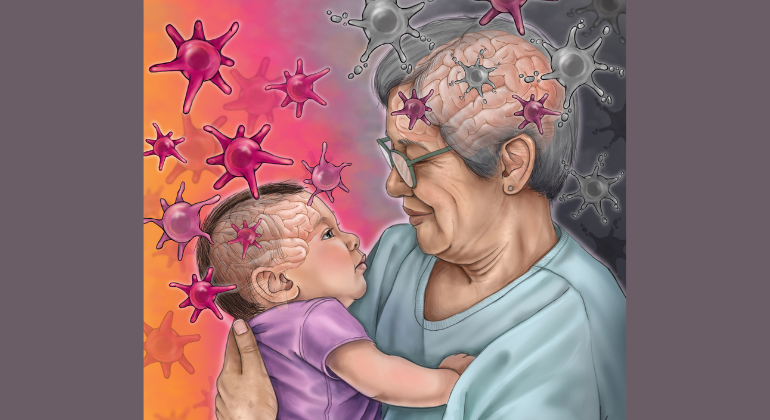
Credit: Jill Gregory
Researchers at the Icahn School of Medicine at Mount Sinai have characterized how cellular senescence—a biological process in which aging cells change how they function—is associated with human brain structure in both development and late life. The study, published January 22 in Cell, provides new insight into how molecular signatures of cellular senescence that are present during development and aging mirror those associated with brain volume and cortical organization.
Understanding brain structure is a central challenge in neuroscience. Although brain structure changes throughout life and is linked to both aging and neurodegenerative conditions such as Parkinson’s and Alzheimer’s diseases, the underlying molecular processes involved—including cellular senescence—are not defined. Cellular senescence is commonly defined as a state characterized by permanent cell cycle arrest in the absence of cell death, in which cells have altered function. While cellular senescence has been implicated in aging and disease, its role in shaping human brain structure—both during development and aging—has remained unclear.
“This is the first study to directly link senescence-related molecular networks in living human brain tissue to measurable differences in brain structure within the same individuals,” said Noam Beckmann, PhD, Director of Data Sciences and founding member for the Mount Sinai Clinical Intelligence Center, Assistant Professor of Artificial Intelligence and Human Health, and co-senior author of the paper. “By identifying molecular pathways that are engaged in both brain structure development and aging, our work highlights senescence as a fundamental biological feature of brain aging and neurodegenerative disease and helps prioritize targets for future experimental research aimed at protecting brain health.”
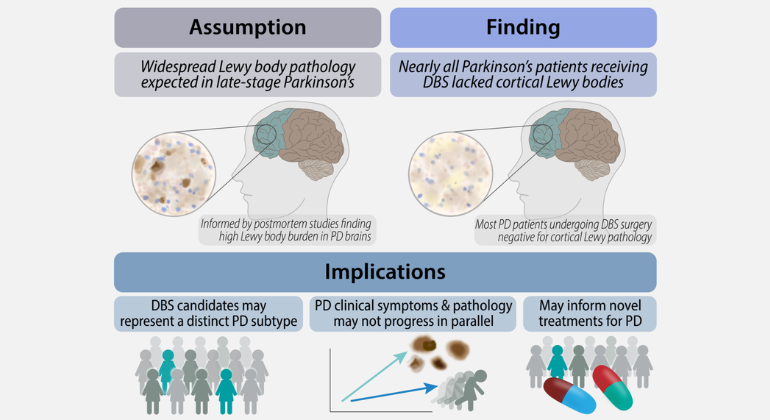
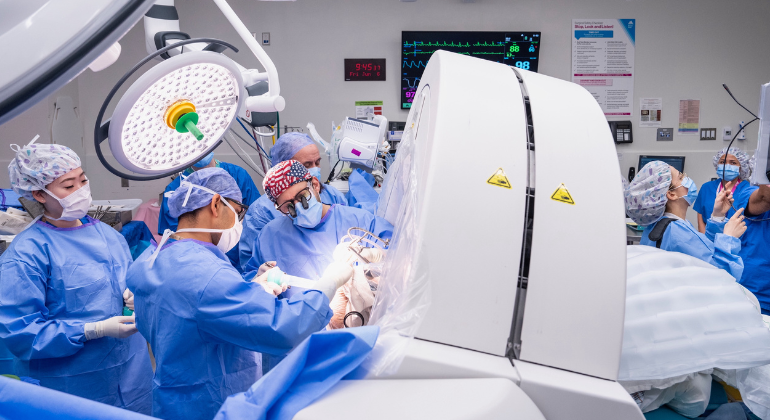
A key resource that was used as the discovery cohort in this study is the Living Brain Project, which uniquely pairs prefrontal cortex biopsies obtained during deep brain stimulation procedures with brain imaging data, allowing researchers to study molecular and structural features together in living individuals. The research team developed a method to define senescent cells in human brain tissue and used the resource to examine how senescence-related gene expression is associated with brain structure.
“This study addresses a major gap in the field by directly linking molecular features of the brain to neuroimaging measures in the same individuals,” said Alexander W. Charney, MD, PhD, Director of The Charles Bronfman Institute for Personalized Medicine and Vice Chair of the Windreich Department of Artificial Intelligence and Human Health, at the Icahn School of Medicine at Mount Sinai and co-senior author of the paper. “By leveraging datasets from the Living Brain Project, we can begin to understand how senescence-related biology may differentially influence brain organization across cell types and across the lifespan.”
Among the study’s most striking findings was evidence that cellular senescence plays distinct roles in brain structure depending on cell type and stage of life. Genes associated with senescence in microglia—the primary immune cells in the brain—were linked to larger brain volumes, while senescence-related genes in excitatory neurons were associated with smaller brain volumes in the aging brain. Notably, the excitatory neuron findings were also observed early in life, providing the first evidence that senescence-related processes are at work soon after embryonic development.
“We were excited to see clear signs of senescence in both the aging and developing brain using our new method,” said Anina N. Lund, PhD, a former neuroscience graduate student and now postdoctoral fellow at the Icahn School of Medicine at Mount Sinai and lead author of the study. “Our results support brain cellular senescence as an example of ‘antagonistic pleiotropy’—the idea that some genes help survival or fertility early in life but cause harm later, contributing to aging and disease. Most prior work links brain cellular senescence only to brain aging, but our finding of it during development shows this process is not just a marker of aging or disease; it also may play key roles in early brain development.”
“Often the greatest developments in medicine are not through invention of totally new means but through a unique understanding of whatever is already in reach,” said Brian Kopell, MD, Director of the Center for Neuromodulation at Mount Sinai and co-lead of The Living Brain Project. “This work represents another fruition of the Living Brain Project’s ability to harness known data types in unique combinations to pave the way for future therapies. While brain ‘senescence’ or growing frail is largely accepted as a normal process of aging, this data set represents an opportunity to challenge that notion.”
While the findings do not point to immediate treatments, they offer a framework for understanding how brain structure changes over time and how age-related differences may emerge. The authors acknowledge the study’s limitations (relatively small and clinically specific cohort; focus on the prefrontal cortex; finding associations, not causal evidence) but are confident that their findings lay important groundwork for future research.
Future directions include expanding to larger and more diverse cohorts, refining cell type-specific definitions of senescence, and conducting experimental studies to determine whether senescence-related pathways causally influence brain structure. Together, these efforts could help clarify when and where senescence supports brain health—and when it may contribute to vulnerability in aging and in Alzheimer’s, Parkinson’s, and other neurodegenerative diseases.
Proteomics data for this project was generated by BPGbio. In the past, Eric J. Nestler, MD, PhD, Anne and Joel Ehrenkranz Dean of the Icahn School of Medicine at Mount Sinai, served as a paid consultant for BPGbio. Dr. Nestler holds equity in the Company. Dr. Nestler was involved in this project as a thesis adviser for Dr. Lund and had no decision-making authority over experiments.
About the Mount Sinai Health System
Mount Sinai Health System is one of the nation’s leading integrated academic health systems and one of the largest in the New York metropolitan area. Its comprehensive system includes seven hospitals, more than 400 outpatient practices, over 600 research and clinical laboratories, the Icahn School of Medicine at Mount Sinai, the Graduate School of Biomedical Sciences, and the Mount Sinai Phillips School of Nursing. Together, the Health System comprises approximately 48,000 employees, more than 9,000 physicians, and 8,600 nurses.
As a leading learning health system, Mount Sinai combines clinical expertise with scientific discovery to improve patient care while training the next generation of health care and biomedical leaders. The Health System provides care across every stage of life, from prenatal care through geriatrics, while advancing personalized medicine through artificial intelligence, data science, and biomedical research.
Mount Sinai is consistently recognized among the nation’s leading academic health systems for patient care, research, and education. The Mount Sinai Hospital is ranked No. 1 in New York by Newsweek and No. 5 on the magazine’s World’s Best Hospitals list. The Icahn School of Medicine at Mount Sinai ranks No. 11 among U.S. medical schools and No. 1 among freestanding medical schools for National Institutes of Health funding, reflecting the strength of its scientific enterprise and leadership in biomedical research.