Biomarker Could Reveal Why Some Develop Post-Traumatic Stress Disorder (PTSD)
Blood expression levels of genes targeted by the stress hormones called glucocorticoids could be a physical measure, or biomarker, of risk for developing Post-Traumatic Stress Disorder (PTSD), according to a study conducted in rats by researchers at the Icahn School of Medicine at Mount Sinai and published August 11 in Proceedings of the National Academy of Sciences (PNAS). That also makes the steroid hormones’ receptor, the glucocorticoid receptor, a potential target for new drugs.
Post-Traumatic Stress Disorder (PTSD) is triggered by a terrifying event, either witnessed or experienced. Symptoms may include flashbacks, nightmares and severe anxiety, as well as uncontrollable thoughts about the event. Not everyone who experiences trauma develops PTSD, which is why the study aimed to identify biomarkers that could better measure each person’s vulnerability to the disorder.
“Our aim was to determine which genes are differentially expressed in relation to PTSD,” said lead investigator Rachel Yehuda, PhD, Professor of Psychiatry and Neuroscience and Director of the Traumatic Stress Studies Division at the Icahn School of Medicine at Mount Sinai. “We found that most of the genes and pathways that are different in PTSD-like animals compared to resilient animals are related to the glucocorticoid receptor, which suggests we might have identified a therapeutic target for treatment of PTSD,” said Dr. Yehuda, who also heads the Mental Health Patient Care Center and PTSD Research Program at the James J. Peters Veterans Affairs Medical Center in the Bronx.
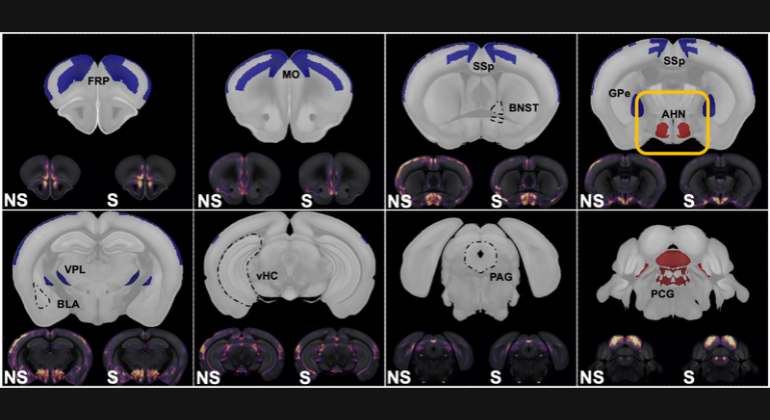
The research team exposed a group of male and female rats to litter soiled by cat urine, a predatory scent that mimics a life-threatening situation. Most PTSD studies until now have used only male rats. Mount Sinai researchers included female rats in this study since women are more vulnerable than men to developing PTSD. The rats were then categorized based on their behavior one week after exposure to the scent. The authors also examined patterns of gene expression in the blood and in stress-responsive brain regions.
After one week of being exposed to soiled cat litter for 10 minutes, vulnerable rats exhibited higher anxiety and hyperarousal, and showed altered glucocorticoid receptor signaling in all tissues compared with resilient rats. Moreover, some rats were treated with a hormone that activates the glucocorticoid receptor called corticosterone one hour after exposure to the cat urine scent. These rats showed lower levels of anxiety and arousal one week later compared with untreated, trauma-exposed rats.
“PTSD is not just a disorder that affects the brain,” said co-investigator Nikolaos Daskalakis, MD, PhD, Associate Research Scientist in the Department of Psychiatry at the Icahn School of Medicine at Mount Sinai. “It involves the entire body, which is why identifying common regulators is key. The glucocorticoid receptor is the one common regulator that consistently stood out.”
Co-collaborators of the study include Joseph Buxbaum, PhD, Professor of Psychiatry, Neuroscience, Genetics and Genomic Sciences and the director of the Seaver Autism Center at the Icahn School of Medicine at Mount Sinai, Hagit Cohen, PhD, Professor of Faculty of Health Sciences and director of the Anxiety & Stress Research Unit at Ben-Gurion University in Israel and Guiqing Cai, Postdoctoral Fellow in the Department of Genetics and Genomic Sciences at the Icahn School of Medicine at Mount Sinai.
About the Mount Sinai Health System
Mount Sinai Health System is one of the nation’s leading integrated academic health systems and one of the largest in the New York metropolitan area. Its comprehensive system includes seven hospitals, more than 400 outpatient practices, over 600 research and clinical laboratories, the Icahn School of Medicine at Mount Sinai, the Graduate School of Biomedical Sciences, and the Mount Sinai Phillips School of Nursing. Together, the Health System comprises approximately 48,000 employees, more than 9,000 physicians, and 8,600 nurses.
As a leading learning health system, Mount Sinai combines clinical expertise with scientific discovery to improve patient care while training the next generation of health care and biomedical leaders. The Health System provides care across every stage of life, from prenatal care through geriatrics, while advancing personalized medicine through artificial intelligence, data science, and biomedical research.
Mount Sinai is consistently recognized among the nation’s leading academic health systems for patient care, research, and education. The Mount Sinai Hospital is ranked No. 1 in New York by Newsweek and No. 5 on the magazine’s World’s Best Hospitals list. The Icahn School of Medicine at Mount Sinai ranks No. 11 among U.S. medical schools and No. 1 among freestanding medical schools for National Institutes of Health funding, reflecting the strength of its scientific enterprise and leadership in biomedical research.




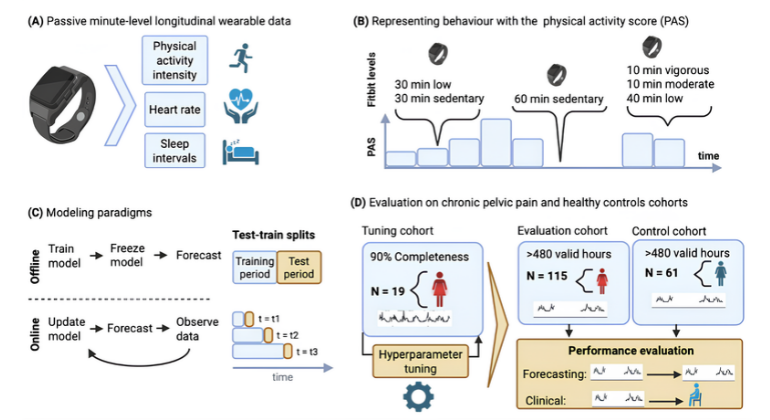
Wearable AI Forecasts Prolonged Sitting in Women With Chronic Pelvic Pain
Sep 30, 2026 View All Press Releases