Mount Sinai Review Maps the Path Forward for Cancer Vaccines, Highlighting Promise of Personalized and Combination Approaches

A new comprehensive review from researchers at the Icahn School of Medicine at Mount Sinai details how decades of cancer vaccine research are converging into a new era of more precise, personalized, and effective immunotherapies, particularly when combined with other cancer treatments.
The review, titled “Pipe Dream to Pipeline: Journey of Cancer Vaccines and the Road Ahead” and published in Cell Reports Medicine, examines the evolution of therapeutic cancer vaccines, with a special focus on neoantigen-based vaccines—highly personalized vaccines designed using genetic mutations unique to a patient’s tumor.
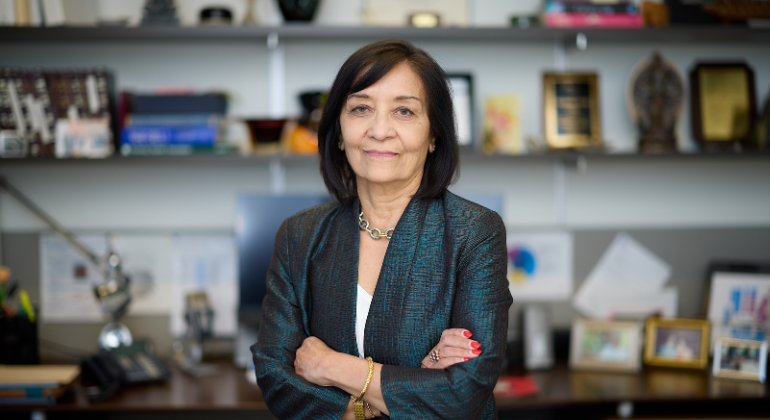
“Cancer vaccines were once seen as a promising idea that struggled to deliver durable clinical benefit,” said Nina Bhardwaj, MD, PhD, senior author of the review, Ward-Coleman Chair in Cancer Research, and Director of the Vaccine and Cell Therapy Laboratory at the Icahn School of Medicine at Mount Sinai, and Co-Director of the Cancer Immunology Program at the Mount Sinai Tisch Cancer Center. “Today, advances in sequencing, immune profiling, and vaccine platforms are transforming that landscape and opening the door to more effective, long-lasting immune responses against cancer.”
While early cancer vaccines showed limited success as standalone treatments, the review highlights how modern technologies have revitalized the field. Improvements in tumor sequencing and a deeper understanding of the tumor microenvironment have enabled researchers to identify precise immune targets and design vaccines that better activate cancer-fighting T cells.
Clinical trial data summarized in the review show that personalized neoantigen vaccines (delivered as peptides, DNA, or mRNA) are safe and capable of generating robust immune responses across a range of cancers, including melanoma, pancreatic cancer, glioblastoma, lung cancer, and bladder cancer.
Importantly, the authors note growing evidence that cancer vaccines may be most effective when used in combination with immune checkpoint inhibitors and other standard therapies, helping overcome immune resistance and improve patient outcomes.
The review synthesizes decades of clinical research and identifies key reasons earlier cancer vaccines fell short, including immune suppression within tumors and limitations in antigen selection. It also outlines persistent challenges, such as the time and cost required to manufacture personalized vaccines and the need for better biomarkers to predict response.
At the same time, the authors highlight emerging strategies, such as shared “off-the-shelf” neoantigen vaccines and improved vaccine delivery platforms, that could expand access and accelerate clinical use.
By drawing together insights from past and ongoing clinical trials, the review outlines a road map for integrating cancer vaccines into standard-of-care treatment, particularly in early-stage disease and in combination with other immunotherapies.
The authors emphasize that while most cancer vaccine clinical trials to date have been early-phase studies, larger randomized clinical trials will be critical to defining how these therapies can best improve survival and quality of life for patients.
“Pipe Dream to Pipeline: Journey of Cancer Vaccines and the Road Ahead” was authored by Sayali Onkar, PhD, under the guidance of Dr. Bhardwaj along with investigators Cansu Cimen Bozkus, PhD, and Mansi Saxena, PhD, from the Vaccine and Cell Therapy Laboratory and the Division of Hematology and Oncology at the Mount Sinai Tisch Cancer Center, Icahn School of Medicine at Mount Sinai, with collaborators from the Parker Institute for Cancer Immunotherapy.
About the Icahn School of Medicine at Mount Sinai
The Icahn School of Medicine at Mount Sinai is internationally renowned for its outstanding research, educational, and clinical care programs. It is the sole academic partner for the seven member hospitals* of the Mount Sinai Health System, one of the largest academic health systems in the United States, providing care to New York City’s large and diverse patient population.
The Icahn School of Medicine at Mount Sinai offers highly competitive MD, PhD, MD-PhD, and master’s degree programs, with enrollment of more than 1,200 students. It has the largest graduate medical education program in the country, with more than 2,600 clinical residents and fellows training throughout the Health System. Its Graduate School of Biomedical Sciences offers 13 degree-granting programs, conducts innovative basic and translational research, and trains more than 560 postdoctoral research fellows.
Ranked 11th nationwide in National Institutes of Health (NIH) funding, the Icahn School of Medicine at Mount Sinai is among the 99th percentile in research dollars per investigator according to the Association of American Medical Colleges. More than 4,500 scientists, educators, and clinicians work within and across dozens of academic departments and multidisciplinary institutes with an emphasis on translational research and therapeutics. Through Mount Sinai Innovation Partners (MSIP), the Health System facilitates the real-world application and commercialization of medical breakthroughs made at Mount Sinai.
-------------------------------------------------------
* Mount Sinai Health System member hospitals: The Mount Sinai Hospital; Mount Sinai Brooklyn; Mount Sinai Morningside; Mount Sinai Queens; Mount Sinai South Nassau; Mount Sinai West; and New York Eye and Ear Infirmary of Mount Sinai.
About the Mount Sinai Health System
Mount Sinai Health System is one of the nation’s leading integrated academic health systems and one of the largest in the New York metropolitan area. Its comprehensive system includes seven hospitals, more than 400 outpatient practices, over 600 research and clinical laboratories, the Icahn School of Medicine at Mount Sinai, the Graduate School of Biomedical Sciences, and the Mount Sinai Phillips School of Nursing. Together, the Health System comprises approximately 48,000 employees, more than 9,000 physicians, and 8,600 nurses.
As a leading learning health system, Mount Sinai combines clinical expertise with scientific discovery to improve patient care while training the next generation of health care and biomedical leaders. The Health System provides care across every stage of life, from prenatal care through geriatrics, while advancing personalized medicine through artificial intelligence, data science, and biomedical research.
Mount Sinai is consistently recognized among the nation’s leading academic health systems for patient care, research, and education. The Mount Sinai Hospital is ranked No. 1 in New York by Newsweek® and No. 7 in the U.S. on the magazine’s World’s Best Hospitals 2026 list. The Icahn School of Medicine at Mount Sinai ranks No. 9 among U.S. medical schools and No. 1 among freestanding medical schools for National Institutes of Health grant funding, reflecting the strength of its scientific enterprise and leadership in biomedical research.
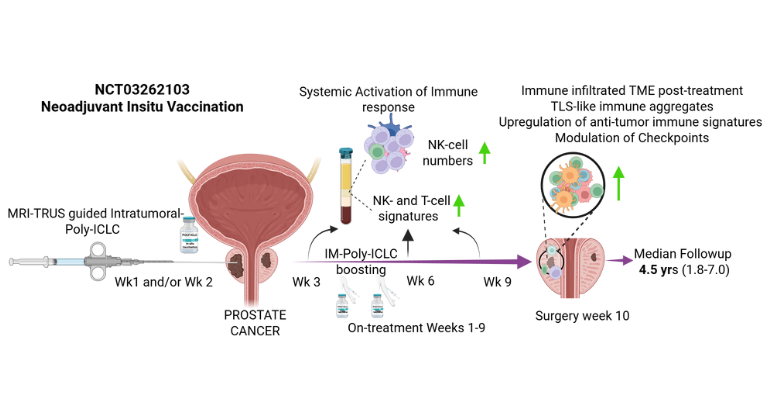
Early Clinical Trial Tests Immune-Boosting Therapy Before Prostate Cancer Surgery
Oct 30, 2025 View All Press Releases
Mount Sinai Researchers Engineer Rare Immune Cells to Create Powerful New Cancer Vaccine
Jul 21, 2025 View All Press Releases
Mount Sinai Study Advances Understanding of Personalized Vaccines for Bladder Cancer
May 12, 2025 View All Press Releases
Personalized Cancer Vaccine Proves Promising in a Phase 1 Trial at Mount Sinai
Mar 17, 2025 View All Press Releases