
Mount Sinai Study May Help Cancer Patients Keep Their Bladder
New molecular monitoring approach identifies patients with extremely low risk of metastasis and supports bladder-sparing treatment strategies
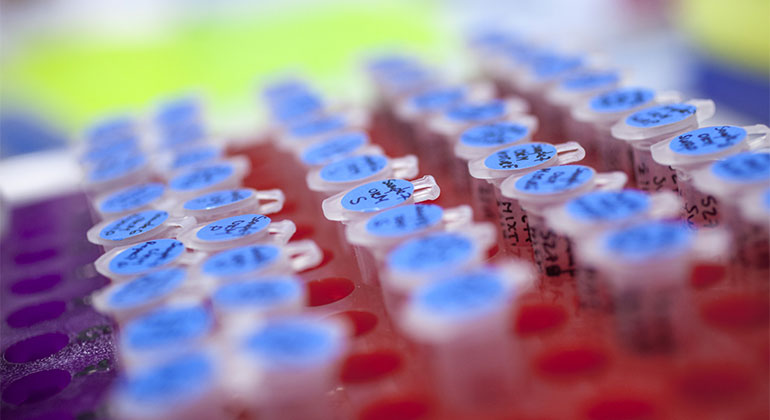
Researchers at the Icahn School of Medicine at Mount Sinai have reported promising findings that may help redefine treatment for patients with muscle-invasive bladder cancer, a potentially aggressive form of the disease traditionally treated with surgical removal of the bladder. The study, published in the Proceedings of the National Academy of Sciences, demonstrates that ultra-sensitive testing of tumor-derived DNA in blood and urine may help identify patients who can safely preserve their bladder without compromising cancer outcomes.
Muscle-invasive bladder cancer is commonly treated with chemotherapy followed by radical cystectomy (complete removal of the bladder), a life-altering procedure that significantly affects quality of life. However, decades of clinical observations have shown that a substantial percentage of patients have no detectable cancer remaining at the time of surgery, raising critical questions about whether all patients require such aggressive treatment.
“Our goal is to move beyond a one-size-fits-all approach,” said Matthew D. Galsky, MD, Professor of Medicine (Hematology and Medical Oncology) at the Icahn School of Medicine, Deputy Director of the Mount Sinai Tisch Cancer Center, and first author of the study. “We are working toward a future where treatment decisions are guided by precise molecular tools that tell us which patients truly need surgery, and which patients may be cured without losing their bladder.”
Cancer cells shed fragments of DNA into bodily fluids. Using highly sensitive assays, researchers can detect these fragments, known as circulating tumor DNA (ctDNA) in blood and urine tumor DNA (utDNA) in urine, to identify traces of residual cancer that may be invisible on scans or biopsies.
In this study, investigators analyzed plasma ctDNA and urine utDNA from patients enrolled in a clinical trial evaluating a bladder-sparing treatment strategy. The approach allowed patients who achieved a complete clinical response (an absence of detectable cancer based on a series of tests including biopsies of the bladder) after tumor biopsy and systemic therapy to forgo immediate bladder removal. The ctDNA and utDNA assays were performed in close collaboration with Bert Vogelstein, MD, and Yuxuan Wang, MD. PhD, and their team at Johns Hopkins University. Dr. Vogelstein and team are among the pioneering researchers who first showed that ctDNA could be used as a measure of minimal residual cancer MRD in solid tumors. The study revealed several clinically important results: Among patients who achieved a complete clinical response following systemic therapy, three-year bladder-intact survival reached 69 percent, underscoring the potential durability of bladder-sparing treatment strategies in carefully selected individuals.
Researchers also found that molecular testing could help predict metastatic risk. Patients with detectable circulating tumor DNA prior to systemic therapy faced a significantly higher likelihood of developing metastatic disease. In contrast, only 4.5 percent of patients with undetectable baseline ctDNA went on to develop metastases, suggesting that ctDNA may serve as a powerful indicator of prognosis.
Importantly, patients with undetectable ctDNA either before or after treatment demonstrated an exceptionally low risk of metastatic recurrence. This finding highlights the potential role of ctDNA monitoring as a tool for identifying patients who may safely avoid radical bladder removal.
The study also showed that plasma and urine DNA testing provide complementary insights. Urine tumor DNA proved more sensitive than blood-based ctDNA for detecting residual disease confined to the bladder. Detectable urine tumor DNA in patients who otherwise appeared to have no evidence of cancer was associated with shorter bladder-intact survival, suggesting that urine-based testing may help uncover hidden cancer not captured by conventional assessments.
“These findings show that blood and urine DNA testing provide complementary information,” Dr. Galsky explained. “Together, they offer a powerful new way to identify patients most likely to benefit from bladder preservation.”
Radical cystectomy, while often curative, requires urinary diversion and can profoundly affect daily functioning and quality of life. More precise tools to assess residual disease could help spare some patients from unnecessary surgery while maintaining excellent cancer control.
“This research represents an important step toward personalized care in muscle-invasive bladder cancer,” said Dr. Galsky. “As therapies and diagnostics improve, we must ensure we are not overtreating patients who may already be cured.”
The researchers emphasize that these results establish a scientific foundation for how ctDNA and utDNA monitoring might be incorporated into clinical decision-making. However, ongoing studies are underway to validate the approach in additional patient cohorts.
This study was led by researchers at the Icahn School of Medicine at Mount Sinai and the Mount Sinai Tisch Cancer Center and Johns Hopkins University’s Ludwig Center for Cancer Genetics and Therapeutics. Researchers from Mount Sinai included Dr. Galsky; Sudeh Izadmehr, PhD; Rachel Brody, MD, PhD; Reza Mehrazin, MD; Diego Chowell, PhD; and John Sfakianos, MD.
Collaborators from additional institutions contributed to the research, including investigators from the University of Michigan; City of Hope Comprehensive Cancer Center; Oregon Health & Science University; the University of Utah; the Keck School of Medicine of USC/Norris Comprehensive Cancer Center; the University of Pennsylvania Abramson Cancer Center; and the University of Wisconsin Carbone Cancer Center. The work reflects a multidisciplinary effort spanning medical oncology, urology, pathology, and genomics.
Full study: https://www.pnas.org/doi/10.1073/pnas.2533449123
About the Icahn School of Medicine at Mount Sinai
The Icahn School of Medicine at Mount Sinai is internationally renowned for its outstanding research, educational, and clinical care programs. It is the sole academic partner for the seven member hospitals* of the Mount Sinai Health System, one of the largest academic health systems in the United States, providing care to New York City’s large and diverse patient population.
The Icahn School of Medicine at Mount Sinai offers highly competitive MD, PhD, MD-PhD, and master’s degree programs, with enrollment of more than 1,200 students. It has the largest graduate medical education program in the country, with more than 2,700 clinical residents and fellows training throughout the Health System. Its Graduate School of Biomedical Sciences offers 13 degree-granting programs, conducts innovative basic and translational research, and trains more than 560 postdoctoral research fellows.
Ranked 11th nationwide in National Institutes of Health (NIH) funding, the Icahn School of Medicine at Mount Sinai is among the 99th percentile in research dollars per investigator according to the Association of American Medical Colleges. More than 4,500 scientists, educators, and clinicians work within and across dozens of academic departments and multidisciplinary institutes with an emphasis on translational research and therapeutics. Through Mount Sinai Innovation Partners (MSIP), the Health System facilitates the real-world application and commercialization of medical breakthroughs made at Mount Sinai.
-------------------------------------------------------
* Mount Sinai Health System member hospitals: The Mount Sinai Hospital; Mount Sinai Brooklyn; Mount Sinai Morningside; Mount Sinai Queens; Mount Sinai South Nassau; Mount Sinai West; and New York Eye and Ear Infirmary of Mount Sinai.
About the Mount Sinai Health System
Mount Sinai Health System is one of the nation’s leading integrated academic health systems and one of the largest in the New York metropolitan area. Its comprehensive system includes seven hospitals, more than 400 outpatient practices, over 600 research and clinical laboratories, the Icahn School of Medicine at Mount Sinai, the Graduate School of Biomedical Sciences, and the Mount Sinai Phillips School of Nursing. Together, the Health System comprises approximately 48,000 employees, more than 9,000 physicians, and 8,600 nurses.
As a leading learning health system, Mount Sinai combines clinical expertise with scientific discovery to improve patient care while training the next generation of health care and biomedical leaders. The Health System provides care across every stage of life, from prenatal care through geriatrics, while advancing personalized medicine through artificial intelligence, data science, and biomedical research.
Mount Sinai is consistently recognized among the nation’s leading academic health systems for patient care, research, and education. The Mount Sinai Hospital is ranked No. 1 in New York by Newsweek® and No. 7 in the U.S. on the magazine’s World’s Best Hospitals 2026 list. The Icahn School of Medicine at Mount Sinai ranks No. 9 among U.S. medical schools and No. 1 among freestanding medical schools for National Institutes of Health grant funding, reflecting the strength of its scientific enterprise and leadership in biomedical research.

Mount Sinai Study Advances Understanding of Personalized Vaccines for Bladder Cancer
May 12, 2025 View All Press Releases


Combination of Chemo and Immunotherapy Is Shown to Work Against Metastatic Bladder Cancer
May 15, 2020 View All Press Releases