
Icahn School of Medicine at Mount Sinai Awarded $8.2 Million NIH Grant to Investigate the Origins of Blood-Forming Stem Cells
Researchers seek to uncover molecular mechanisms that guide blood formation, potentially laying the groundwork to develop new treatments for cancers and blood diseases
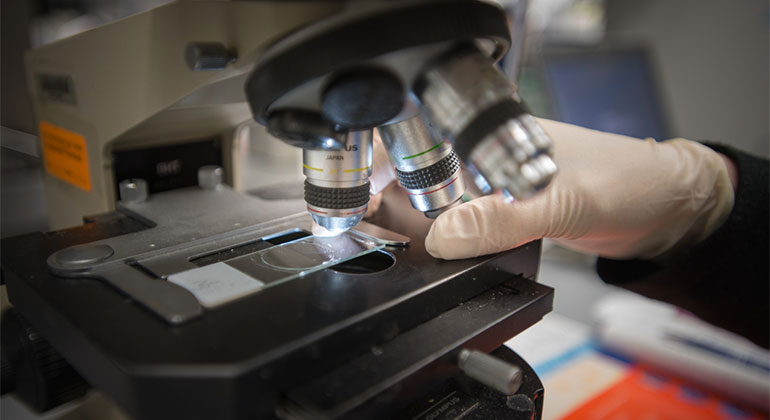
Researchers at the Icahn School of Medicine at Mount Sinai have been awarded an $8.2 million grant from the National Heart, Lung and Blood Institute of the National Institutes of Health to investigate the earliest developmental origins of the hematopoietic system—the network of organs and tissues responsible for producing blood cells. This work aims to uncover the signals and genetic programs that govern blood formation.
By advancing the understanding of how blood-forming stem cells arise, the research will lay the foundation for transformative breakthroughs in regenerative medicine, such as the development of innovative methods using engineered immune cells for therapies to treat cancers and blood diseases.
This prestigious grant recognizes emerging and outstanding investigators, and will be awarded to the Mount Sinai team over seven years. The principal investigator is Christopher M. Sturgeon, PhD, Associate Professor of Stem Cell Biology and Regenerative Medicine and Associate Director of the Center for Advancement of Blood Cancer Therapies at the Icahn School of Medicine at Mount Sinai. Dr. Sturgeon’s prior work has examined how blood systems form during development of the human embryo.
“We aim to understand the developmental origins and regulation of how blood-forming stem cells form in the early mammalian embryo, and from human pluripotent stem cells, for regenerative medicine applications,” said Dr. Sturgeon. “We take a novel approach to this through our foundational observations that blood development occurs much earlier than previously appreciated, during an extremely early stage of embryogenesis called gastrulation.”
Insights from the Sturgeon laboratory will help inform our understanding of the generation of blood-forming stem cells from human pluripotent stem cells, for use in human disease modeling and development of novel therapies for hematological disorders like sickle cell disease and leukemia.
“We are delighted that Dr. Sturgeon has received this recognition from the National Heart, Lung and Blood Institute. This grant underscores the cutting-edge biomedical research taking place at Mount Sinai and highlights Dr. Sturgeon’s leadership in advancing the future of blood and immune system therapies,” said Sarah E. Millar, PhD, Dean for Academic and Scientific Affairs, and Chair of the Department of Stem Cell Biology and Regenerative Medicine at the Icahn School of Medicine.
About the Icahn School of Medicine at Mount Sinai
The Icahn School of Medicine at Mount Sinai is internationally renowned for its outstanding research, educational, and clinical care programs. It is the sole academic partner for the seven member hospitals* of the Mount Sinai Health System, one of the largest academic health systems in the United States, providing care to New York City’s large and diverse patient population.
The Icahn School of Medicine at Mount Sinai offers highly competitive MD, PhD, MD-PhD, and master’s degree programs, with enrollment of more than 1,200 students. It has the largest graduate medical education program in the country, with more than 2,700 clinical residents and fellows training throughout the Health System. Its Graduate School of Biomedical Sciences offers 13 degree-granting programs, conducts innovative basic and translational research, and trains more than 560 postdoctoral research fellows.
Ranked 11th nationwide in National Institutes of Health (NIH) funding, the Icahn School of Medicine at Mount Sinai is among the 99th percentile in research dollars per investigator according to the Association of American Medical Colleges. More than 4,500 scientists, educators, and clinicians work within and across dozens of academic departments and multidisciplinary institutes with an emphasis on translational research and therapeutics. Through Mount Sinai Innovation Partners (MSIP), the Health System facilitates the real-world application and commercialization of medical breakthroughs made at Mount Sinai.
-------------------------------------------------------
* Mount Sinai Health System member hospitals: The Mount Sinai Hospital; Mount Sinai Brooklyn; Mount Sinai Morningside; Mount Sinai Queens; Mount Sinai South Nassau; Mount Sinai West; and New York Eye and Ear Infirmary of Mount Sinai.
About the Mount Sinai Health System
Mount Sinai Health System is one of the nation’s leading integrated academic health systems and one of the largest in the New York metropolitan area. Its comprehensive system includes seven hospitals, more than 400 outpatient practices, over 600 research and clinical laboratories, the Icahn School of Medicine at Mount Sinai, the Graduate School of Biomedical Sciences, and the Mount Sinai Phillips School of Nursing. Together, the Health System comprises approximately 48,000 employees, more than 9,000 physicians, and 8,600 nurses.
As a leading learning health system, Mount Sinai combines clinical expertise with scientific discovery to improve patient care while training the next generation of health care and biomedical leaders. The Health System provides care across every stage of life, from prenatal care through geriatrics, while advancing personalized medicine through artificial intelligence, data science, and biomedical research.
Mount Sinai is consistently recognized among the nation’s leading academic health systems for patient care, research, and education. The Mount Sinai Hospital is ranked No. 1 in New York by Newsweek and No. 5 on the magazine’s World’s Best Hospitals list. The Icahn School of Medicine at Mount Sinai ranks No. 11 among U.S. medical schools and No. 1 among freestanding medical schools for National Institutes of Health funding, reflecting the strength of its scientific enterprise and leadership in biomedical research.


Mount Sinai Launches Institute for Airway Sciences
Jan 12, 2022 View All Press Releases