Two Leading Mount Sinai Brain Scientists Elected to the National Academy of Sciences
Highest honor recognizing outstanding contributions to science
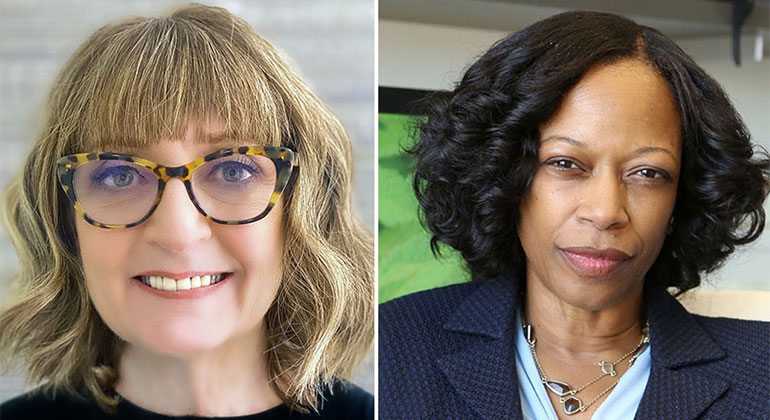
Yasmin Hurd, PhD, Ward Coleman Chair of Translational Neuroscience and Director of the Addiction Institute of Mount Sinai, and Helen S. Mayberg, MD, founding Director of the Nash Family Center for Advanced Circuit Therapeutics at Mount Sinai, have been elected to the National Academy of Sciences (NAS). Election to the NAS is considered one of the highest honors that a scientist can achieve, recognizing individuals for their distinguished and continuing achievements in original research.
“The recognitions of Dr. Hurd and Dr. Mayberg are well-deserved for the extraordinary contributions each has made to the biomedical sciences,” said Eric J. Nestler, MD, PhD, Nash Family Professor of Neuroscience, Director of The Friedman Brain Institute, and Dean for Academic Affairs for Icahn Mount Sinai, and Chief Scientific Officer for the Mount Sinai Health System. “Dr. Hurd’s work to uncover the neurobiology of drug use has had a major impact on our understanding of addiction and related psychiatric disorders. Likewise, Dr. Mayberg’s identification of novel brain circuits implicated in depression has helped rethink the way we study underlying brain mechanisms, catalyzing a fundamental shift that challenges traditional approaches to treatment.”
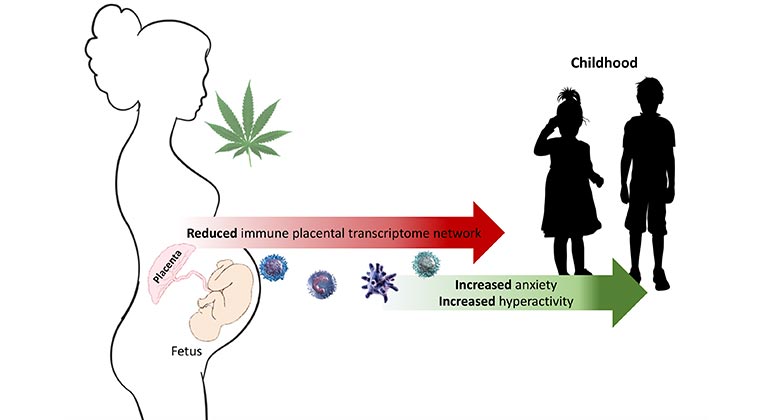
Dr. Hurd is an internationally-renowned neuroscientist whose translational research examines the neurobiology of drug addiction and related psychiatric disorders. Her research exploring the neurobiological effects of cannabis and heroin has significantly shaped the field. Using multidisciplinary approaches, her research has provided unique insights into the impact of prenatal and adolescent cannabis exposure on human development and the epigenetic mechanisms underlying the drugs’ effects into adulthood and even across generations.
Her basic science research is complemented by clinical laboratory investigations evaluating the therapeutic potential of novel, science-based strategies for the treatment of opioid addiction, including pioneering work with cannabidiol, a non-intoxicating cannabinoid. Utilizing a truly translational approach, Dr. Hurd and her research team examine molecular and neurochemical events in the human brain and comparable animal models to find neurobiological correlates of behavior. They also conduct neuroimaging studies and human clinical trials to further understand the neurobiology of addiction towards the development of novel therapies. The significant impact of Dr. Hurd’s research is also reflected by its reach into the mainstream media and governmental policies.
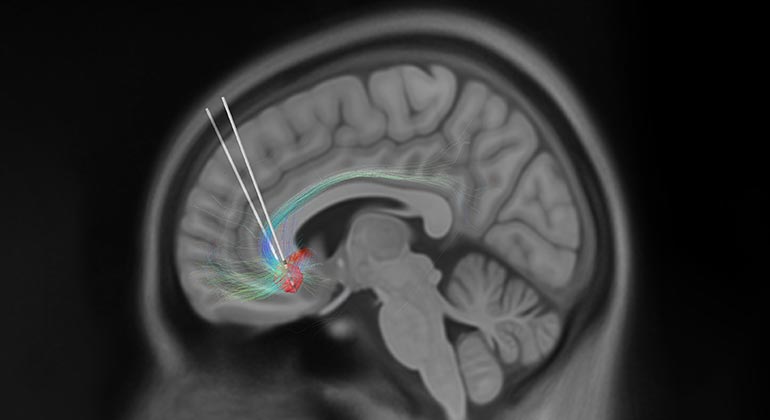
Dr. Mayberg is a renowned behavioral neurologist who has established an international reputation for her pioneering research to map the brain circuits implicated in depression and for leading the first studies of deep brain stimulation for treatment-resistant depression, heralded as one of the first hypothesis-driven treatment strategies for a major mental illness. Early in her career, she developed one of the first “network” models for mood disorders, which incorporated the fundamentals of neuroanatomy and brain connections with imaging technologies to propose an alternative neurological view of this classical psychiatric condition that extended beyond the neurochemical models that had dominated for decades. The circuit approach has evolved over the years through collaborations with neuroscientists, clinicians, and engineers.
This approach continues to anchor many contemporary studies of mood disorders, including the identification of clinically meaningful biomarkers that can optimize treatment selection for individual depressed patients at all stages of illness and the development and latest refinements of deep brain stimulation, an experimental procedure for the most severe forms of treatment-resistant depression. Under Dr. Mayberg’s leadership, The Center for Advanced Circuit Therapeutics at Mount Sinai is advancing precision surgical treatments for several neuropsychiatric conditions through the rapid conversion of neuroscience and neuroengineering innovations that correct brain circuit abnormalities to restore mood as well as motor and cognitive functioning.
“Dr. Hurd and Dr. Mayberg stand at the forefront of their fields, leading their contemporaries and others coming up in the field to challenge existing limitations of science and medicine,” said Dennis S. Charney, MD, the Anne and Joel Ehrenkranz Dean of the Icahn School of Medicine at Mount Sinai, and President for Academic Affairs, Mount Sinai Health System. “Their exemplary work—under the auspices of The Friedman Brain Institute—is a reflection of Mount Sinai’s culture of innovation and our passion to relentlessly push the boundaries of knowledge to help create and discover new treatments that were never before thought possible. We applaud and commend them for their work and for this well-deserved recognition.”
Mount Sinai now has six current faculty members in the National Academy of Sciences, including: Adolfo García-Sastre, PhD, Professor of Microbiology, Medicine (Infectious Diseases) and Pathology, Molecular, and Cell-Based Medicine, and Director of the Global Health and Emerging Pathogens Institute; Maria Iandolo New, MD, Professor of Pediatrics, Medicine (Endocrinology), and Genetic and Genomic Sciences; Peter Palese, PhD, Horace W. Goldsmith Professor and Chair of Microbiology, and Professor of Medicine (Infectious Diseases); and Miriam Merad, MD, PhD, Professor of Oncological Sciences and Medicine (Hematology and Medical Oncology), and Director of the Precision Immunology Institute.
About the Mount Sinai Health System
Mount Sinai Health System is one of the nation’s leading integrated academic health systems and one of the largest in the New York metropolitan area. Its comprehensive system includes seven hospitals, more than 400 outpatient practices, over 600 research and clinical laboratories, the Icahn School of Medicine at Mount Sinai, the Graduate School of Biomedical Sciences, and the Mount Sinai Phillips School of Nursing. Together, the Health System comprises approximately 48,000 employees, more than 9,000 physicians, and 8,600 nurses.
As a leading learning health system, Mount Sinai combines clinical expertise with scientific discovery to improve patient care while training the next generation of health care and biomedical leaders. The Health System provides care across every stage of life, from prenatal care through geriatrics, while advancing personalized medicine through artificial intelligence, data science, and biomedical research.
Mount Sinai is consistently recognized among the nation’s leading academic health systems for patient care, research, and education. The Mount Sinai Hospital is ranked No. 1 in New York by Newsweek and No. 5 on the magazine’s World’s Best Hospitals list. The Icahn School of Medicine at Mount Sinai ranks No. 11 among U.S. medical schools and No. 1 among freestanding medical schools for National Institutes of Health funding, reflecting the strength of its scientific enterprise and leadership in biomedical research.