Close Monitoring of Renal Tumors May Provide Alternative to Surgery
In patients with small renal tumors confined to the kidneys, close, active monitoring, as opposed to immediate surgery, is associated with low rates of tumor growth or death, according to a study by researchers at the Icahn School of Medicine at Mount Sinai and Fox Chase Cancer Center, part of the Temple University Health System, published in the September issue of the Journal of Urology.
Although surgical excision of tumors remains the standard of care for renal tumors that have not yet spread (localized), the risk of complications in elderly or ill patients may outweigh the benefits of surgery. The study suggests that actively monitoring renal tumors in some patients may prove a safer option than immediate surgery.
The incidence of kidney cancer in the United States has been increasing for two decades, with the trend partly attributed to the introduction of abdominal imaging studies such as CT scans or MRIs in the 1980’s. However, death rates due to renal cell carcinoma (kidney cancer) have not decreased, indicating that surgery may be of little or no benefit to some patients.
“We are beginning to better understand the behavior of tumors that grow on the kidneys,” said Reza Mehrazin, MD, Assistant Professor, Urology, Icahn School of Medicine at Mount Sinai, the study’s lead investigator. “In some patients, particularly those who are considered elderly or ‘high risk,’ we are now more likely able to delay surgery, sometimes indefinitely.” Much of the work behind the study was completed while Dr. Mehrazin was a researcher at Fox Chase Cancer Center.
In cases which are likely to result in surgery, it is important that urologists understand the natural history of renal tumors. If surgery does prove necessary, minimally invasive surgery using robotic tools may be possible. For example, a robotic partial nephrectomy provides the surgeon with enhanced visualization and precision during the procedure, which translates to significantly less blood loss. Moreover, the incisions are smaller and result in less pain and shorter recovery time and hospital stay.
“Patients diagnosed with renal tumors have more options than ever before, said Dr. Mehrazin. “Surgery is not always the best solution. It is vital that patients consult with their urologists to explore all options and make the best treatment decision for that particular case.”
About Fox Chase Cancer Center
Fox Chase Cancer Center, part of the Temple University Health System, is one of the leading cancer research and treatment centers in the United States. Founded in 1904 in Philadelphia as one of the nation’s first cancer hospitals, Fox Chase was also among the first institutions to be designated a National Cancer Institute Comprehensive Cancer Center in 1974. Fox Chase researchers have won the highest awards in their fields, including two Nobel Prizes. Fox Chase physicians are also routinely recognized in national rankings, and the Center’s nursing program has received the Magnet status for excellence four consecutive times. Today, Fox Chase conducts a broad array of nationally competitive basic, translational, and clinical research, with special programs in cancer prevention, detection, survivorship, and community outreach. For more information, visit Fox Chase’s Web site at www.foxchase.org or call 1-888-FOX CHASE or (1-888-369-2427).
About the Mount Sinai Health System
Mount Sinai Health System is one of the nation’s leading integrated academic health systems and one of the largest in the New York metropolitan area. Its comprehensive system includes seven hospitals, more than 400 outpatient practices, over 600 research and clinical laboratories, the Icahn School of Medicine at Mount Sinai, the Graduate School of Biomedical Sciences, and the Mount Sinai Phillips School of Nursing. Together, the Health System comprises approximately 48,000 employees, more than 9,000 physicians, and 8,600 nurses.
As a leading learning health system, Mount Sinai combines clinical expertise with scientific discovery to improve patient care while training the next generation of health care and biomedical leaders. The Health System provides care across every stage of life, from prenatal care through geriatrics, while advancing personalized medicine through artificial intelligence, data science, and biomedical research.
Mount Sinai is consistently recognized among the nation’s leading academic health systems for patient care, research, and education. The Mount Sinai Hospital is ranked No. 1 in New York by Newsweek® and No. 7 in the U.S. on the magazine’s World’s Best Hospitals 2026 list. The Icahn School of Medicine at Mount Sinai ranks No. 9 among U.S. medical schools and No. 1 among freestanding medical schools for National Institutes of Health grant funding, reflecting the strength of its scientific enterprise and leadership in biomedical research.

World Renowned Urologist and Prostate Cancer Specialist Awarded Honorary Fellowship
May 28, 2026 View All Press Releases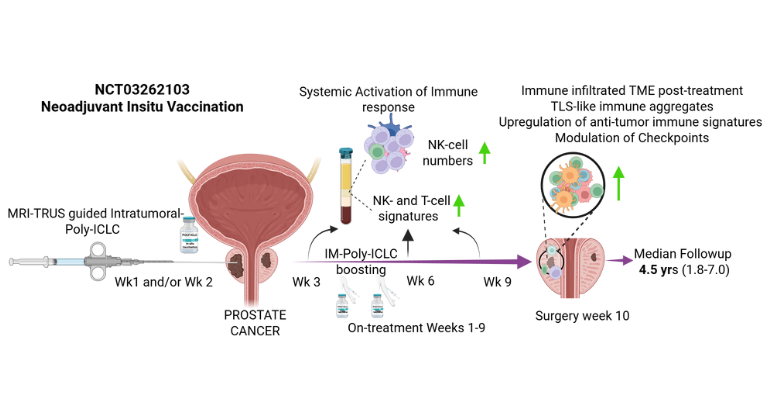
Early Clinical Trial Tests Immune-Boosting Therapy Before Prostate Cancer Surgery
Oct 30, 2025 View All Press Releases

The Mount Sinai Hospital Ranked Among Top in the Nation by U.S. News & World Report®
Jul 29, 2025 View All Press Releases
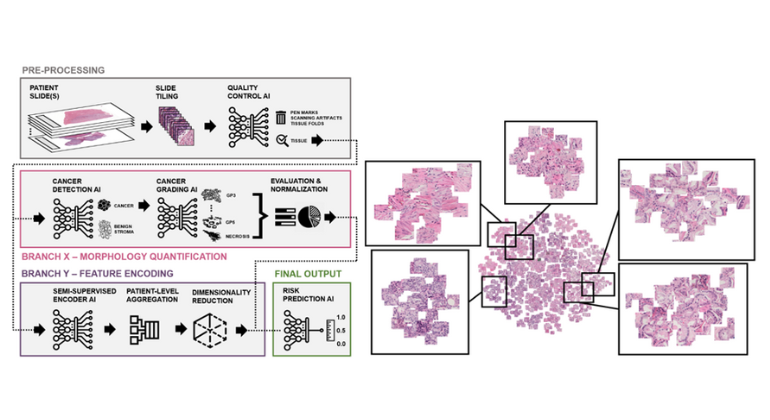
New AI Tool by Mount Sinai Researchers Could Reshape Prostate Cancer Care
Sep 23, 2024 View All Press Releases