Delivery of Stem Cells into Heart Muscle After Heart Attack May Enhance Cardiac Repair and Reverse Injury
Mount Sinai's Cardiovascular Research Center presents new findings at the AHA Scientific Sessions 2014.
Delivering stem cell factor directly into damaged heart muscle after a heart attack may help repair and regenerate injured tissue, according to a study led by researchers from Icahn School of Medicine at Mount Sinai presented November 18 at the American Heart Association Scientific Sessions 2014 in Chicago, IL.
"Our discoveries offer insight into the power of stem cells to regenerate damaged muscle after a heart attack,"says lead study author Kenneth Fish, PhD, Director of the Cardiology Laboratory for Translational Research, Cardiovascular Research Center, Mount Sinai Heart, Icahn School of Medicine at Mount Sinai.
In the study, Mount Sinai researchers administered stem cell factor (SCF) by gene transfer shortly after inducing heart attacks in pre-clinical models directly into damaged heart tissue to test its regenerative repair response. A novel SCF gene transfer delivery system induced the recruitment and expansion of adult c-Kit positive (cKit+) cardiac stem cells to injury sites that reversed heart attack damage. In addition, the gene therapy improved cardiac function, decreased heart muscle cell death, increased regeneration of heart tissue blood vessels, and reduced the formation of heart tissue scarring.
"It is clear that the expression of the stem cell factor gene results in the generation of specific signals to neighboring cells in the damaged heart resulting in improved outcomes at the molecular, cellular, and organ level," says Roger J. Hajjar, MD, senior study author and Director of the Cardiovascular Research Center at Mount Sinai. "Thus, while still in the early stages of investigation, there is evidence that recruiting this small group of stem cells to the heart could be the basis of novel therapies for halting the clinical deterioration in patients with advanced heart failure."
cKit+ cells are a critical cardiac cytokine, or protein receptor, that bond to stem cell factors. They naturally increase after myocardial infarction and through cell proliferation are involved in cardiac repair.
According to researchers there has been a need for the development of interventional strategies for cardiomyopathy and preventing its progression to heart failure. Heart disease is the number one cause of death in the United States, with cardiomyopathy or an enlarged heart from heart attack or poor blood supply due to clogged arteries being the most common causes of the condition. In addition, cardiomyopathy causes a loss of cardiomyocyte cells that control heartbeat, and changes in heart shape, which lead to the heart’s decreased pumping efficiency.
"Our study shows our SCF gene transfer strategy can mobilize a promising adult stem cell type to the damaged region of the heart to improve cardiac pumping function and reduce myocardial infarction sizes resulting in improved cardiac performance and potentially increase long-term survival and improve quality of life in patients at risk of progressing to heart failure," says Dr. Fish.
"This study adds to the emerging evidence that a small population of adult stem cells can be recruited to the damaged areas of the heart and improve clinical outcomes," says Dr. Hajjar.
Other study co-authors included Kiyotake Ishikawa, MD, Jaume Aguero, MD, Lisa Tilemann, MD, Dongtak Jeong, PhD, Lifan Liang, PhD, Lauren Fish, Elisa Yaniz-Galende, PhD, and Krisztina Zsebo, PhD.
This research study was performed in collaboration with the Celladon Corporation in San Diego, CA. Dr. Hajjar is the scientific cofounder of the company Celladon, which is developing his AAV1/SERCA2a gene therapy for the treatment of heart failure. He holds equity in Celladon and receives financial compensation as a member of its advisory board.
Abstract 17141 was presented at the AHA Scientific Sessions 2014 as: Stem Cell Factor Gene Transfer in a Swine Model of Ischemic Cardiomyopathy is accompanied by decreased apoptosis and proliferating cKit cells.
About the Mount Sinai Health System
Mount Sinai Health System is one of the nation’s leading integrated academic health systems and one of the largest in the New York metropolitan area. Its comprehensive system includes seven hospitals, more than 400 outpatient practices, over 600 research and clinical laboratories, the Icahn School of Medicine at Mount Sinai, the Graduate School of Biomedical Sciences, and the Mount Sinai Phillips School of Nursing. Together, the Health System comprises approximately 48,000 employees, more than 9,000 physicians, and 8,600 nurses.
As a leading learning health system, Mount Sinai combines clinical expertise with scientific discovery to improve patient care while training the next generation of health care and biomedical leaders. The Health System provides care across every stage of life, from prenatal care through geriatrics, while advancing personalized medicine through artificial intelligence, data science, and biomedical research.
Mount Sinai is consistently recognized among the nation’s leading academic health systems for patient care, research, and education. The Mount Sinai Hospital is ranked No. 1 in New York by Newsweek and No. 5 on the magazine’s World’s Best Hospitals list. The Icahn School of Medicine at Mount Sinai ranks No. 11 among U.S. medical schools and No. 1 among freestanding medical schools for National Institutes of Health funding, reflecting the strength of its scientific enterprise and leadership in biomedical research.
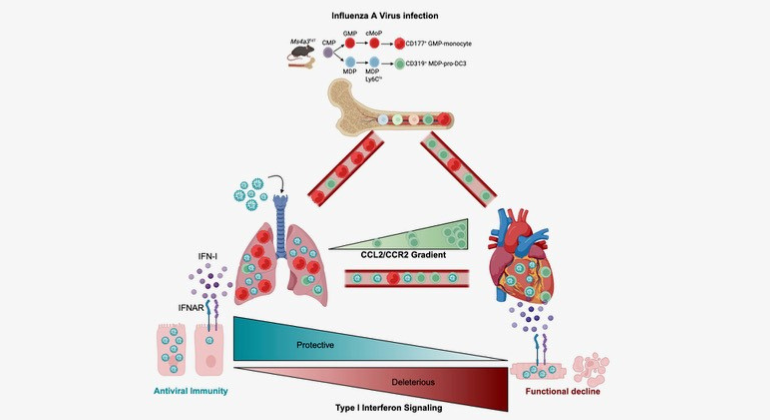
Mount Sinai Scientists Uncover Link Between Influenza and Heart Disease
Feb 09, 2026 View All Press Releases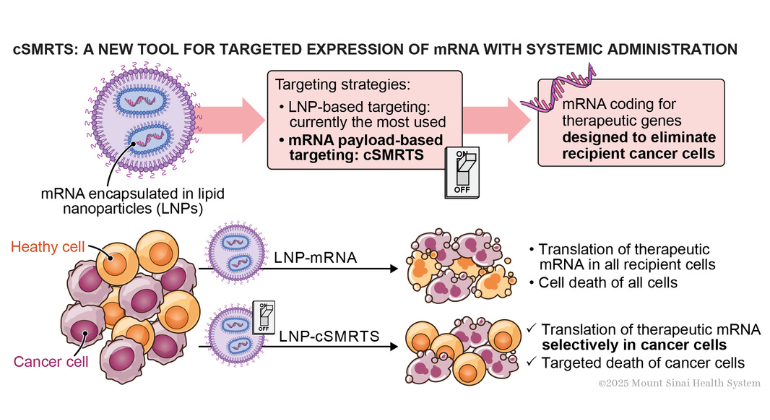
Scientists Develop a Smarter mRNA Therapy That Knows Which Cells to Target
Dec 15, 2025 View All Press Releases
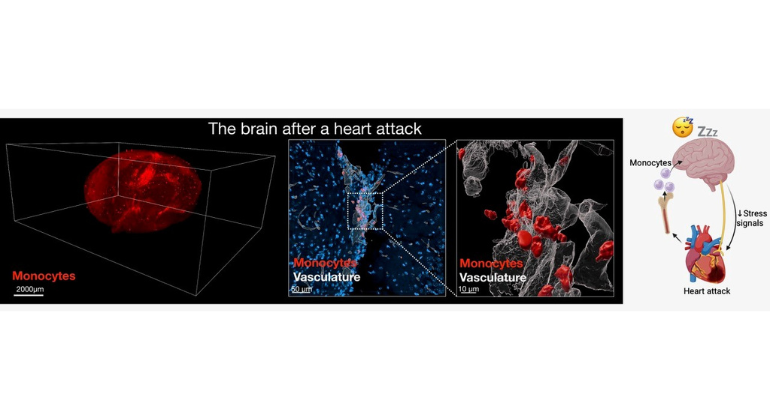
After a Heart Attack, the Heart Signals to the Brain to Increase Sleep to Promote Healing
Oct 30, 2024 View All Press Releases
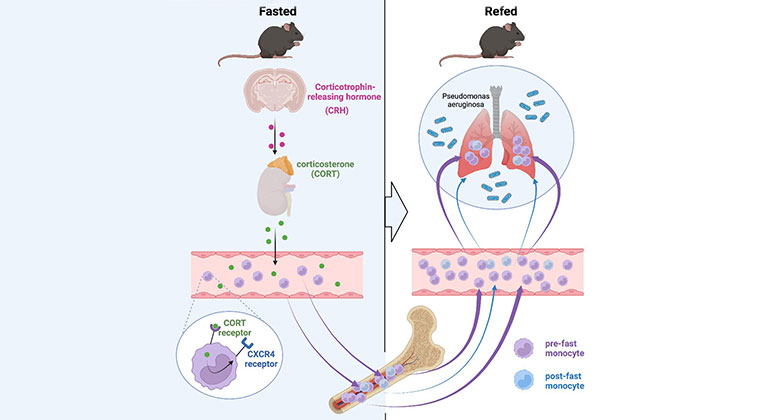
Skipping Breakfast May Compromise the Immune System
Feb 23, 2023 View All Press Releases.jpg)