
Mount Sinai Study Finds Lung Cancer Surgery Safe for Many Patients Over 80
Research in The Lancet Regional Health – Americas shows older adults can recover well and live just as long as younger patients
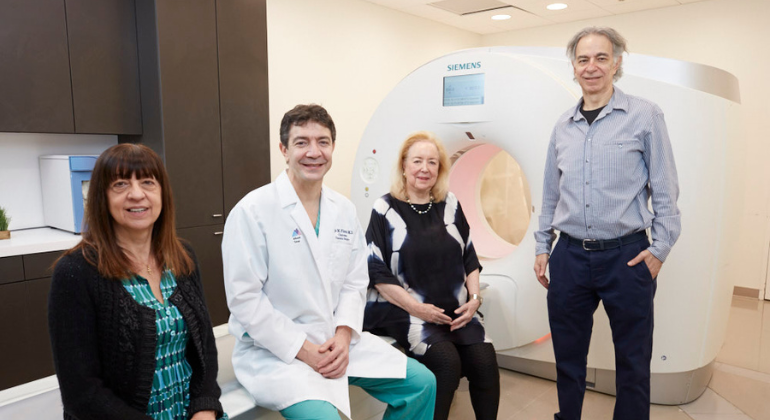
Left to right: Emanuela Taioli, MD, PhD; Raja M. Flores,MD; Claudia Henschke, PhD, MD; and David F. Yankelevitz, MD.
Researchers at the Icahn School of Medicine at Mount Sinai and the Mount Sinai Tisch Cancer Center have found that adults aged 80 and older with early-stage lung cancer can safely undergo surgery and achieve outcomes comparable to younger patients, challenging longstanding assumptions about age and cancer treatment.
The findings, published in The Lancet Regional Health – Americas (10. 1016/j.lana.2026. 101428), suggest that carefully selected older adults should not be excluded from potentially curative surgical treatment based on age alone.
The study, led by Raja M. Flores, MD, Chair of the Department of Thoracic Surgery at Mount Sinai Health System; Claudia Henschke, PhD, MD, Professor of Diagnostic, Molecular and Interventional Radiology and Director of the Early Lung and Cardiac Action Program (ELCAP) at the Icahn School of Medicine at Mount Sinai; and Emanuela Taioli, MD, PhD, Director of the Institute for Translational Epidemiology at the Icahn School of Medicine, examined surgical outcomes and quality of life in patients with early-stage non-small cell lung cancer, comparing those aged 80 and older with younger patients. The first authors are Rowena Yip, PhD, Associate Professor of Diagnostic, Molecular and Interventional Radiology at the Icahn School of Medicine at Mount Sinai; and Louis Gros, MD, Postdoc Fellow, Early Lung and Cardiac Action Program at the Icahn School of Medicine at Mount Sinai.
“As our population ages, more patients over 80 are being diagnosed with early-stage lung cancer, yet they are often not considered for surgery,” said Dr. Flores. “Our findings show that when patients are carefully selected based on their overall health, not just their age, they can tolerate surgery well and experience excellent long-term outcomes.”
The study followed 884 patients with early-stage lung cancer, including 114 people who were age 80 or older. The researchers found that older patients lived just as long as younger patients after surgery. While some older patients had more complications right after surgery, most patients in both groups felt better over time, and their quality of life improved within a year.
“Our study highlights the importance of making sure all patients are evaluated based on their overall health, not just their age,” said Dr. Taioli. “We must ensure that effective treatments are available to everyone who can benefit from them. Older adults are often left out of clinical decisions, but our findings show they should have equal access to care that can improve survival and quality of life.”
As people live longer, more adults over 80 are being diagnosed with lung cancer. However, many are not offered surgery because of their age.
“We should treat the whole person, not just the number of years they have lived,” Dr. Flores said. “If a patient is strong enough, surgery can save their life.”
For patients and families, the message is clear: even if you are over 80, you may still be able to safely have surgery and be cured. For doctors, the study is a reminder to focus on how healthy a patient is overall and not rule out surgery based solely on age.
“Early detection and thoughtful treatment go hand in hand,” said Dr. Henschke. “When lung cancer is found at an early stage, patients (even those over 80) can benefit from treatments that offer a real chance at a cure. This study shows that with the right approach, we can extend both life and quality of life for older adults. Additionally, screening guidelines should include patients who are over 80 years old based on these findings.”
Mount Sinai researchers who contributed to this study include Wenchao Ma, Jeffrey Zhu, Jiafang Zhang, Sydney Kantor, Siyang Cai; Andrew J. Kaufman, MD; Andrea S. Wolf, MD; Ardeshir Hakami-Kermani, MD; Daniel Nicastri, MD; Dong-Seok Lee, MD; Kimberly J. Song, MD; Brian Housman, MD; and David F. Yankelevitz, MD, as part of the IELCART (Initiative for Early Lung Cancer Research on Treatment) Investigators, an international collaborative network led by researchers at Mount Sinai Health System.
This study was supported by the Simons Foundation.
Full study and list of contributors: https://www.thelancet.com/journals/lanam/article/PIIS2667-193X(26)00058-X/fulltext
About the Icahn School of Medicine at Mount Sinai
The Icahn School of Medicine at Mount Sinai is internationally renowned for its outstanding research, educational, and clinical care programs. It is the sole academic partner for the seven member hospitals* of the Mount Sinai Health System, one of the largest academic health systems in the United States, providing care to New York City’s large and diverse patient population.
The Icahn School of Medicine at Mount Sinai offers highly competitive MD, PhD, MD-PhD, and master’s degree programs, with enrollment of more than 1,200 students. It has the largest graduate medical education program in the country, with more than 2,600 clinical residents and fellows training throughout the Health System. Its Graduate School of Biomedical Sciences offers 13 degree-granting programs, conducts innovative basic and translational research, and trains more than 560 postdoctoral research fellows.
Ranked 11th nationwide in National Institutes of Health (NIH) funding, the Icahn School of Medicine at Mount Sinai is among the 99th percentile in research dollars per investigator according to the Association of American Medical Colleges. More than 4,500 scientists, educators, and clinicians work within and across dozens of academic departments and multidisciplinary institutes with an emphasis on translational research and therapeutics. Through Mount Sinai Innovation Partners (MSIP), the Health System facilitates the real-world application and commercialization of medical breakthroughs made at Mount Sinai.
-------------------------------------------------------
* Mount Sinai Health System member hospitals: The Mount Sinai Hospital; Mount Sinai Brooklyn; Mount Sinai Morningside; Mount Sinai Queens; Mount Sinai South Nassau; Mount Sinai West; and New York Eye and Ear Infirmary of Mount Sinai.
About the Mount Sinai Health System
Mount Sinai Health System is one of the nation’s leading integrated academic health systems and one of the largest in the New York metropolitan area. Its comprehensive system includes seven hospitals, more than 400 outpatient practices, over 600 research and clinical laboratories, the Icahn School of Medicine at Mount Sinai, the Graduate School of Biomedical Sciences, and the Mount Sinai Phillips School of Nursing. Together, the Health System comprises approximately 48,000 employees, more than 9,000 physicians, and 8,600 nurses.
As a leading learning health system, Mount Sinai combines clinical expertise with scientific discovery to improve patient care while training the next generation of health care and biomedical leaders. The Health System provides care across every stage of life, from prenatal care through geriatrics, while advancing personalized medicine through artificial intelligence, data science, and biomedical research.
Mount Sinai is consistently recognized among the nation’s leading academic health systems for patient care, research, and education. The Mount Sinai Hospital is ranked No. 1 in New York by Newsweek® and No. 7 in the U.S. on the magazine’s World’s Best Hospitals 2026 list. The Icahn School of Medicine at Mount Sinai ranks No. 9 among U.S. medical schools and No. 1 among freestanding medical schools for National Institutes of Health grant funding, reflecting the strength of its scientific enterprise and leadership in biomedical research.


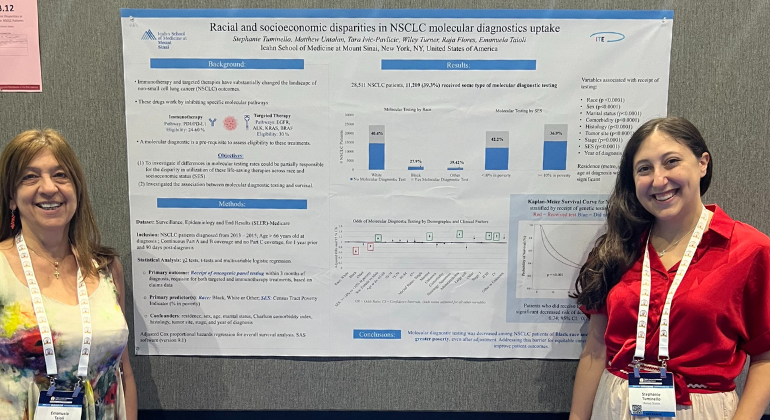
New Mount Sinai Study Reveals Disparities in Lung Cancer Testing
Sep 18, 2024 View All Press Releases
Lung Cancer Screening Dramatically Increases Long-term Survival Rate
Nov 22, 2022 View All Press Releases
Lung Cancer Death Decline Associated With Screening, Earlier Diagnosis, and Surgery
Dec 17, 2021 View All Press Releases