Mount Sinai Study Shows That Circulating Immune Cells Drawn to the Brain During Stress Can Control Emotional Behaviors
Findings shed light on mechanisms underlying psychosocial stress and depression susceptibility
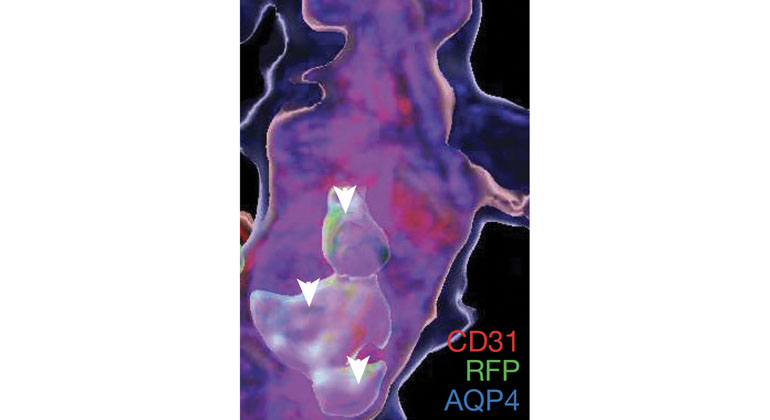
Mount Sinai researchers have shown for the first time that immune cells called monocytes, derived in the bone marrow and released into the bloodstream, can be drawn during stress into sites in the brain that control emotional behaviors. There, they release an enzyme called matrix metalloproteinase 8 (MMP8) that breaks down proteins and restructures the brain to alter the function of neurons and, ultimately, impair social behavior and reward.
These data establish a novel mechanism by which the immune system can affect central nervous system function and behavior in the context of stress, potentially opening the door to novel therapeutic targets for stress-related disorders. The study appears in the February 7 issue of Nature.
“Psychosocial stress is a major factor for developing major depressive disorder and post-traumatic stress disorder (PTSD) and has been shown to have profound effects on the body, including the immune system and the brain,” says lead author Flurin Cathomas, MD, Instructor of Neuroscience and member of the Brain-Body Research Center at Mount Sinai. “These data are the first to show that immune cells derived in the bone marrow—and not the brain—can be recruited during stressful circumstances to the brain, setting off a cascade of other mechanisms that alter brain function and behavior.”
To explore these mechanisms, the research team performed comparative cross-species analyses in mice and humans and found that MMP8 is elevated in the serum of study subjects with major depressive disorder, as well as in stress-susceptible mice following chronic social defeat stress, a model of social trauma. Studies in mice confirmed that peripheral MMP8 enters the brain through damaged blood vessels to restructure the brain’s extracellular tissue matrix, which leads to altered function of neurons that ultimately impairs social behavior and reward.
Prior to this work, most hypotheses about the role of the immune system in stress disorders such as depression have centered on mechanisms related to the brain’s resident immune cells, called microglia, and their ability to release pro-inflammatory molecules such as interleukins to control neural function and behavior.
Using single-cell RNA sequencing to look at gene expression profiles in circulating monocytes as compared to microglia, the team found that, contrary to popular belief, the microglia did not exhibit a pro-inflammatory gene signature. The team found no evidence that they upregulate genes that code for interleukins. This is in stark contrast to circulating monocytes found within the blood vessel lining of brain regions that control mood and emotion.
“There are no existing medications to target MMP8, and while it’s not yet clear if such treatments will ultimately be effective in treating depression, my hope is that this study will lead to renewed effort in developing such drugs,” said Scott Russo, PhD, Mount Sinai Professor in Affective Neuroscience, Leon Levy Director of the Brain-Body Research Center, and Center for Affective Neuroscience at Mount Sinai. “It’s also possible that non-pharmacological ‘lifestyle’ strategies to promote positive immune health might be helpful in treating these stress-related disorders.”
The disturbances in the immune system identified in this study were only found in a subset of patients, which highlights the heterogeneous nature of such illnesses in terms of etiology. Additionally, the studies performed in human subjects were purely correlative, so the team does not yet know if treatments targeting monocytes or MMP8 directly will be effective for human stress disorders. Importantly, there are several additional MMPs that can be derived directly in the brain and it remains unclear whether they play complementary or opposing roles.
“The brain and the body are unequivocally connected and we are really at the precipice of a markedly deeper understanding of how the connections between the brain and peripheral organ systems like the immune system, cardiovascular system, and others can affect a person’s health,” said Dr. Russo. “Our work suggests that strategies to promote immune health can benefit one’s emotional well-being and possibly prevent stress-related illnesses like depression and PTSD. Additional research for continued understanding and potential treatment development is warranted.”
The Mount Sinai research team is currently testing therapeutic strategies to inhibit MMP8 as novel antidepressants. They are also investigating MMP8 as a novel immune biomarker for depression patients.
About the Mount Sinai Health System
Mount Sinai Health System is one of the nation’s leading integrated academic health systems and one of the largest in the New York metropolitan area. Its comprehensive system includes seven hospitals, more than 400 outpatient practices, over 600 research and clinical laboratories, the Icahn School of Medicine at Mount Sinai, the Graduate School of Biomedical Sciences, and the Mount Sinai Phillips School of Nursing. Together, the Health System comprises approximately 48,000 employees, more than 9,000 physicians, and 8,600 nurses.
As a leading learning health system, Mount Sinai combines clinical expertise with scientific discovery to improve patient care while training the next generation of health care and biomedical leaders. The Health System provides care across every stage of life, from prenatal care through geriatrics, while advancing personalized medicine through artificial intelligence, data science, and biomedical research.
Mount Sinai is consistently recognized among the nation’s leading academic health systems for patient care, research, and education. The Mount Sinai Hospital is ranked No. 1 in New York by Newsweek® and No. 7 in the U.S. on the magazine’s World’s Best Hospitals 2026 list. The Icahn School of Medicine at Mount Sinai ranks No. 9 among U.S. medical schools and No. 1 among freestanding medical schools for National Institutes of Health grant funding, reflecting the strength of its scientific enterprise and leadership in biomedical research.

Scott J. Russo, PhD, Appointed Chair of the Nash Family Department of Neuroscience
Oct 13, 2026 View All Press Releases