Mount Sinai Researchers Awarded $16 Million to Develop Antivirals Against Viruses With Pandemic Potential
Leading scientists who study microbiology and emerging pathogens will contribute to several Antiviral Drug Discovery (AViDD) Centers for Pathogens of Pandemic Concern recently established by the NIH

Researchers at the Icahn School of Medicine at Mount Sinai have been awarded an initial $16 million from the National Institutes of Health (NIH) to discover and develop globally accessible and affordable novel oral antivirals to combat COVID-19 and future pandemics.
The National Institute of Allergy and Infectious Diseases (NIAID), part of the NIH, recently announced $577 million in funding to establish nine Antiviral Drug Discovery (AViDD) Centers for Pathogens of Pandemic Concern. Researchers from Mount Sinai’s Departments of Microbiology and Pharmacological Sciences, the Global Health and Emerging Pathogens Institute, and the Mount Sinai Center for Therapeutics Discovery will conduct critical research for four of the nine newly established centers, collaborating with other leading researchers at academic institutions across the country.
According to the NIH announcement, AViDD centers will conduct multidisciplinary research to develop candidate COVID-19 antivirals, especially those that can be taken in an outpatient setting, as well as antivirals targeting specific viral families with high potential to cause a pandemic in the future. These include paramyxoviruses, bunyaviruses, togaviruses, filoviruses (including Ebola and Marburg viruses), picornaviruses (including enteroviruses and other cold-causing viruses), and flaviviruses (including the viruses that cause yellow fever, dengue, and Zika).
“We are very excited to continue and expand our previous collaborations with several groups of investigators under the AViDD program for the discovery and advancement of novel antivirals against pathogenic viruses, including SARS-CoV-2,” said Adolfo Garcia-Sastre, PhD, Irene and Dr. Arthur M. Fishberg Professor of Medicine and Director of the Global Health and Emerging Pathogens Institute at Icahn Mount Sinai. “This program fills a major gap in our pandemic preparedness plans.”
The AViDD Centers Mount Sinai researchers will contribute to include:
Center for Antiviral Medicines and Pandemic Preparedness
Dr. Garcia-Sastre will serve as one of the co-principal investigators of the center.
- Project dedicated to discovering inhibitors of SARS-CoV-2 non-enzymatic components
- Dr. Garcia-Sastre is principal investigator; Matthew Evans, PhD, Associate Professor of Microbiology, and Lisa Miorin, PhD, Assistant Professor of Microbiology, are co-investigators. - Project dedicated to discovering inhibitors of SARS-CoV-2 polymerase
- Christopher Basler, PhD, Professor of Microbiology, is principal investigator; Gustavo Palacios, PhD, Professor of Microbiology, is co-investigator. - Project dedicated to discovering inhibitors of hemorrhagic fever viruses
-Dr. Basler is co-investigator.
Antiviral Countermeasures Development Center
Project dedicated to developing antivirals that target the polymerase of paramyxoviruses of pandemic concern.
- Benhur Lee, MD, Professor of Microbiology, is principal investigator.
QBI Coronavirus Research Group Pandemic Response Program
Dedicated to bringing together research centers from both academia and industry to pursue the discovery and development of drug therapies for viruses with pandemic potential.
- In Vitro Virology Core: Garcia-Sastre and Ana Fernandez-Sesma, PhD, Professor of Microbiology and Medicine (Infectious Diseases), are co-investigators.
- In Vivo Virology Core: Garcia-Sastre leads this group; Kris White, PhD, Assistant Professor of Microbiology, and Randy Albrecht, PhD, Associate Professor of Microbiology, are co-investigators.
- Medicinal Chemistry Core: Jian Jin, PhD, Mount Sinai Endowed Professor in Therapeutics Discovery, is a co-leader of this core.
AI-Driven Structure-Enabled Antiviral Platform
Dedicated to using cutting-edge technology, such as advanced structural biology, artificial intelligence, machine learning, and computational chemistry, to build a robust antiviral discovery pipeline.
- Antiviral Efficacy and Resistance Core: led by Dr. White; Drs. Garcia-Sastre and Albrecht are co-investigators of the core.
“The AViDD centers will conduct research on the early-stage identification and validation of novel viral targets, with an eye to identifying small molecules and biotherapeutics that directly block viral targets. As drug candidates are identified and evaluated for properties such as potency and breadth, the most promising will enter late-stage preclinical development,” the NIH says in a statement. “Importantly, the centers can draw on the resources of their industry partners to accelerate research, making use of the companies’ chemical libraries and expertise in moving candidates into the product development pipeline.”
”The advent of sophisticated technologies including transcriptomics, proteomics and high-throughput screening of small-molecular-weight compounds has made it possible to rapidly develop novel antivirals against pandemic and other pathogenic viruses. The Global Health and Emerging Pathogens Institute headed by Dr. Garcia-Sastre is at the forefront of these national and international efforts. Through the AViDD Center awards, manyMount Sinai researchers will now be able to lend their expertise to this targeted effort,making a real difference for the future,” said Peter Palese, PhD, Horace W. Goldsmith Professor and Chair of Microbiology at Icahn Mount Sinai.
About the Mount Sinai Health System
Mount Sinai Health System is one of the nation’s leading integrated academic health systems and one of the largest in the New York metropolitan area. Its comprehensive system includes seven hospitals, more than 400 outpatient practices, over 600 research and clinical laboratories, the Icahn School of Medicine at Mount Sinai, the Graduate School of Biomedical Sciences, and the Mount Sinai Phillips School of Nursing. Together, the Health System comprises approximately 48,000 employees, more than 9,000 physicians, and 8,600 nurses.
As a leading learning health system, Mount Sinai combines clinical expertise with scientific discovery to improve patient care while training the next generation of health care and biomedical leaders. The Health System provides care across every stage of life, from prenatal care through geriatrics, while advancing personalized medicine through artificial intelligence, data science, and biomedical research.
Mount Sinai is consistently recognized among the nation’s leading academic health systems for patient care, research, and education. The Mount Sinai Hospital is ranked No. 1 in New York by Newsweek and No. 5 on the magazine’s World’s Best Hospitals list. The Icahn School of Medicine at Mount Sinai ranks No. 11 among U.S. medical schools and No. 1 among freestanding medical schools for National Institutes of Health funding, reflecting the strength of its scientific enterprise and leadership in biomedical research.
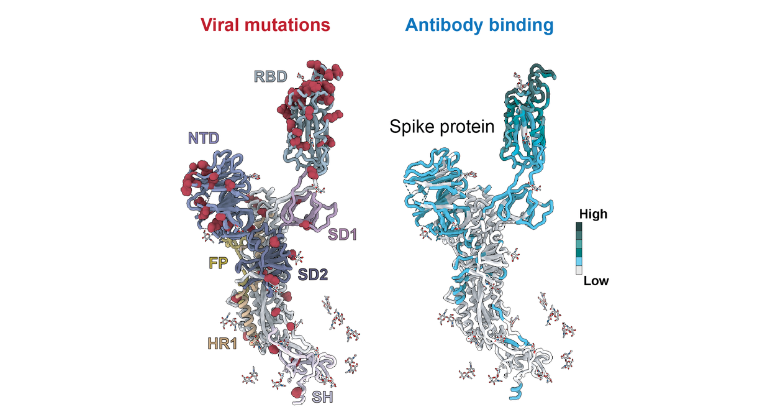
Scientists Uncover How COVID-19 Variants Outsmart the Immune System
Nov 21, 2025 View All Press Releases