
Mount Sinai Researchers Use Wearable Devices to Identify Psychological Effects of Pandemic
Study links changes in heart rate variability with degree of resilience, as part of larger effort to understand and mitigate the effects of COVID-19 on health care workers
Health care workers with high resilience or strong emotional support were protected against the effects of stress related to the COVID-19 pandemic compared to those who had low emotional support or resilience, according to a study published September 13 in the Journal of Medical Internet Research. Mount Sinai researchers also found that the number of individuals with COVID-19 in the community was a significant factor associated with stress in health care workers over time.
The Mount Sinai team found that high emotional support or high resilience—the ability to overcome difficulty and a reduced vulnerability to environmental stressors—resulted in a unique nervous system profile, demonstrating that these features impact both how health care workers perceive stress and how their bodies are physically affected by stress.
“Our study highlights the importance of emotional support and resilience in moderating the effects of stress on health care workers during the ongoing pandemic,” said the study’s corresponding author Robert P. Hirten, MD, Assistant Professor of Medicine (Gastroenterology) at the Icahn School of Medicine at Mount Sinai, and member of the Hasso Plattner Institute for Digital Health at Mount Sinai and the Mount Sinai Clinical Intelligence Center (MSCIC). “Assessing the resilience and emotional support of health care workers may be able to help identify those at risk from ongoing stressors and may help guide health care institutions in allocating mental health resources for these at-risk employees.”
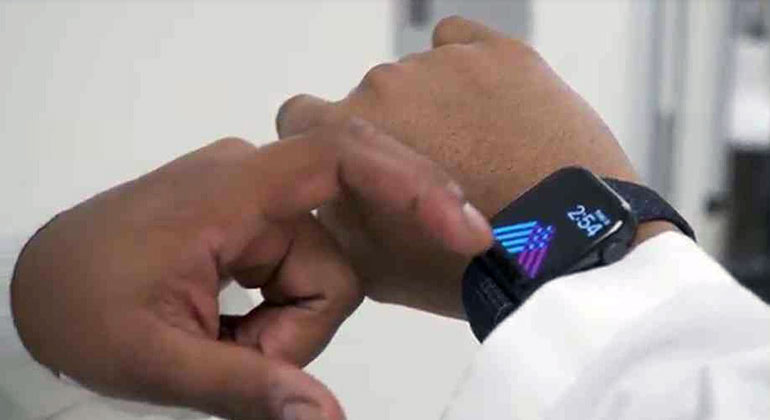
Several hundred study participants wore an Apple Watch that measured their heart rate variability and downloaded a customized app to complete weekly surveys measuring perceived stress, resilience, emotional support, quality of life, and optimism. Researchers found that health care workers with high resilience or high emotional support had different autonomic nervous system stress patterns compared with those who had medium or low emotional support or resilience. The autonomic nervous system is a primary component of the stress response and can be found by measuring heart rate variability. The participants’ physiological results aligned with their self-reported answers, the study concluded.
“The experience of this pandemic has been especially stressful for health care workers, and as a community we need to be able to support them, especially as the virus persists,” said the study’s co-author Zahi Fayad, PhD, Director of the BioMedical Engineering and Imaging Institute, Co-Founder of the MSCIC, and the Lucy G. Moses Professor of Medical Imaging and Bioengineering at Icahn Mount Sinai. “Our study is one of the first to document not only the toll the pandemic has taken on our health care workers, but also the importance of resilience and social support as specific paths toward efficiently and effectively directing support.”
The latest findings from the Warrior Watch Study build on previous research that used wearable devices to identify COVID-19 cases earlier than traditional diagnostic methods. Researchers monitored the participant’s physical activity and tracked subtle changes in their heart rate variability measured by an Apple Watch, which signaled the onset of COVID-19 up to seven days before the individual was diagnosed with the infection via nasal swab.
About the Mount Sinai Health System
Mount Sinai Health System is one of the nation’s leading integrated academic health systems and one of the largest in the New York metropolitan area. Its comprehensive system includes seven hospitals, more than 400 outpatient practices, over 600 research and clinical laboratories, the Icahn School of Medicine at Mount Sinai, the Graduate School of Biomedical Sciences, and the Mount Sinai Phillips School of Nursing. Together, the Health System comprises approximately 48,000 employees, more than 9,000 physicians, and 8,600 nurses.
As a leading learning health system, Mount Sinai combines clinical expertise with scientific discovery to improve patient care while training the next generation of health care and biomedical leaders. The Health System provides care across every stage of life, from prenatal care through geriatrics, while advancing personalized medicine through artificial intelligence, data science, and biomedical research.
Mount Sinai is consistently recognized among the nation’s leading academic health systems for patient care, research, and education. The Mount Sinai Hospital is ranked No. 1 in New York by Newsweek and No. 5 on the magazine’s World’s Best Hospitals list. The Icahn School of Medicine at Mount Sinai ranks No. 11 among U.S. medical schools and No. 1 among freestanding medical schools for National Institutes of Health funding, reflecting the strength of its scientific enterprise and leadership in biomedical research.