
Mount Sinai Leader Awarded 2021 Sherman Prize for Advancements in Understanding IBD Genetics
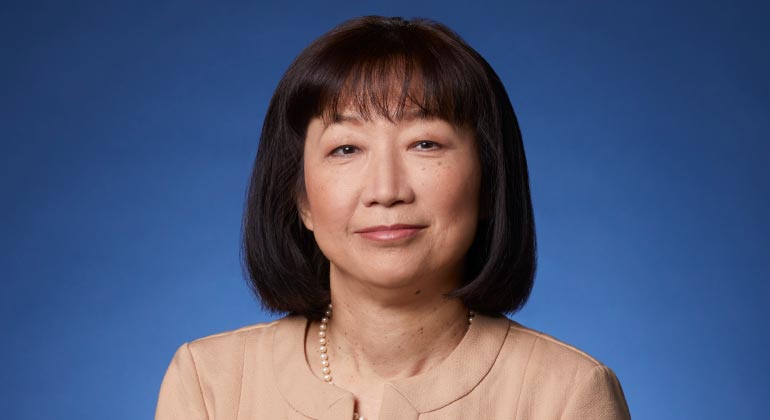
The Bruce and Cynthia Sherman Charitable Foundation has announced Judy H. Cho, MD, Dean of Translational Genetics and Director of The Charles Bronfman Institute for Personalized Medicine at the Icahn School of Medicine at Mount Sinai, as a recipient of the 2021 Sherman Prize, which recognizes excellence in the field of Crohn’s disease and ulcerative colitis, two forms of inflammatory bowel disease (IBD).
Dr. Cho was awarded a $100,000 Sherman Prize for her pioneering genetics research that has advanced understanding of the underlying causes of IBD and paved the way for personalized treatment approaches. A leader of the team that identified the first gene for Crohn’s disease, NOD2, Dr. Cho has contributed to virtually every major discovery in IBD genetics over the past 20 years.
“It is particularly gratifying to me that this prize is awarded by my lifelong friends and collaborators in IBD,” said Dr. Cho, who also holds the Ward-Coleman Chair in Translational Genetics as well as professorships in Genetics and Genomic Sciences, and Medicine. “Together, we can make a major positive impact in substantially improving the lives of our patients.”
Dr. Cho’s work explores how to prioritize new therapeutic targets and tailor biologic agents for individual patients who don’t respond to current therapies. Her research on the involvement of the protein IL-23 in the disease cascade led to anti-IL-23 therapies that are widely used to treat Crohn’s disease and ulcerative colitis. Now she’s exploring new targets and combination therapies and supporting junior colleagues in their research to help ensure the work continues. Her hope for the future is that with greater understanding of the genetics of these diseases, gene therapies will be made possible—putting the potential for true cures within reach for even the most severe forms of disease.
Dr. Cho joined the Icahn Mount Sinai faculty in 2013, following appointments at the Yale University School of Medicine and the University of Chicago Pritzker School of Medicine. She earned her MD at The Ohio State University College of Medicine, and completed both a residency in Internal Medicine and postdoctoral research training at Northwestern University Feinberg School of Medicine.
The Sherman Prize, which was founded in 2016 by the Bruce and Cynthia Sherman Charitable Foundation, honors innovators from a variety of professional disciplines who have dedicated their careers to the fight to overcome IBD and represent “Excellence in Crohn’s and Colitis.” Every year, two $100,000 Sherman Prizes are awarded to IBD visionaries for their pioneering contributions that have transformed the care of people with IBD, and one $25,000 Sherman Emerging Leader Prize is awarded to an early-career professional who has contributed to an advancement and shown promise for future contributions. The other 2021 recipients are Phillip R. Fleshner, MD, FASCRS, of Cedars-Sinai Medical Center in Los Angeles, and Edward L. Barnes, MD, MPH, of the University of North Carolina School of Medicine in Chapel Hill, North Carolina. The Prizes will be presented in December during the Advances in IBD (AIBD) conference in Orlando, Florida.
To learn more about Dr. Cho, read her story here.
About the Mount Sinai Health System
Mount Sinai Health System is one of the nation’s leading integrated academic health systems and one of the largest in the New York metropolitan area. Its comprehensive system includes seven hospitals, more than 400 outpatient practices, over 600 research and clinical laboratories, the Icahn School of Medicine at Mount Sinai, the Graduate School of Biomedical Sciences, and the Mount Sinai Phillips School of Nursing. Together, the Health System comprises approximately 48,000 employees, more than 9,000 physicians, and 8,600 nurses.
As a leading learning health system, Mount Sinai combines clinical expertise with scientific discovery to improve patient care while training the next generation of health care and biomedical leaders. The Health System provides care across every stage of life, from prenatal care through geriatrics, while advancing personalized medicine through artificial intelligence, data science, and biomedical research.
Mount Sinai is consistently recognized among the nation’s leading academic health systems for patient care, research, and education. The Mount Sinai Hospital is ranked No. 1 in New York by Newsweek and No. 5 on the magazine’s World’s Best Hospitals list. The Icahn School of Medicine at Mount Sinai ranks No. 11 among U.S. medical schools and No. 1 among freestanding medical schools for National Institutes of Health funding, reflecting the strength of its scientific enterprise and leadership in biomedical research.