
Ribbon Cutting for Renovated Clinic and Symposium Commemorating 100th Anniversary of Birth of Dr. Irving J. Selikoff
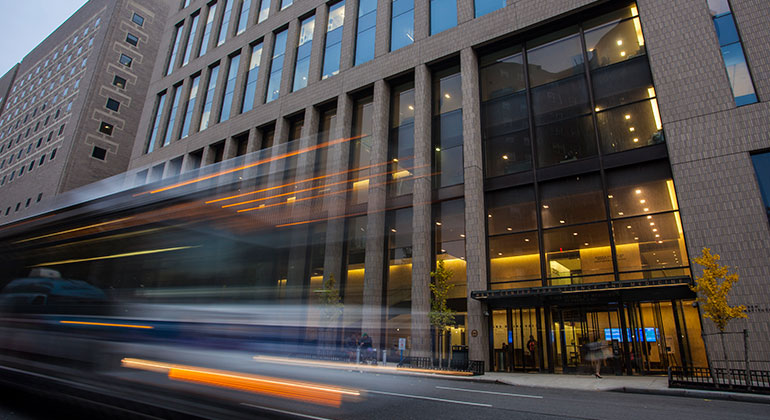
On Friday, October 16, New York Representative The Honorable Carolyn Maloney, Dr. David Michaels, Assistant Secretary of Labor for Occupational Safety and Health and Director of OSHA, and Dr. John Howard, Director of NIOSH along with leaders in health care and industry joined faculty from the Mount Sinai Selikoff Centers for Occupational Health to dedicate the newly renovated clinical center. The redesigned and renovated space has been coupled with a new patient care process aimed to enhance the patient experience. Renovations included reconfigured layouts to improve flow, a new patient waiting area, and new, state-of-the-art equipment. This clinic is located at the Annenberg building, 3rd Floor, 1468 Madison Avenue. Other offices are in Staten Island, Monroe, and Yonkers.
A symposium and exhibit celebrating the 100th anniversary of the birth of Dr. Irving J. Selikoff, for whom the Centers are named, was also held that day. The symposium examined the lasting impact of Dr. Selikoff’s legacy on occupational health and safety in the United States. At the symposium, Representative Maloney presented a congressional record paying tribute to Dr. Selikoff. Representative Maloney is also an author of the James Zadroga 9/11 Health and Compensation Act, signed into law by President Obama in January 2011. This Act established the World Trade Center Health Program that provides treatment for 9/11-related health conditions and monitoring services.
Irving J. Selikoff, MD (January 15, 1915 – May 20, 1992), considered the father of occupational medicine, is remembered for his seminal research on asbestos-related illness, his tireless advocacy for worker safety and health protections, and his contributions to the establishment of federal asbestos regulations. He is also credited for co-discovering a treatment for tuberculosis earlier in his career. Dr. Selikoff joined the Mount Sinai Hospital in 1941 where he established the nation's first hospital division of environmental and occupational medicine, establishing clinical programs that cared for thousands of workers impacted by occupational diseases. Over the span of a 50 year career until his death in 1992, he taught two generations of physicians, published over 380 scientific works, and publicized the health risks associated with toxins found in everyday work environments. The Mount Sinai Selikoff Centers for Occupational Health continue his work in the prevention, diagnosis, and treatment of workplace injuries and illnesses.
The symposium, led by experts from a wide range of backgrounds, covered topics from Dr. Selikoff’s role in the current understanding of asbestos and workers’ health protection to the state of asbestos and other occupational hazards in the United States and other parts of the world today. These talks touched upon different perspectives from epidemiological research, to perception of disease, to health and safety law.
Speakers included: Albert Miller, MD, Director of the Pulmonary Function Laboratory, Albert Einstein College of Medicine; Steven Markowitz, MD, DrPH, Barry Commoner Center for Health and the Environment, Queens College and Graduate Center, City University of New York; David K. Rosner, PhD, MPH, Ronald H. Lauterstein Professor of Sociomedical Sciences and Professor of History, Graduate School of Arts and Sciences, Columbia University Mailman School of Public Health; Paul D. Blanc, MD, MSPH, Professor of Medicine and Endowed Chair, Occupational and Environmental Medicine, University of California San Francisco; Neil T. Leifer, Esq., Neil T Leifer, LLC, Auburndale, MA; and Barry I. Castleman, ScD, Author of Asbestos: Medical and Legal Aspects.
In conjunction with the symposium, an exhibit by photographer Earl Dotter titled “Badges: A Memorial Tribute to Asbestos Workers” was on display to the public in the Annenberg Building from October 15th-22nd. This exhibit highlighted workers exposed to asbestos in the mining, manufacturing, and product installation industries.
About the Mount Sinai Health System
Mount Sinai Health System is one of the largest academic medical systems in the New York metro area, with 48,000 employees working across seven hospitals, more than 400 outpatient practices, more than 600 research and clinical labs, a school of nursing, and a leading school of medicine and graduate education. Mount Sinai advances health for all people, everywhere, by taking on the most complex health care challenges of our time—discovering and applying new scientific learning and knowledge; developing safer, more effective treatments; educating the next generation of medical leaders and innovators; and supporting local communities by delivering high-quality care to all who need it.
Through the integration of its hospitals, labs, and schools, Mount Sinai offers comprehensive health care solutions from birth through geriatrics, leveraging innovative approaches such as artificial intelligence and informatics while keeping patients’ medical and emotional needs at the center of all treatment. The Health System includes approximately 9,000 primary and specialty care physicians and 10 free-standing joint-venture centers throughout the five boroughs of New York City, Westchester, Long Island, and Florida. Hospitals within the System are consistently ranked by Newsweek’s® “The World’s Best Smart Hospitals, Best in State Hospitals, World Best Hospitals and Best Specialty Hospitals” and by U.S. News & World Report's® “Best Hospitals” and “Best Children’s Hospitals.” The Mount Sinai Hospital is on the U.S. News & World Report® “Best Hospitals” Honor Roll for 2025-2026.
For more information, visit https://www.mountsinai.org or find Mount Sinai on Facebook, Instagram, LinkedIn, X, and YouTube.

.jpg)
Childhood Asthma Study Uncovers Risky Air Pollutant Mixtures
Oct 06, 2021 View All Press ReleasesArtificial Intelligence Can Scan Doctors’ Notes to Distinguish Between Types of Back Pain
Feb 27, 2020 View All Press Releases