
Mount Sinai Surgeons Perform First Surgery in New York City Using FDA-Approved Spinal Tethering Device
Latest Technology and Minimally Invasive Approach to Correct Most Common Form of Scoliosis
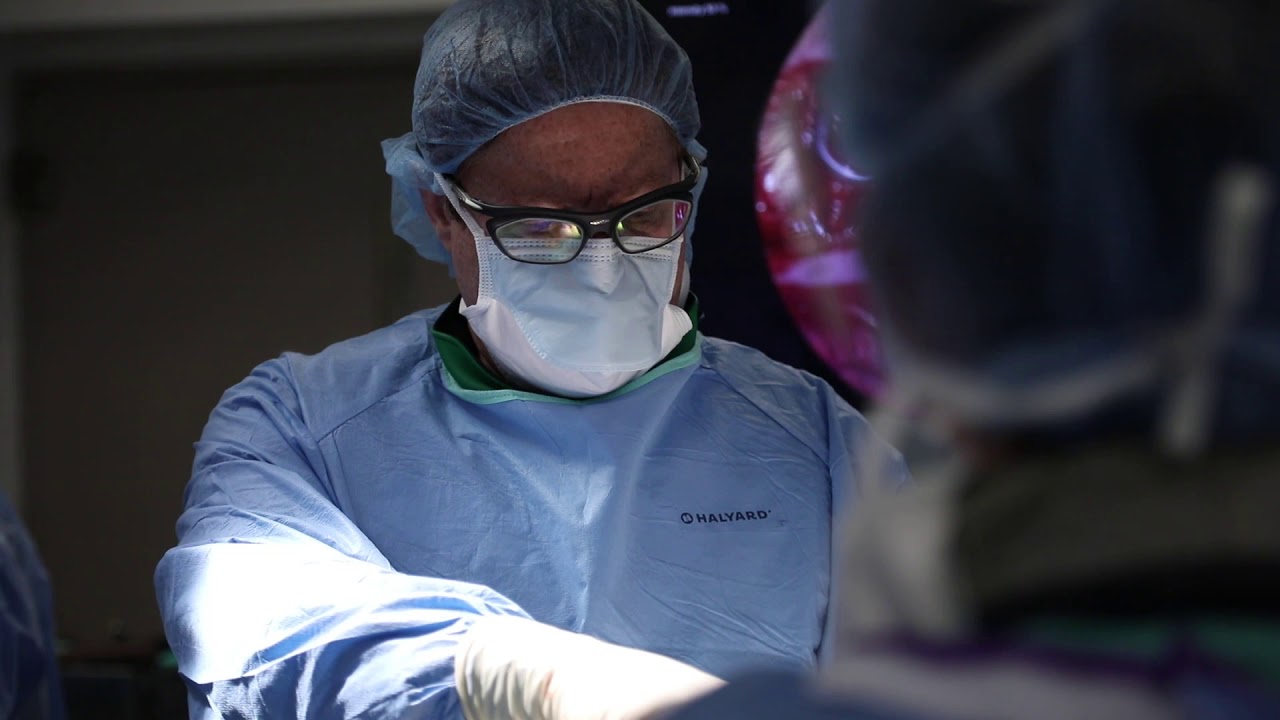
Mount Sinai surgeons have performed the first-ever spinal tethering surgery in New York City to correct idiopathic scoliosis—a sideways curvature in the spine—in children and adolescents. The procedure performed by Baron S. Lonner, MD, Professor of Orthopedic Surgery, and Pediatrics, Icahn School of Medicine at Mount Sinai, and Chief of Minimally Invasive Scoliosis Surgery, Mount Sinai Health System, uses the latest technology that was recently approved by the U.S. Food and Drug Administration (FDA).
The procedure, a minimally invasive approach known as vertebral body tethering scoliosis surgery, uses a tethering device that was approved by the FDA in August 2019. Dr. Lonner led in the research and development of the procedure, the first of its kind approved by the FDA for non-fusion scoliosis correction.
“As patients become increasingly interested in non-fusion surgical options for treating scoliosis when a back brace has not been effective, vertebral body tethering is an alternative that preserves motion and flexibility—especially in younger patients as they continue to grow,” says Dr. Lonner. “This option using the FDA-approved device may increase the chances for better long-term outcomes among patients seeking to correct their severe spinal deformity, and continues Mount Sinai’s commitment to using the latest in innovative technology to provide our patients with exceptional care.”
The Tether™- Vertebral Body Tethering System comprises a set of screws and anchors along a flexible cord that is attached to the spinal column to correct the curvature. As an alternative to spinal fusion surgery, the device allows motion in the operated segments of the spine. The technique is a revolutionary change to what has previously been the gold standard of care, a spinal fusion, which eliminates motion in the corrected spine and places greater stresses on adjacent unoperated portions of the spine.
Patients may resume activities including bending, lifting, and twisting, as soon as six weeks following tethering, and can pursue the highest level of athletics, dance, and gymnastics virtually unimpeded, while recovery following a spinal fusion could take 12 weeks and may result in limitations in some activities.
The first patients to receive this procedure with the FDA-approved spinal tethering device are available for interview.
About the Mount Sinai Health System
Mount Sinai Health System is one of the nation’s leading integrated academic health systems and one of the largest in the New York metropolitan area. Its comprehensive system includes seven hospitals, more than 400 outpatient practices, over 600 research and clinical laboratories, the Icahn School of Medicine at Mount Sinai, the Graduate School of Biomedical Sciences, and the Mount Sinai Phillips School of Nursing. Together, the Health System comprises approximately 48,000 employees, more than 9,000 physicians, and 8,600 nurses.
As a leading learning health system, Mount Sinai combines clinical expertise with scientific discovery to improve patient care while training the next generation of health care and biomedical leaders. The Health System provides care across every stage of life, from prenatal care through geriatrics, while advancing personalized medicine through artificial intelligence, data science, and biomedical research.
Mount Sinai is consistently recognized among the nation’s leading academic health systems for patient care, research, and education. The Mount Sinai Hospital is ranked No. 1 in New York by Newsweek and No. 5 on the magazine’s World’s Best Hospitals list. The Icahn School of Medicine at Mount Sinai ranks No. 11 among U.S. medical schools and No. 1 among freestanding medical schools for National Institutes of Health funding, reflecting the strength of its scientific enterprise and leadership in biomedical research.