
"Researchers Call for Diversity in the Next Generation of Personalized Medicine"
In a perspective published in the journal Cell, researchers from the Icahn School of Medicine at Mount Sinai reveal that genomic data extracted from population biobanks across the globe contain much less ethnic diversity than desirable. By targeting underrepresented populations, researchers at Mount Sinai were able to discover that a recessive genetic disease, Steel syndrome, is most commonly found in populations of Puerto Rican descent. This demonstrates that the next generation of personalized medicine will undoubtedly benefit from ethnic diversity in genomic sampling and research, which will help identify at-risk populations, improving population health on a global scale. Eimear Kenny, PhD, Associate Professor of Medicine and Genetics at the Icahn School of Medicine at Mount Sinai, Director of the Center for Genomic Health, and senior author of the publication said, "The use of genomic data in clinical settings is fairly new, and there is much more to learn when it comes to the clinical interpretation of genomic data. Even so, the expansion of EHR-linked biobanks coupled with an industry-wide focus on increasing sample diversity could mean a brighter future for individualized care."
— Eimear E. Kenny, PhD, Director, The Center for Genomic Health, Associate Professor, Genetics and Genomic Sciences, Icahn School of Medicine at Mount Sinai

Targeting One Type of Immune Cell With Another Slows Cancer Growth in Preclinical Studies
Oct 25, 2022 View All Press Releases


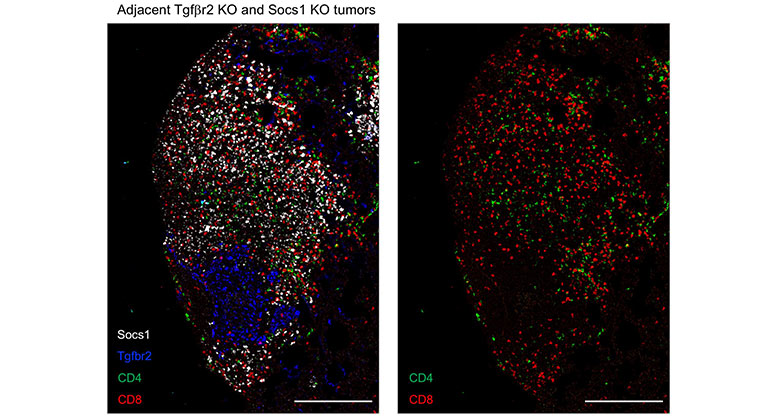
Novel CRISPR Imaging Technology Reveals Genes Controlling Tumor Immunity
Mar 15, 2022 View All Press ReleasesMount Sinai Researchers: Why COVID-19 May Be Less Common in Children Than Adults
May 22, 2020 View All Press ReleasesAirway Microbiome and Host Interact Differently in Children with Severe Asthma
Mar 12, 2020 View All Press Releases