Robert M. Arnold, MD, Appointed Vice Chair for Professional Development at Mount Sinai’s Brookdale Department of Geriatrics and Palliative Medicine
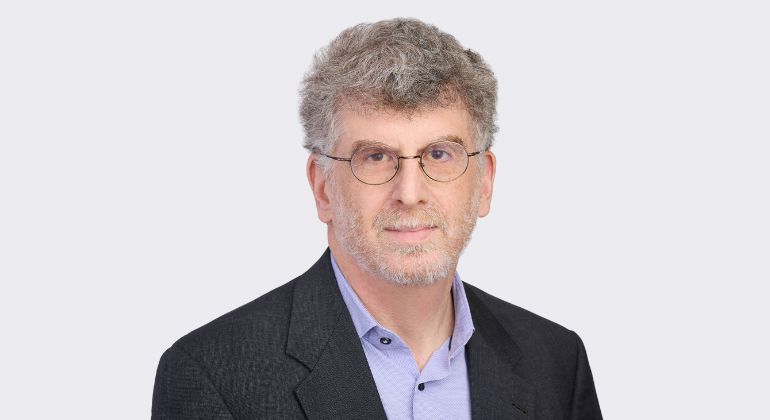
The Icahn School of Medicine at Mount Sinai announced today the appointment of Robert M. Arnold, MD, as Vice Chair for Professional Development within the Brookdale Department of Geriatrics and Palliative Medicine.
“A triple threat in medicine, Dr. Arnold is an expert clinician, educator, and researcher. We are thrilled that he will be coming on board at a time when patient demand is quickly escalating as a result of our aging population, while our workforce is undergoing a steady decline,” said R. Sean Morrison, MD, the Ellen and Howard C. Katz Professor and Chair of the Brookdale Department of Geriatrics and Palliative Medicine.
“Dr. Arnold’s arrival is part of our larger strategy to prepare for this shift in our population by training doctors in the science of palliative care as early in their careers as possible. With Dr. Arnold joining our faculty, we will bring the best care to all seriously ill patients and their caregivers.”
Dr. Arnold, who will also be a Palliative Care attending physician, comes to Icahn Mount Sinai from the University of Pittsburgh, where he was Distinguished Service Professor of Medicine, Director of the Institute for Doctor-Patient Communication, and Medical Director of UPMC’s Palliative and Supportive Institute. He started the University of Pittsburgh Section of Palliative Care and Medical Ethics and was the Section Chief until 2023. He is a co-founder and Chair of the Board of Directors of VitalTalk, a not-for-profit company designed to promote better relationships between clinicians and seriously ill patients and their families. In addition, Dr. Arnold is a past President of the American Academy of Hospice and Palliative Medicine and of the Society for Health and Human Values.
“I am enormously pleased to join Dr. Morrison and his team as we train the workforce who will care for our aging population and introduce them to the field of palliative medicine,” said Dr. Arnold.
Dr. Arnold’s work focuses on how clinicians operationalize ethical precepts in the care of seriously ill patients, and the intersection of communication skills training, medical ethics, and palliative care to improve clinician-patient relationships. His research focuses on teaching palliative care communication skills to clinicians using both face-to-face courses and new technologies, and on understanding the impact of these educational interventions. He works with junior investigators to better understand the impact of primary palliative care interventions in oncology, cystic fibrosis, and cardiology. Dr. Arnold is also studying health care system-wide interventions to improve the experiences of seriously ill patients and their families. In addition, he teaches other clinicians to be more effective educators using evidence based educational methods gleaned from K-12 teachers.
Mount Sinai was the first in the nation to offer a Geriatrics fellowship program 50 years ago. Anticipating the growing nationwide need for specialists as the population ages, the Brookdale Department recently introduced the Mid-Career Geriatrics and Palliative Medicine Fellowship, an innovative fellowship program aimed at doctors already board certified in internal, emergency, or family medicine. Building on this program, the Department offers a two-year LEAP geriatrics fellowship that trains doctors to assume leadership positions and promote changes in health care that better meet the needs of older, frail, and seriously ill adults. The curriculum helps fellows “Learn, Explore, Advocate, and Promote” (LEAP) into leadership positions. The training emphasizes communication and leadership skills, health care policy and delivery knowledge, and programmatic development and management skills.
“Training our medical students and house staff to be skilled communicators is a major area of focus, and Dr. Arnold will bring great expertise to this area,” said Dr. Morrison.
Dr. Arnold, who has received significant funding from the National Institutes of Health and private foundations, has published extensively on ethical issues in end-of-life care, hospice and palliative care, doctor-patient communication, and ethics education. He is a co-author of the textbook “Navigating Communication With Seriously Ill Patients: Balancing honesty with empathy and hope,” (2nd edition, 2024) which is widely read and highly regarded within the palliative care field.
“I was drawn to palliative medicine because I wanted to study the emotional and ethical questions that present themselves when we care for seriously ill patients. What I have learned from my patients is that while I am the guide, it is their journey. They have taught me that I cannot make everything okay, but my being there is important to them,” say Dr. Arnold.
About the Mount Sinai Health System
Mount Sinai Health System is one of the nation’s leading integrated academic health systems and one of the largest in the New York metropolitan area. Its comprehensive system includes seven hospitals, more than 400 outpatient practices, over 600 research and clinical laboratories, the Icahn School of Medicine at Mount Sinai, the Graduate School of Biomedical Sciences, and the Mount Sinai Phillips School of Nursing. Together, the Health System comprises approximately 48,000 employees, more than 9,000 physicians, and 8,600 nurses.
As a leading learning health system, Mount Sinai combines clinical expertise with scientific discovery to improve patient care while training the next generation of health care and biomedical leaders. The Health System provides care across every stage of life, from prenatal care through geriatrics, while advancing personalized medicine through artificial intelligence, data science, and biomedical research.
Mount Sinai is consistently recognized among the nation’s leading academic health systems for patient care, research, and education. The Mount Sinai Hospital is ranked No. 1 in New York by Newsweek® and No. 7 in the U.S. on the magazine’s World’s Best Hospitals 2026 list. The Icahn School of Medicine at Mount Sinai ranks No. 9 among U.S. medical schools and No. 1 among freestanding medical schools for National Institutes of Health grant funding, reflecting the strength of its scientific enterprise and leadership in biomedical research.

The Mount Sinai Hospital Ranked Among Top in the Nation by U.S. News & World Report®
Jul 29, 2025 View All Press Releases
Mount Sinai Establishes Steven S. Elbaum Family Center for Caregiving
May 20, 2025 View All Press Releases